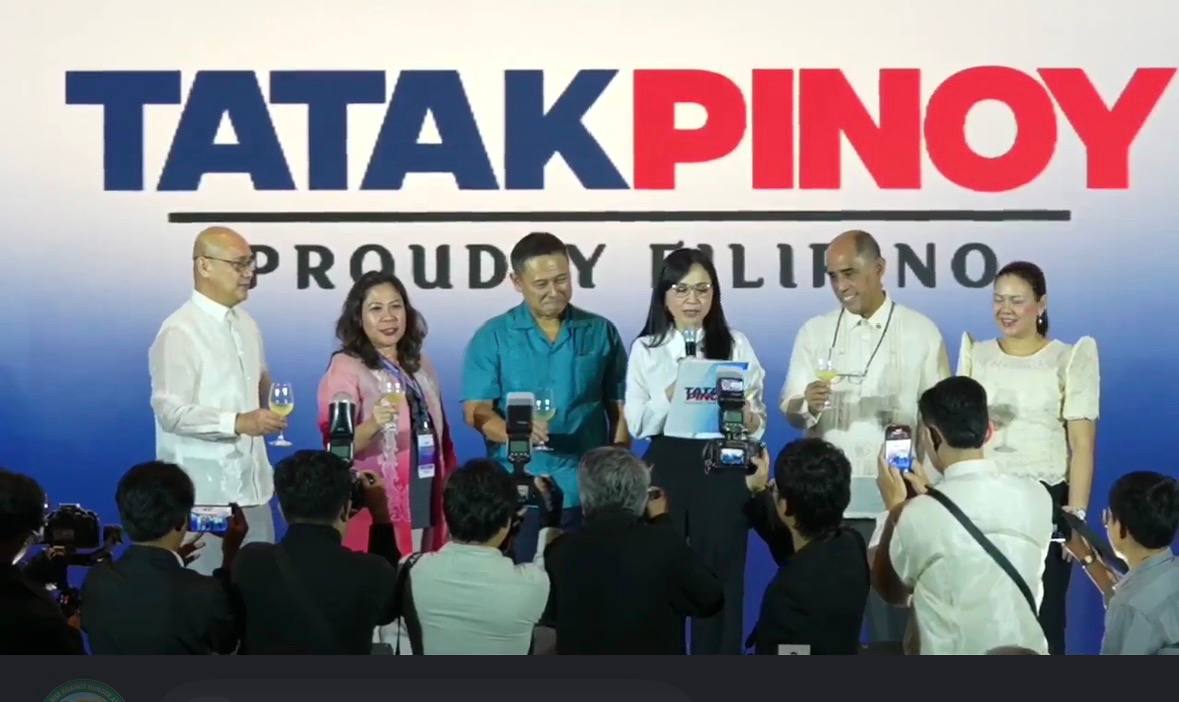
The Department of Trade and Industry (DTI) on Monday rolled out the Tatak Pinoy Strategy (TPS), the Philippines’ first national industrial policy, positioning the country for a major economic showcase as it prepares to host ASEAN meetings in 2026.
Unveiled in Pasay City, the TPS serves as a 10-year industrial roadmap crafted to sharpen the Philippines’ competitiveness across Southeast Asia. Institutionalized under the Tatak Pinoy Act (Republic Act 11981) and outlined in Memorandum Circular No. 104, the strategy is the government’s most coordinated push yet to build a modern, innovation-driven economy.
DTI Secretary Cristina Roque said the roadmap “charts a clear path toward a more innovative, inclusive, and globally competitive Philippine economy,” noting that next year’s hosting duties offer a prime stage.
“It is our turn to show our ASEAN neighbors our aces,” Roque told business leaders and industry groups. “We have 500 meetings next year, 200 related to trade. This is our time to showcase what the Philippines can offer.”
A key TPS mandate requires government agencies to prioritize Philippine-made products and services in procurement, which Roque described as “the power of public spending to fuel innovation, strengthen supply chains, and ensure that progress begins at home.”
The strategy focuses on nine priority sectors, including IT-BPM, food and agro-processing, construction materials, semiconductors, electronics, electric vehicles and auto components, pharmaceuticals and health products, defense manufacturing, and chemicals and industrial inputs.
Roque said Tatak Pinoy is designed to empower entrepreneurs and create “better jobs and world-class Filipino products capable of competing across ASEAN and the global market.” She urged industries not to overlook the country’s nearly 120 million-strong domestic market.
Highlighting the backbone role of MSMEs, which account for 99.6 percent of establishments and 60 percent of the workforce, Roque cited homegrown success stories, including Ilocos weavers exporting premium textiles, Filipino engineers developing globally competitive components, digital-first startups scaling rapidly, and coconut products gaining worldwide recognition.