The World Bank Group and the Asian Development Bank (ADB) have launched their first joint projects under an unprecedented co-financing model designed to accelerate development in the Pacific while cutting red tape for governments long burdened by lengthy, overlapping procedures.
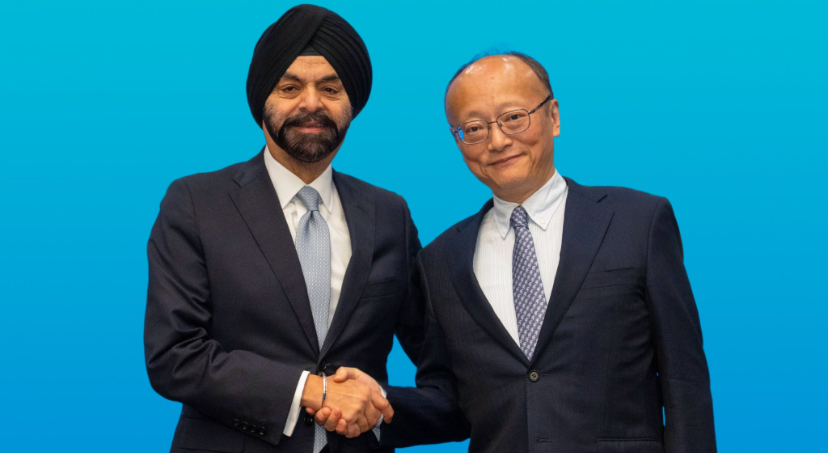
World Bank President Ajay Banga and ADB President Masato Kanda unveiled the inaugural ventures under the Full Mutual Reliance Framework—an arrangement that allows countries to work with a single “lead lender” responsible for project design, preparation, supervision, and evaluation. The approach aims to minimize duplication between the two lenders, speed up delivery, and reduce transaction costs while maintaining rigorous policy standards.
“This is about making development finance simpler, faster, and more effective,” Kanda said. “With this approach, we respond to client needs to solve complex challenges together, from disaster resilience to better connectivity.”
Banga said the framework emerged directly from the demands of borrowing countries. “Our clients asked us to make their lives easier. To work faster. To be better partners,” he said. “This is an important step forward—for our institutions, yes, but far more importantly, for the countries and communities who count on us to deliver real results.”
The rollout begins with two marquee projects in Fiji and Tonga. The first, the USD236.5-million Pacific Healthy Islands Transformation (PHIT) project, will be the largest single World Bank operation ever undertaken in the Pacific. It targets rising rates of noncommunicable diseases by modernizing primary health-care networks and supporting a new regional hospital equipped to treat cancer, cardiovascular disease, diabetes, and other major conditions. World Bank financing has been approved, with ADB cofinancing to be considered in early 2026.
The second initiative, the Tonga Sustainable Economic Corridors and Urban Resilience (SECURE) project, is ADB-led and backed by a combined USD120 million in grant financing—the largest partner-financed project in Tonga’s history. It will overhaul Greater Nuku’alofa’s transport network and storm-water systems, including construction of the 720-meter Fanga’uta lagoon bridge. The upgrades promise smoother transport, safer evacuation routes during disasters, and improved access to the airport and port. World Bank cofinancing is slated for Board review in early 2026.
Both institutions say the framework marks a new era of cooperation—one aimed squarely at faster impact for Pacific communities.