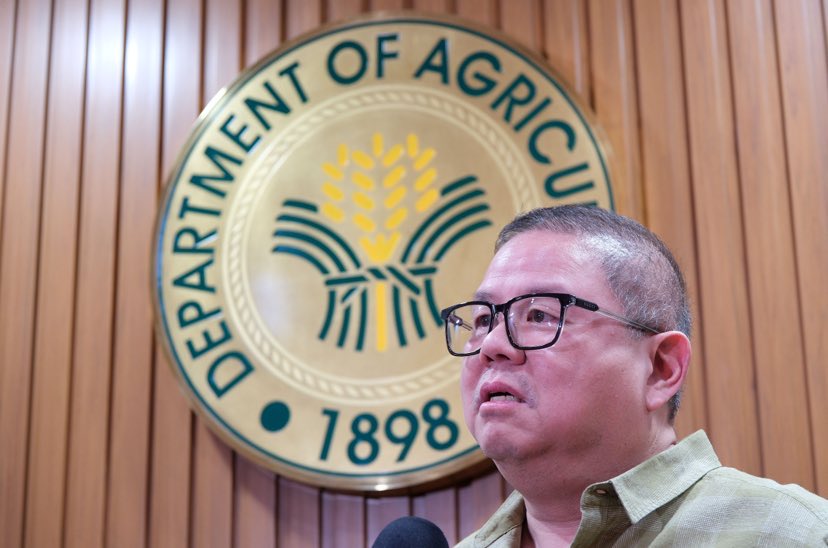
Agriculture Secretary Francisco P. Tiu Laurel Jr. has called for a faster, more disciplined overhaul of how government agencies support farmers and fisherfolk, directing those under the Department of Agriculture to focus on securing stable demand, strengthening market access, and helping agri-fishery enterprises with business-level rigor.
Closing the inaugural meeting of the Farmers and Fisherfolk Enterprise Development Council held recently, Tiu Laurel said delays are no longer acceptable. “We must accelerate,” the DA chief told member government agencies composed of the Department of Trade and Industry, Department of the Interior and Local Government, Department of Finance, and the Cooperative Development Authority, as well as the 4 private sector representatives. “Our enterprises deserve predictable, meaningful demand. We must deliver that.”
At the center of his directives is expanding direct government purchases from accredited farmers’ and fisherfolk’s cooperatives and enterprises (FFCEs), which he said is crucial to stabilizing incomes. “Scaling up is what gives enterprises the stable demand they require,” he said.
Tiu Laurel also ordered DA agencies to intensify market linkages, noting that updated producer supply maps must now be used proactively to match producers with buyers in both the public and private sectors.
He underscored the revival of Food Terminal Inc. (FTI), which is being restored to its mandate of buying directly from farmers with minimal margins and fixing logistics gaps. “We’re bringing FTI back to its former glory,” he said.
He pushed for stronger data systems and uniform standards, calling for enhancements to the Farmers and Fisherfolk Enterprise Development Information System (FFEDIS) and a nationwide rollout of the Enterprise Capacity Development Plan (ECDP) to eliminate fragmented support and ensure efficient use of government resources and sustainability of agricultural and fishery enterprises.
Field support will also be rebuilt. Tiu Laurel confirmed that the Department of Agriculture will restore its extension workforce starting next year, deploying around 12,000 personnel. A bill sponsored by Senator Francis Pangilinan will revive the Bureau of Agricultural Extension, which will support the implementation of the Farmers and Fisherfolk Enterprise Development Program under the Sagip Saka Act.
Financing, he further said, must enable rather than delay growth. He urged the Agricultural Credit Policy Council and state lenders Land Bank and DBP to streamline credit access for maturing enterprises.
“There is money,” Secretary Tiu Laurel said. “We just have to get our act together.”
He closed with a call for more frequent monitoring by the Council—monthly at minimum—to keep programs responsive to conditions on the ground. “Our farmers and fisherfolk cannot wait,” he said, urging agencies to move with urgency and discipline.