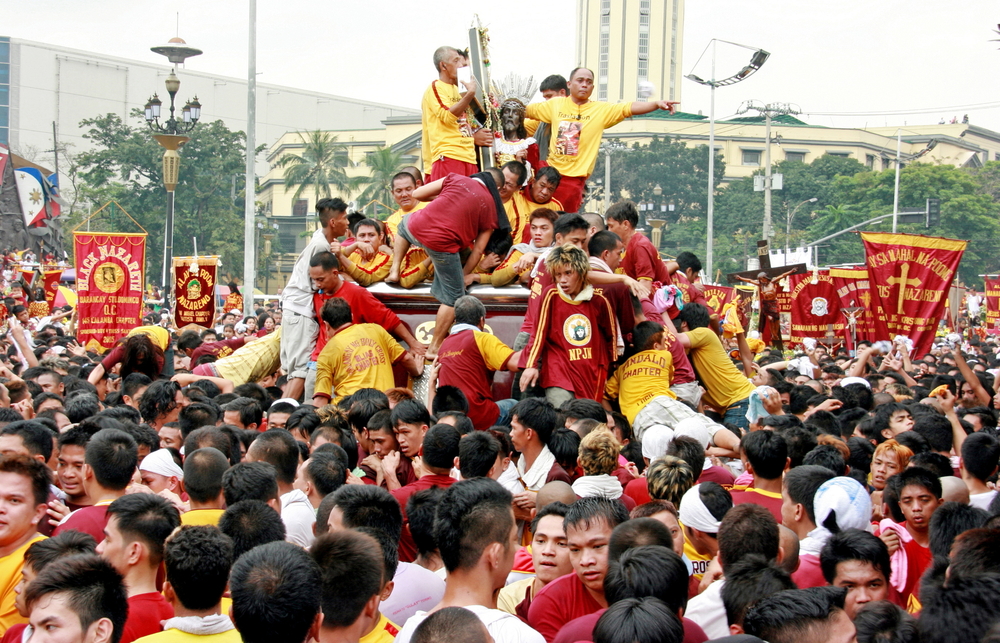
Every January 9, Manila wakes up to a city transformed. Streets close, mobile signals strain, and time seems to slow as millions of barefoot devotees converge for the Traslación of the Black Nazarene—one of the world’s largest religious processions and among the most powerful public expressions of Filipino faith.
The Traslación commemorates the 1787 transfer of the life-sized image of Jesus Christ carrying the cross from the Quirino Grandstand to Quiapo, retracing the historic journey that led the Black Nazarene to its permanent home.
But for devotees, history is only the backdrop. The heart of the event is panata—a deeply personal vow rooted in gratitude, healing, repentance, or hope. Some pull the andas with blistered hands; others walk for hours under the sun. Sacrifice here is not symbolic; it is physical, communal, and intentional.
The devotion cuts across geography and social class. Many devotees travel from the provinces, enduring overnight bus rides, long queues, and hours of waiting just to glimpse or touch the image. For some, the moment is fleeting—a brush of a hand, a touch of a towel—but it carries immense meaning. Devotees whisper prayers of thanksgiving, offer silent pleas, and recount miracles and answered prayers that have bound them to the Black Nazarene for years, even generations.
Familiar faces also blend into the sea of faith. Actor Coco Martin and veteran broadcaster and former vice president Noli de Castro are among known devotees who have joined the Traslación. In the press of bodies and prayers, celebrity dissolves; faith levels the field.
At the spiritual center of it all stands Quiapo Church—canonically known as the St. John the Baptist Parish and formally the Minor Basilica and National Shrine of Jesus Nazareno. As the image’s permanent home and final destination, it anchors the devotion, embodying a faith that endures hardship and finds meaning in suffering. For one long day—and many more throughout the year—it becomes the beating heart of a city moved by prayer.
Around this sacred core, another rhythm quietly unfolds. Days before the procession, the streets surrounding Quiapo turn into hubs of short-term commerce. Vendors sell food, water, towels, candles, and religious items, serving the practical needs of millions. The trade is brisk but reverent; here, commerce bends to devotion, sustaining livelihoods without overwhelming the ritual’s solemnity.
Souvenirs are not impulse buys but extensions of belief. Images of the Black Nazarene—small statues or framed icons—are the most treasured, often touched to the original image or blessed before taking their place on home altars. Towels and handkerchiefs, used to wipe the image or the ropes of the andas, are believed to carry blessings and healing. Rosaries, medals, candles, keychains, and prayer cards allow devotion to travel home with the faithful.
The devotion does not end in Quiapo. Celebrations of the Black Nazarene are observed in other parts of the country, reflecting the depth of Filipino Catholicism—the Philippines being the largest Catholic-majority nation in Asia. In towns and cities nationwide, the same themes of sacrifice, resilience, and hope are reenacted in smaller but no less fervent ways.
In a country where faith shapes daily life and collective identity, the Traslación remains a singular reminder: belief can move millions—across streets, across provinces, and across generations—without ever losing its soul.