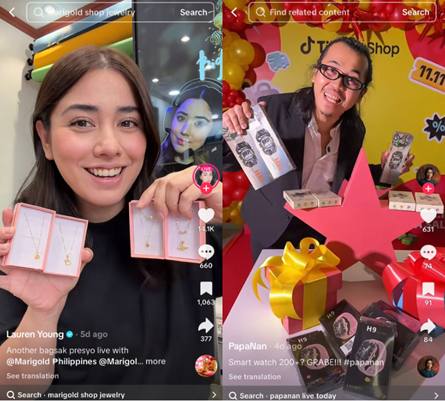
Filipino micro, small, and medium enterprises (MSMEs) didn’t just survive in 2025—they went live and thrived.
Sales by local MSMEs and creators jumped by more than 200 percent, fueled by the rapid rise of live commerce, smarter digital tools, and hands-on capacity-building programs on TikTok Shop. What was once a platform for short videos is now doubling as a virtual marketplace—and a powerful income engine.
Live selling has become the star of the show. Part entertainment, part storefront, it allows sellers to pitch, demo, and close deals in real time—no mall rent, no middlemen.
For MSMEs strapped for capital but rich in creativity, livestreams have proven to be a game-changer, helping them scale faster and reach customers far beyond their neighborhoods.
Behind the surge is a growing ecosystem of support.
TikTok Shop said it worked with government and private-sector partners—including the Department of Trade and Industry, Go Negosyo, and Hapinoy—to train and support more than 25,000 entrepreneurs in 2025. Sellers were equipped with livestream tools, data-driven analytics, and digital skills designed to turn views into value.
Demand for local products also got a major boost. TikTok Shop’s #SarilingAtin campaign, which put Filipino-made goods in the spotlight, pushed sales up by more than 230 percent. Undeniably, when local products meet compelling storytelling and algorithm-powered reach, “buy local” becomes more than a slogan—it becomes a transaction.
Beyond headline growth figures, social commerce is quietly reshaping how Filipinos earn.
Creators and sellers are increasingly one and the same, blending trust, personality, and community with commerce. This model lowers barriers to entry and opens national markets to micro-entrepreneurs, including those outside major urban centers.
“TikTok Shop is more than a marketplace; it is a partner for Filipino entrepreneurs,” said Yves Gonzalez, head of Public Policy for the Philippines at TikTok Shop. He said collaboration, education, and creative tools are key to helping sellers grow responsibly while strengthening communities.
As smartphones become storefronts and livestreams replace sales counters, it has become clear that the future of selling for Filipino MSMEs is social, and it is happening in real time.