Sustainability is no longer a niche concern in the packaging industry—it is a commercial imperative colliding head-on with the explosive growth of e-commerce.
As online shopping accelerates demand for faster, lighter, and more convenient packaging, companies are being forced to rethink materials, processes, and even business models.
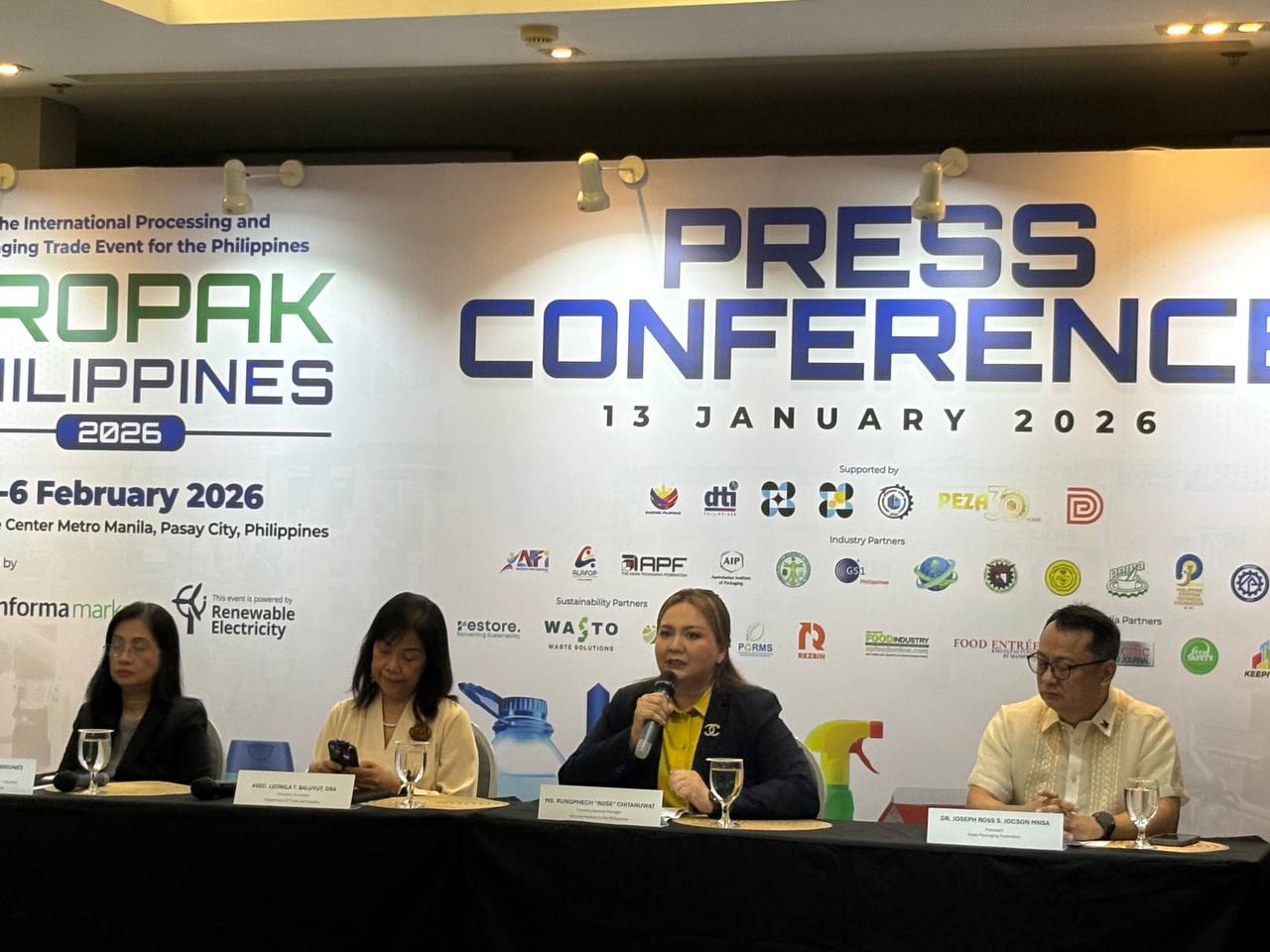
That tension will take center stage at ProPak Philippines 2026, running February 4 to 6 at the World Trade Center. The event is positioning itself as both a marketplace and a strategy lab for manufacturers grappling with waste reduction, recyclability, and energy efficiency—without sacrificing performance or profitability.
Rose Chitanuwat, country general manager of Informa Markets Philippines, said the surge in e-commerce has intensified scrutiny on packaging.
Consumers want convenience, but they also want accountability. “Filipino buyers are now looking beyond the product,” she said, noting growing interest in how materials are sourced, produced, and eventually disposed of.
That shift is forcing companies to innovate faster. Sustainable packaging is becoming a competitive differentiator, not just a compliance checkbox. Firms that align environmental responsibility with cost efficiency and brand value stand to gain, especially as regulators and consumers raise the bar.
“Consumer-conscious innovation is not just a theme; it’s a call to action,” Chitanuwat said, adding that ProPak aims to connect businesses with practical tools, insights, and partnerships that translate sustainability into market advantage.
Dr. Joseph Ross Jocson, president of the Asian Packaging Federation, echoed the global nature of the challenge. With 17 member countries, the federation is investing heavily in research on reusable and recyclable materials.
He pointed to multinationals such as Nestlé and Coca-Cola, which now report fully recyclable packaging, as signals of where the industry is headed.
This year’s ProPak Philippines will feature training courses, forums, conferences, and hands-on clinics focused on sustainable, inclusive, halal-compliant, and technology-driven packaging solutions.
The goal is to turn sustainability from a cost center into a growth engine, and position the Philippines as a credible hub for future-ready manufacturing.