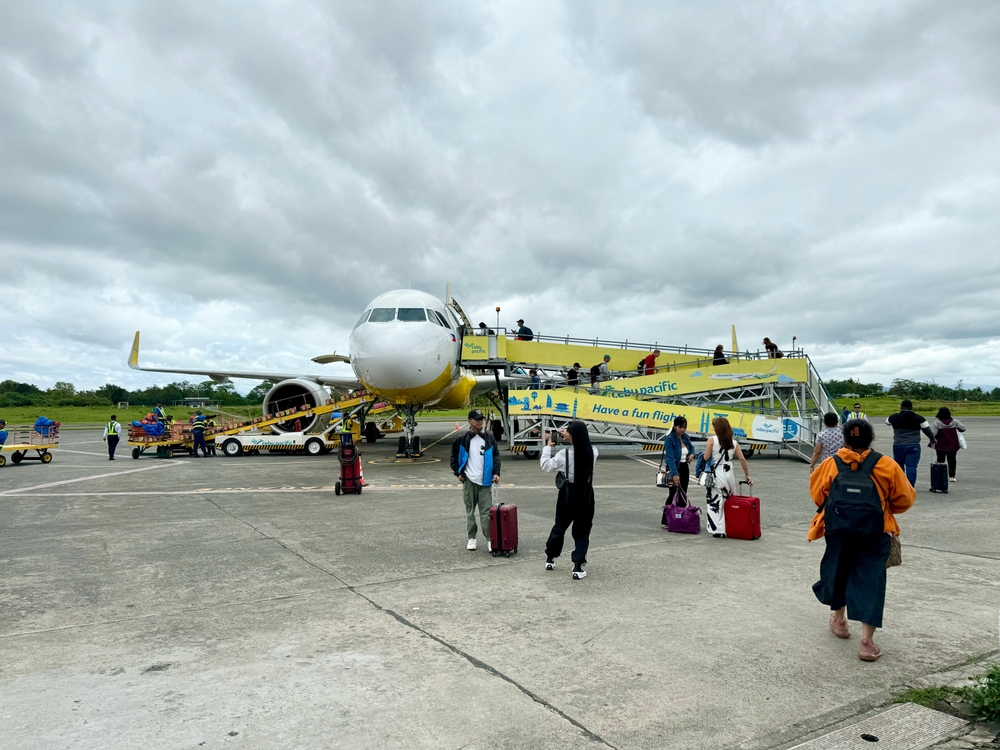
Cebu Pacific (CEB) closed December 2025 with a surge in passenger traffic, carrying more than 2.7 million travelers—its highest monthly total on record—up 5.1 percent from the same month a year earlier.
The record passenger traffic in December capped a year of steady expansion for the Philippines’ largest airline, even as capacity growth outpaced demand late in the year.
Overall seat load factor (SLF) in December slipped to 83.8 percent from 85.2 percent last year as seat capacity rose 6.9 percent.
Domestic traffic increased 4.5 percent year-on-year on a matching rise in seats, resulting in a healthy domestic SLF of 85.5 percent.
International passenger traffic grew faster, up 6.6 percent, but with seat capacity expanding by 13.6 percent, international SLF fell 5.2 percentage points to 79.4 percent.
For the full year of 2025, Cebu Pacific flew nearly 27 million passengers, a 9.5 percent increase from 24.5 million in 2024.
Domestic passengers climbed 8.1 percent to 20 million, while international traffic jumped 14.0 percent to 6.9 million. Average SLF for the year stood at 84.0 percent, with total seat capacity rising 10.0 percent to 32 million.
“Cebu Pacific concluded 2025 on a strong note, achieving its highest-ever monthly passenger traffic,” said CEO Mike Szucs, citing fleet reliability issues, supply chain disruptions, and global geopolitical tensions as key challenges navigated during the year.
He said the airline expects to sustain similar growth in 2026, supported by the delivery of seven new aircraft.
As it marks its 30th anniversary, Cebu Pacific—operator of a 100-aircraft fleet and the country’s widest domestic and international network—appears poised for another milestone year, reinforcing the resilience of its low-cost model.