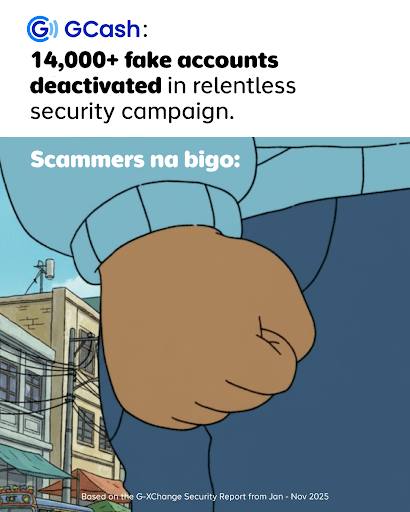
Online fraud is no longer a fringe threat—it is an industrial operation. And in 2025, GCash responded at industrial scale. Its newly released GSafe Report lays out a year of aggressive digital defense: more than 27,000 scam-related sites, posts, and accounts taken down; 466 million hacking attempts blocked; and over 2.2 million scam-linked wallets shut for good.
Those numbers tell a simple story: scammers are persistent, but platforms can be more persistent still.
The report positions GCash not just as a payments app, but as a frontline security operator for millions of Filipinos who rely on digital finance daily. Over the past year, the company doubled down on fraud prevention technologies, faster responses to suspicious behavior, and broader scam advisories designed to keep users alert as tactics evolve.
What’s notable is the shift in tone. Security is no longer framed purely as damage control. GCash says the next phase is about reassurance—making protection feel seamless, intuitive, and always-on.
Planned upgrades include an in-app one-time password (OTP) system, which keeps verification inside the app and sharply reduces exposure to phishing, interception, and fake links. And that matters because fraud doesn’t just exploit technology; it exploits hesitation, confusion, and urgency.
By simplifying verification and reducing points of failure, GCash is betting that better design can quietly neutralize entire categories of scams.
It is clear that technology alone isn’t enough. User behavior remains a critical line of defense. Every suspicious link ignored, every unusual request verified, and every report filed helps train systems and harden the ecosystem. As the report puts it, every failed scam strengthens collective digital habits.
Scams haven’t disappeared. But the balance is shifting. With scale, speed, and smarter safeguards, GCash’s 2025 results suggest that in the fight against fraud, momentum now favors the defenders.