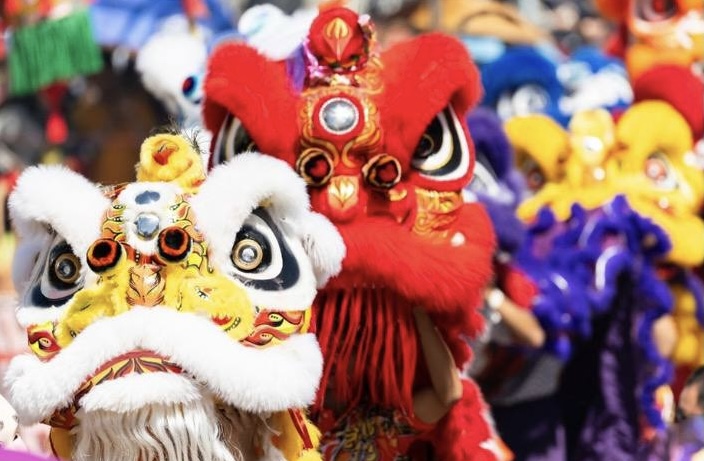
The Lunar New Year, by law, is a special non-working holiday in the Philippines. In real life, it functions more like an early-year economic tune-up. It signals fresh starts, lighter wallets, fuller restaurants, and a nationwide willingness to believe that this year might finally behave itself.
Once a community-centered celebration, Lunar New Year has slipped into the national calendar with impressive ease. Visibility did the heavy lifting.
Historian Xiao Chua traces the shift to the 1990s, when mall culture and mass-media exposure turned niche traditions into shared experiences. “As malls became dominant public spaces, awareness grew,” Chua says.
Lucky colors, feng shui tips, and zodiac forecasts left living rooms and moved into food courts, shop windows, and Monday-morning small talk. Culture followed commerce. Commerce followed foot traffic.
Lunar New Year went fully mainstream when shopping malls replaced town plazas. Its logic even bled into how Filipinos approach January 1. Timing matters. Symbols matter. Starting clean matters. Retailers caught on early. The rest of the business community followed quickly.
Cultural analyst Wilson Flores argues that the holiday has outgrown any narrow label. “Chinese New Year has become perhaps the most important Asian festival,” he says. Across the region, the celebration stretches beyond a single day and, in many cases, beyond a single country.

This is not just a break from work. It is the break. For famously work-driven Chinese communities worldwide, this is the rare moment when productivity dips and consumption spikes. That pattern lands squarely in the Philippines, even though ethnic Chinese account for only around 2 percent of the population. Add Chinese mestizos, estimated at up to 40 percent of the population, and the consumer base widens into a formidable economic bloc.
The result is a dependable early-year sales surge. Malls roll out red-and-gold displays. Bakeries scale up production. Restaurants dress familiar menus in limited-time promise. Gift shops thrive. Flores sums it up cleanly. “It is an excuse to celebrate, an excuse for shopping malls, department stores, bakeries, and restaurants to generate more sales.”
In a slow first quarter, that excuse is powerful.
No product captures the season better than tikoy. Sweet, sticky, and aggressively symbolic, it sells feeling more than flavor. Sweetness promises happiness. Stickiness promises closeness. Tikoy slides easily from kitchen counter to gift bag, carrying goodwill and margin in equal measure. It is culture that knows how to monetize itself.
Beyond domestic spending, Lunar New Year exposes a long-standing tourism gap. Across Asia, millions of Chinese tourists travel during the season, filling hotels in Japan, South Korea, Singapore, and Thailand. The Philippines attracts only a fraction of that traffic.
Recent policy moves like visa-free entry for Chinese citizens’ short stays help, but timing matters. Regional neighbors moved earlier and moved faster. Flores puts it plainly. “The real problem now is perception.” Travelers decide quickly, and safety, ease, and value drive those decisions long before bookings happen.
Inside Filipino-Chinese business circles, optimism remains stubbornly intact. Lunar New Year is culturally wired for renewal. A weak year is treated as finished business. A new one is a clean slate. That belief shows up in hiring plans, expansion talks, and risk appetite.
Interest in feng shui peaks alongside the festivities, hovering between logic and belief. At its most practical, it reinforces common-sense ideas about harmony and environment. At its most commercialized, it becomes noise. Most entrepreneurs know which parts to keep.
The celebration’s historic heart still beats in Binondo, nearly five-hundred years old and buzzing every Lunar New Year.
Once a colonial-era settlement for Chinese traders, it evolved into a financial hub and a proving ground for generations of entrepreneurs who shaped Philippine commerce.
Lunar New Year in the Philippines is no longer just tradition. It is confidence, packaged and seasonal. Red envelopes now signal more than luck. They signal spending, strategy, and a collective willingness to start again.