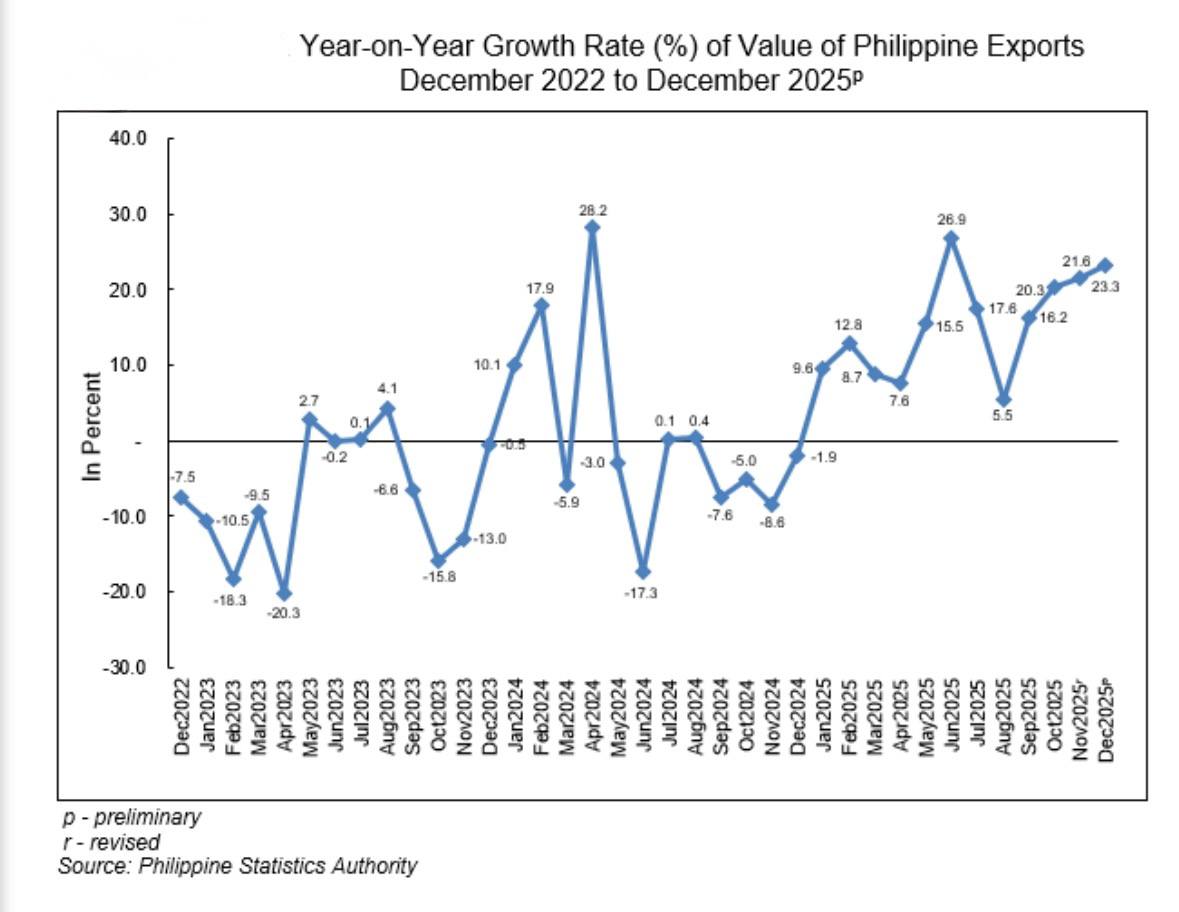
The Philippine Economic Zone Authority is projecting a stronger export run in 2026, riding on record-breaking trade performance last year and a fresh wave of investments flowing into economic zones nationwide.
PEZA said the Philippines’ USD84 billion merchandise exports in 2025, up 15 percent year on year, underscore the resilience of local manufacturers despite global volatility and lingering supply-chain risks.
Enterprises operating inside ecozones remained a key growth engine, with PEZA-registered exports rising 10 percent and historically accounting for 50 to 60 percent of total goods exports.
“This milestone is a testament to the competitiveness of our export manufacturers,” the agency said, pointing to sustained demand for Philippine-made products across major markets.
Electronics continued to anchor export strength, representing 33 percent of PEZA-approved investments and retaining its position as the country’s top export commodity. PEZA also cited solid contributions from machinery and transport equipment, wiring harnesses, bananas, and coconut products—many of which are produced or processed within economic zones.
PEZA is targeting a 15 percent increase in investment approvals in 2026, a pipeline it expects to translate into higher export volumes as new projects and capacity expansions come online. The agency said continued investor interest reflects confidence in the Philippines as a manufacturing and export base in Southeast Asia.
“As more investors choose to locate in our ecozones, we are optimistic that Philippine exports will sustain their upward trajectory,” PEZA said.
Beyond goods, services exports are strengthening the country’s trade position. PEZA highlighted the IT-BPM sector’s USD40 billion in services exports in 2025, reinforcing the growing role of digital and knowledge-based services alongside manufacturing.
With manufacturing scale-ups, services growth, and a robust investment pipeline converging, PEZA said 2026 is shaping up as another strong year for Philippine exports.