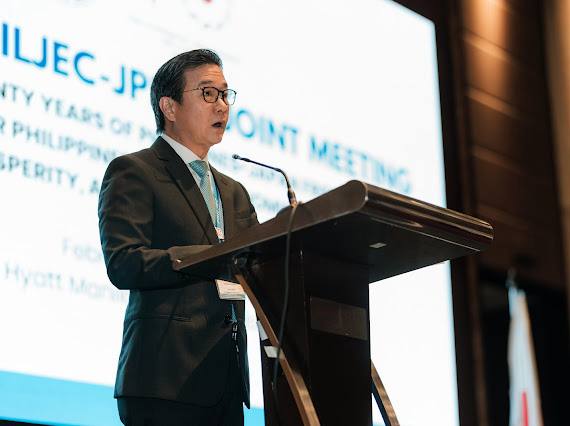
Leaders from the Philippines and Japan called for broader and more ambitious collaboration as the 42nd Joint Meeting of the Philippines-Japan Economic Cooperation Committee convened in Taguig City on February 19.
At the center of discussions was Philippines-Japan Economic Cooperation Committee, where Chairman Alfred V. Ty pressed for expanded initiatives to safeguard growth momentum despite mounting challenges in 2025.
Ty acknowledged that governance concerns within the bureaucracy had tempered business sentiment toward the end of the year. Yet he framed the moment as an opening for structural reform rather than retreat. He urged government to implement enduring regulatory changes that promote compliance, transparency and a sustainable fiscal framework to strengthen long-term competitiveness.
Economic ties between the Philippines and Japan remained firm in 2025. Japan continued to rank as the Philippines’ top investor in Philippine Economic Zone Authority zones and a leading partner in trade and tourism.
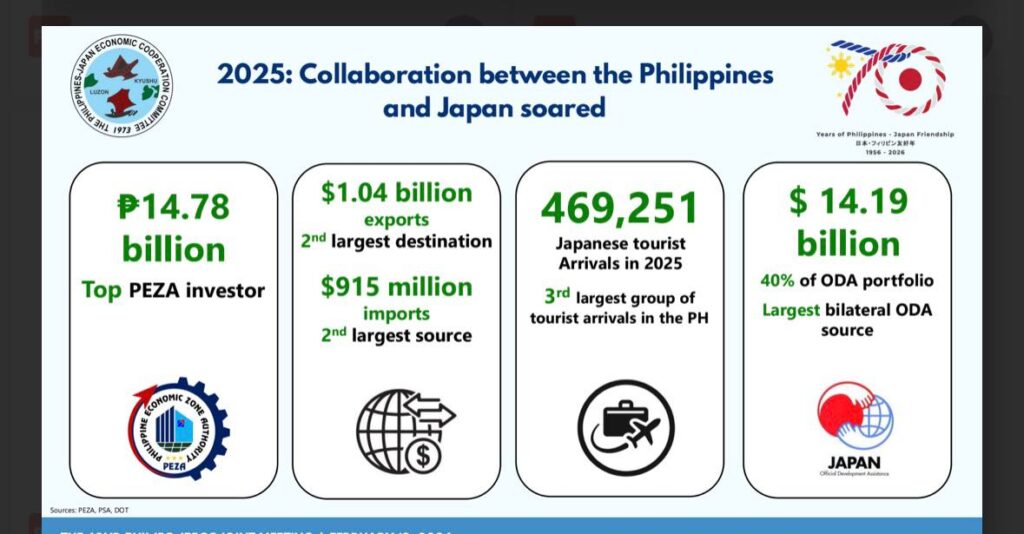
Ty noted that these foundations provide a stable platform, but warned that evolving global pressures demand deeper engagement.
He outlined priority areas for cooperation, including stronger mobility and connectivity, expanded people-to-people exchanges and accelerated know-how transfer.
Emerging sectors such as artificial intelligence, alternative energy, agriculture and strategic investments were identified as key pillars for future growth.
The meeting also set its sights on 2026, marking 70 years of normalized diplomatic relations between the Philippines and Japan.
Ty expressed optimism that the milestone year could anchor a more transformative agenda grounded in collaboration and mutual respect.
Despite below-target gross domestic product growth of 4.4 percent in 2025 amid political and climate strains, Ty emphasized that core fundamentals remain intact, citing rising exports, easing inflation and an improving trade balance.
He urged stakeholders to use shared history as a guiding force to navigate uncertainty and advance sustainable, co-prosperous growth for both nations.