The Philippines is weighing whether to push for a coordinated regional response to Washington’s newly announced 15 percent global tariff, as trade talks continue and no formal position has been adopted.
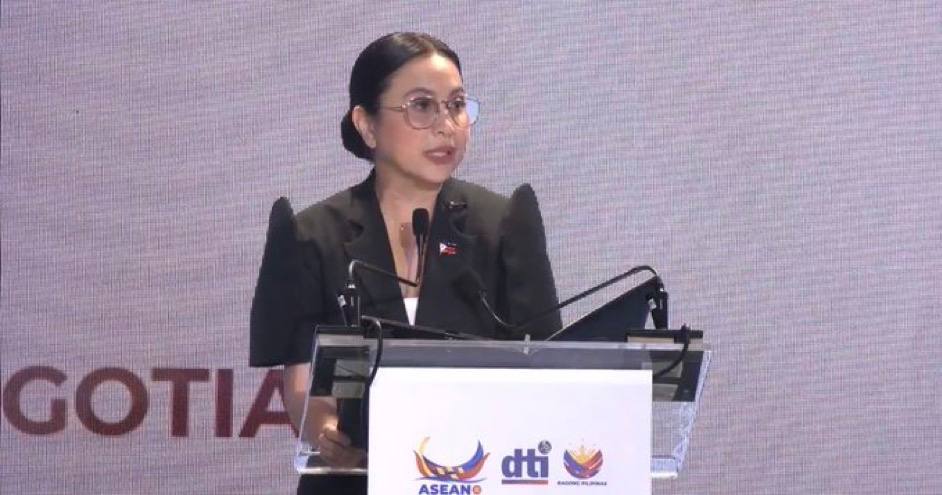
Speaking on the sidelines of the Association of Southeast Asian Nations Editors and Economic Opinion Leaders Forum, Trade Secretary Cristina Roque said consultations with fellow ASEAN member states have yet to begin. For now, she noted, Manila is focused on its responsibilities as ASEAN chair.
Still, Roque signaled that the tariff issue could soon move to the regional agenda. As chair, the Philippines would “definitely” raise the matter in upcoming discussions, she said, adding that ASEAN “once bonded together, is a very strong force to reckon with.”
The remarks come as negotiations with U.S. counterparts remain in flux. Roque said she has yet to discuss the tariff issue with Ferdinand Marcos Jr., who is scheduled to travel to New York on March 11. It is not yet clear whether the new tariff regime will feature in his US meetings.
She cautioned against speculation, particularly on whether goods that previously enjoyed exemptions such as semiconductors and select agricultural products would be affected. “Negotiations are continuing,” Roque said, underscoring that details remain under discussion.
At the same forum, Finance Secretary Frederick Go emphasized that the Philippines’ ASEAN chairship will focus on deeper regional economic cooperation and market diversification. He said recent tariff talks reinforced a shared view among Southeast Asian economies on the need to “open new markets” and expand trade partnerships.
Among the priorities is advancing free trade negotiations with the European Union, part of a broader strategy to reduce overreliance on any single export destination.
Despite mounting global trade uncertainty, Roque stressed that Manila is actively broadening its export base beyond the U.S. market. The approach aligns with ASEAN’s push for stronger regional resilience and collective economic positioning as supply chains shift and trade rules evolve.
For Manila, the challenge is twofold. Manage bilateral negotiations carefully while testing whether ASEAN unity can amplify its leverage in a more protectionist global environment.