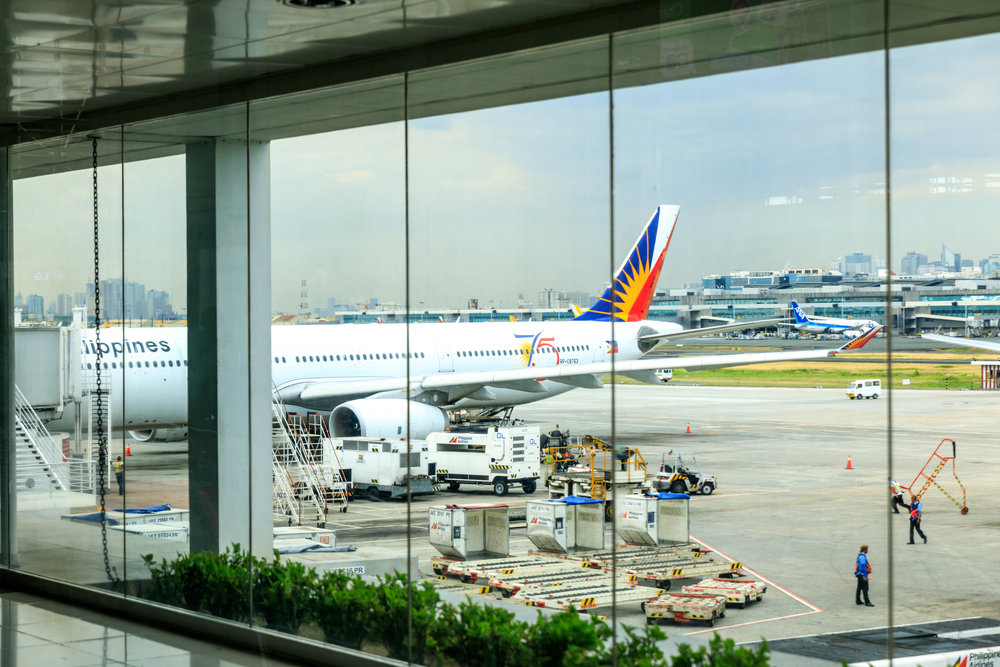
Philippine carriers are pulling back from the Middle East as security risks and airspace limits ripple across key corridors, forcing cancellations and swift contingency plans. Mostly affected are the tens of thousands of overseas Filipino workers deployed in the Middle East.
Philippine Airlines (PAL) said late Saturday, February 28, it is closely tracking escalating tensions and the operational restrictions now affecting select airports and flight paths. In the interest of safety, the carrier scrapped March 1 services PR658/PR659 (Manila–Dubai–Manila) and PR654/PR655 (Manila–Riyadh–Manila), citing continuing constraints in impacted station.
PAL is coordinating with aviation authorities, airport operators and government agencies as developments unfold. Impacted passengers can rebook, reroute or request refunds under existing policies.
The airline urged travelers to verify flight status via its website, app and official social channels before heading to the airport, underscoring that safety remains paramount.
Budget rival Cebu Pacific echoed the cautious stance. As of 9 p.m. February 28, it was monitoring the situation after Flight 5J 14 to Dubai returned to Manila, arriving 10:45 p.m., prompting the cancellation of its return leg, 5J 15. Both 5J 14/15 rotations scheduled for March 1 were also called off.
CEB is extending flexible remedies: free rebooking within 30 days, Travel Fund conversion, or full refunds. Additional flexibility covers select Dubai and Riyadh services in the coming days as the airline reviews operations.
For carriers heavily reliant on Gulf labor traffic, the disruptions highlight how geopolitics can swiftly upend schedules—and revenues—while safety calculus takes precedence over load factors.