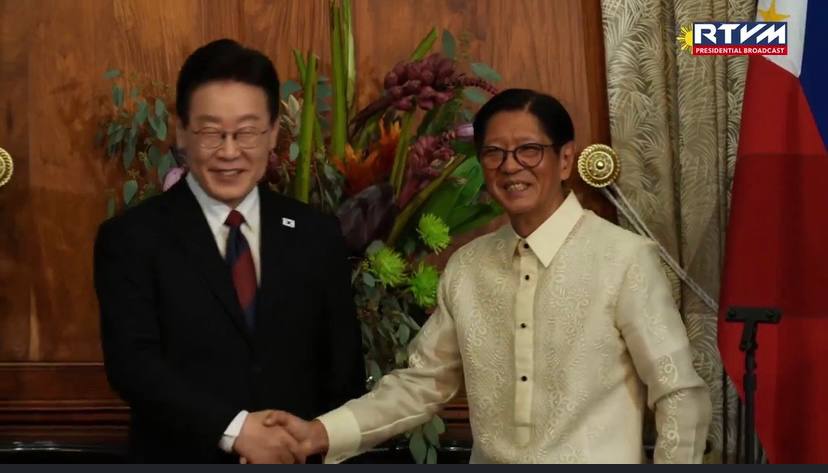
Philippine President Ferdinand Marcos Jr. and South Korean President Lee Jae-myung on Tuesday pledged to broaden cooperation across trade, infrastructure, defense, nuclear energy and emerging technologies, marking a significant expansion of economic ties between the two Asian countries .
Meeting at Malacañang Palace on the 77th anniversary of diplomatic relations, the two leaders framed the partnership as both historic and forward-looking.
Lee noted that the Philippines was the first Asian nation to establish diplomatic ties with Korea and to send troops during the Korean War, a gesture he said laid the foundation for nearly eight decades of “robust, substantial cooperation.”
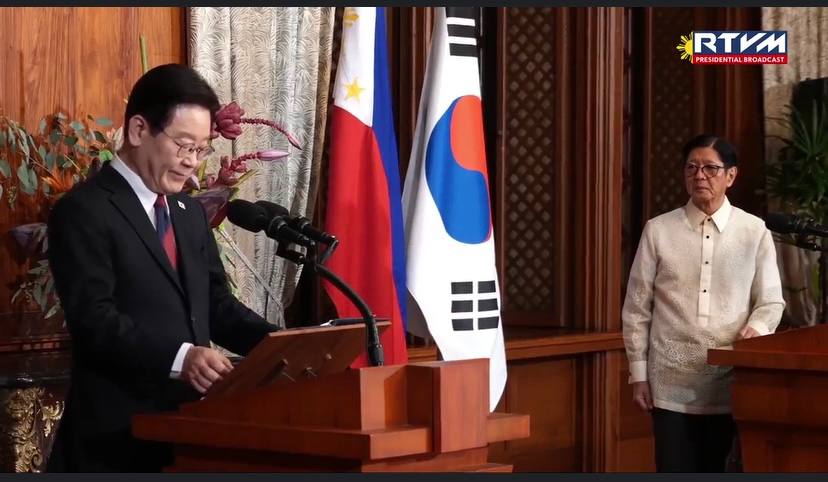
Central to the talks was the South Korea–Philippines free trade agreement, which entered into force in 2024. Since then, South Korean investments in the Philippines have surged more than fivefold, underscoring rising trade flows and capital commitments. Both leaders agreed to further liberalize trade and ease regulatory hurdles facing Korean firms operating in the country.
Two new memoranda of understanding—covering intellectual property rights and agriculture—were signed to facilitate market entry for new businesses and stimulate regional investment.
Beyond trade, Seoul signaled strong backing for Manila’s infrastructure drive and pledged continued support for Korean defense firms participating in the modernization of the Armed Forces of the Philippines.
The leaders also turned to future-facing sectors. They committed to deeper collaboration in shipbuilding, where Korea and the Philippines rank second and fourth globally by output, respectively, as well as nuclear power, artificial intelligence, digital infrastructure and critical minerals supply chains.
On nuclear energy, the sides agreed to build on feasibility studies tied to the potential revival of the Bataan Nuclear Power Plant and new projects under discussion.
With South Korea supplying advanced technology and the Philippines offering mineral resources and strategic geography, both governments cast the expanded partnership as a hedge against a rapidly shifting global economic and security landscape.