At the storied Intramuros campus of Mapúa University, the chalkboard is increasingly sharing space with the real world.
In a move that underscores how engineering education is evolving, Mapúa recently signed a Memorandum of Agreement with Nickel Asia Corporation and Emerging Power Inc. The partnership aims to give engineering students a front-row seat to industry in action.
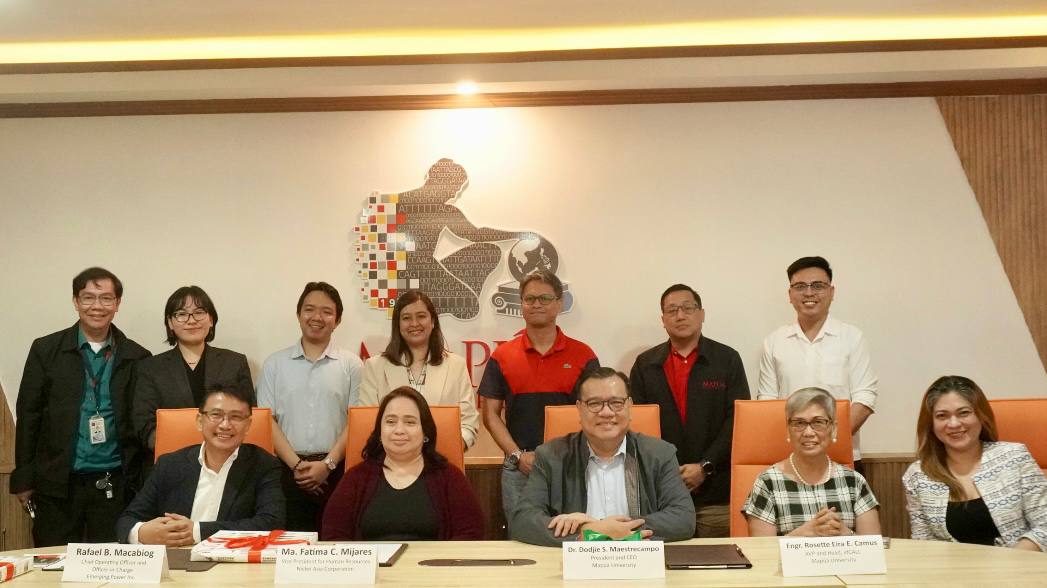
The agreement, formalized at Mapúa’s Office of the President, was led by university chief Dodjie S. Maestrecampo alongside NAC’s people transformation head Ma. Fatima C. Mijares and EPI’s operations chief Rafael B. Macabiog, joined by academic deans from Mapúa’s engineering and science schools.
The centerpiece of the collaboration is NAC’s START 2026 Internship Program, an eight-week industry immersion running from May to August next year. For students, it promises less theory, more terrain.
Participants will work alongside engineers and scientists in projects tied to natural resource development, renewable energy operations, environmental stewardship, and corporate social responsibility. In short: the messy, complex realities behind the tidy diagrams of engineering textbooks.
The internship targets students in disciplines that mirror NAC and EPI’s operational needs—civil engineering, geology, environmental and sanitary engineering, chemistry, mechanical engineering, energy engineering, and electrical engineering.
For Mapúa, the program strengthens its outcomes-based approach to education, long marketed as a pipeline to globally competitive graduates. For NAC and EPI, it’s a strategic talent play. Energy transition and responsible mining demand engineers who can navigate both technology and sustainability—skills best learned outside the classroom.
The program’s emphasis goes beyond technical training. Mentorship, problem-solving in live environments, environmental protection, and community engagement are all part of the mix.
In effect, the partnership sketches a new model for engineering education: universities supplying rigorous theory, industry providing the proving ground.
If the formula works, Mapúa students won’t just graduate with diplomas. They’ll leave with dirt on their boots, data in their laptops—and perhaps a clearer blueprint for building a more sustainable Philippine energy and resource sector.