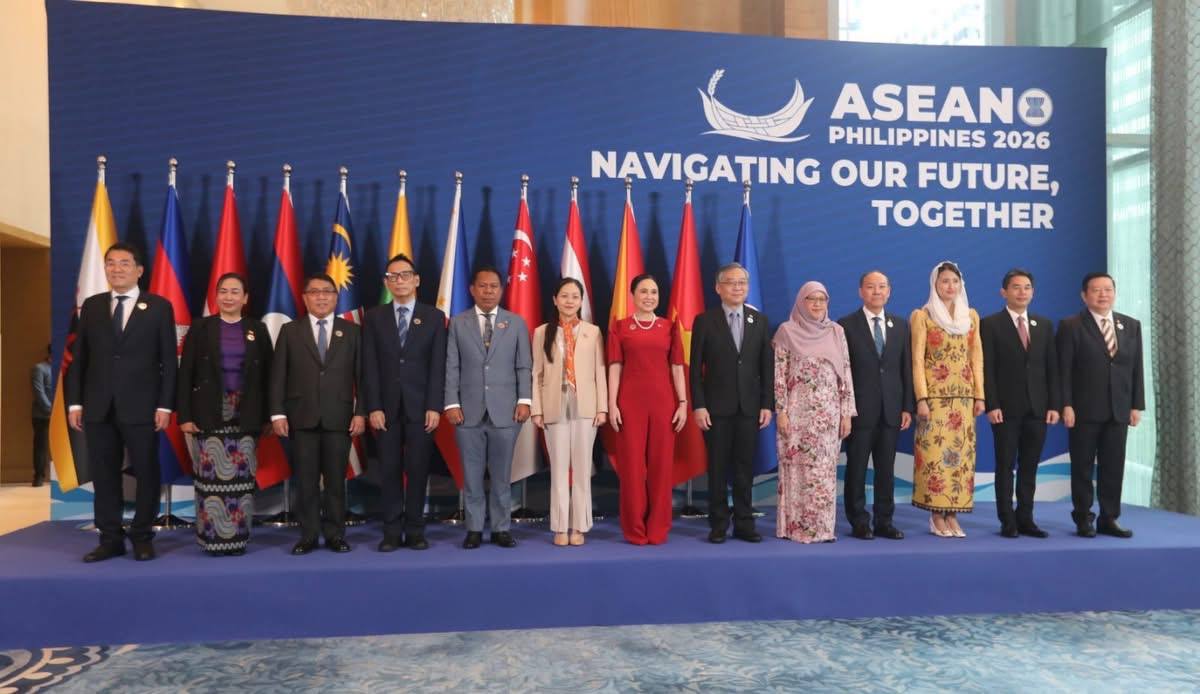
Economic ministers of the Association of Southeast Asian Nations on Friday called for urgent de-escalation of tensions in the Middle East, warning that prolonged conflict could ripple across global energy markets and threaten Southeast Asia’s fragile economic recovery.
In a joint statement concluding the 32nd ASEAN Economic Ministers’ Retreat in Taguig City, the ministers joined their foreign policy counterparts in urging “maximum restraint” and the cessation of hostilities, stressing that diplomatic engagement and constructive dialogue remain the only viable path forward.
Beyond the geopolitical concern lies a hard economic reality. ASEAN officials said escalating tensions risk disrupting critical maritime routes and global supply chains, driving up freight, insurance, and logistics costs. Those pressures, in turn, could feed inflation across energy, food, and other essential goods, squeezing both consumers and businesses in the trade-dependent region.
Energy markets remain the immediate flashpoint. Ministers warned that volatility in oil and gas prices could undermine economic stability if left unchecked.
To cushion the impact, they emphasized the need for stronger regional energy security measures, including managing consumption, diversifying supply routes, and expanding alternative energy sources such as biofuels and renewables.
The retreat also underscored ASEAN’s push to accelerate the region’s renewable energy transition while strengthening cooperation on emergency energy preparedness and reserves with dialogue partners.
At the same time, the ministers reaffirmed their commitment to keeping ASEAN markets open and predictable for trade and investment—an implicit response to growing protectionist pressures worldwide. They flagged concern over rising unilateral trade measures and said the bloc would closely monitor newly launched U.S. Section 301 investigations affecting several ASEAN member states.
The broader message from Taguig was clear: while Southeast Asia cannot control geopolitical flashpoints beyond its borders, it can prepare for the economic shockwaves. Strengthening supply chains, diversifying energy sources, and maintaining open trade channels are now as much about resilience as they are about growth.
In an increasingly fractured global economy, ASEAN appears determined to hedge against instability while preserving the region’s reputation as one of the world’s most reliable trading hubs.