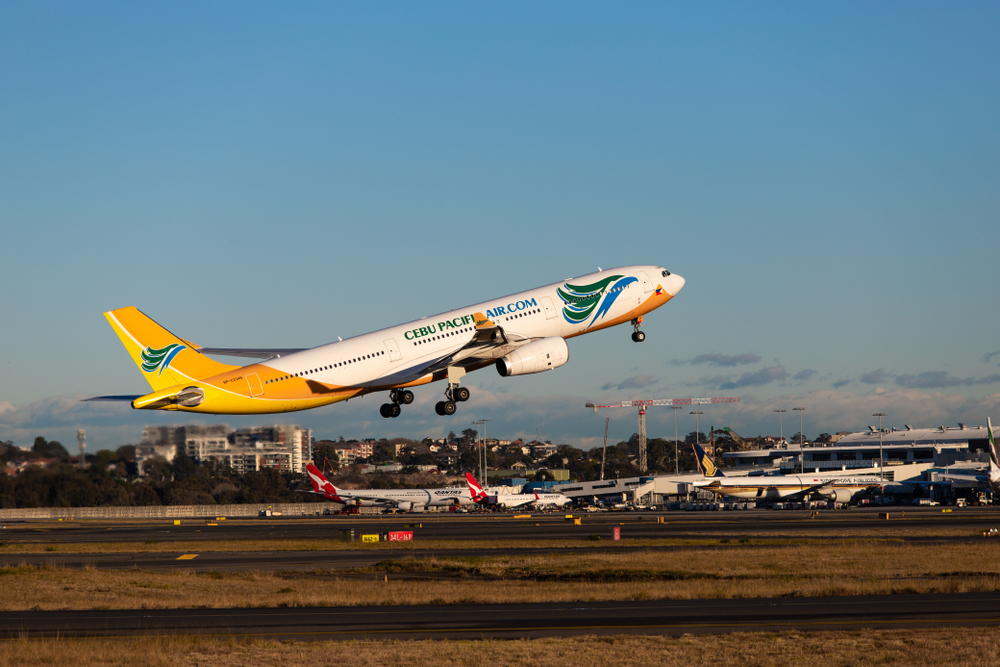
Cebu Pacific, the budget carrier unit of the Gokongwei Group, is bracing for potential turbulence from rising global fuel prices, even as the Philippines’ largest budget airline continues to post steady passenger growth early this year.
Jet fuel is typically the single biggest expense for airlines, and the recent surge in oil prices due to escalating conflict in the Middle East threatens to squeeze margins across the aviation industry. For low-cost carriers such as Cebu Pacific, whose business model relies heavily on competitive fares, higher fuel costs could translate into fare adjustments or tighter capacity management in the months ahead.
Chief Executive Officer Mike Szucs said the airline is closely monitoring the situation amid the ongoing geopolitical tensions in the Middle East. “Our operating fundamentals including our robust domestic network, modern fuel-efficient fleet, and low-cost structure provide us advantages as we navigate these headwinds,” Szucs said, adding the airline will continue reviewing pricing and network strategies to cushion the impact of higher fuel prices.
The cautious outlook comes even as Cebu Pacific delivered solid traffic performance in February.
The airline carried more than 2.3 million passengers during the month, up 7.9 percent from the same period last year, supported by a 9.5 percent increase in seat capacity. Systemwide seat load factor stood at a healthy 85.6 percent, slightly lower than 86.8 percent a year earlier as additional capacity entered the market.
Domestic routes continued to anchor demand. Passenger traffic within the Philippines rose 7.6 percent year on year as seat capacity grew 9.4 percent, resulting in a domestic load factor of 86.6 percent.
International travel also expanded, with passenger numbers climbing 8.8 percent alongside a 9.7 percent increase in seats, although the load factor was lower at 82.6 percent.
In the first two months of 2026, Cebu Pacific flew nearly 5.1 million passengers, a 7 percent increase from a year earlier.
The data suggest that demand for air travel remains resilient, but whether that momentum holds may depend largely on how long elevated fuel prices stay in the cockpit.