Rice feeds the world but it also drains it.
The staple that sustains more than 4 billion people and supports about 150 million farmers consumes roughly 30 percent of global freshwater and generates about 1.5 percent of greenhouse gas emissions.
Flooded paddies keep plants happy but they also release methane, making rice cultivation one of agriculture’s quiet climate challenges.
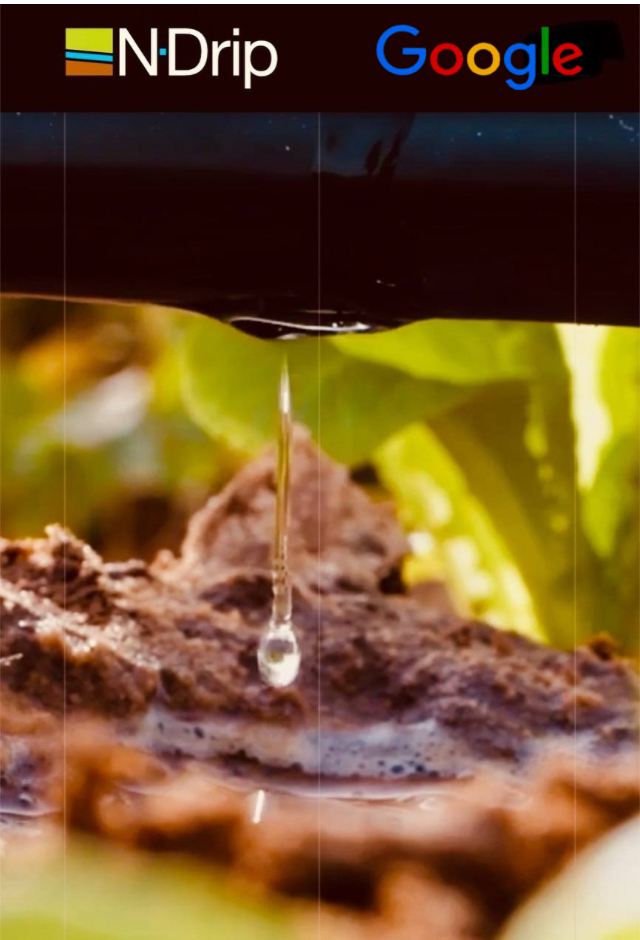
Now an unlikely partnership between Google and Israeli agri-tech firm N-Drip suggests rice fields do not have to stay underwater to thrive.
Their pilot in Changhua County swaps the familiar flooded paddy for subsurface drip irrigation powered largely by gravity. Pipes buried 10 to 20 centimeters below the soil send water straight to the roots. Sensors track soil moisture and activate irrigation only when plants need it. Fertilizer travels through the same network in precise doses.
The first growing season delivered eye-catching results presented at National Chung Hsing University in October 2025. Compared with conventional flooding, the system used 57 percent less water, raised yields by 5.4 percent and cut methane emissions by more than 80 percent.
The idea of reducing water in rice fields is not new. Researchers at the Philippine Rice Research Institute have long promoted Alternate Wetting and Drying, or AWD. The method lets paddies dry for short periods before irrigation resumes. Studies across Asia show it can save up to 38 percent of water while keeping harvests stable.
Yet adoption has been slow in the Philippines. Many farmers see AWD as labor intensive. Cheap or free irrigation water dulls incentives to conserve. And decades of practice have normalized fields that stay flooded from planting to harvest.
Experts point to solutions such as stronger extension programs, participatory farmer training and reforms to the Free Irrigation Service Act to encourage smarter water use.
Gravity drip systems could push the transition further. They remove standing water entirely while automating irrigation decisions.
The timing is notable. As AI expands, companies including Google and Microsoft are building water cooled data centers around the world. Investments that cut agricultural water demand offer a way to balance that footprint.
In a hotter and thirstier future, the humble rice paddy may be due for a smart irrigation upgrade.