The Asian Development Bank is preparing an indicative USD280-million loan to support a Philippine program designed to turn university research into commercially viable technologies.
In a project brief, the Manila-based lender said the funding will back the Advancing Skills, Competitiveness and Enterprise-Driven Innovation (ASCEND) Project, which aims to strengthen the ability of state universities and colleges to transform research and development (R&D) outputs into market-ready products.
The initiative focuses on bridging a long-standing gap in the Philippines’ innovation ecosystem—moving discoveries from the laboratory to the marketplace.
Under ASCEND, selected higher education institutions will receive support for facility upgrades, specialized training, and technology transfer capabilities.
The project also plans to fund applied research grants, startup incubation programs, and enterprise development initiatives designed to link academic researchers with private industry.
The goal is to align university research more closely with business needs, particularly in emerging technology sectors.
The investment builds on earlier programs supported by the ADB that sought to promote Industry 4.0 capabilities and identify opportunities for technology-driven startups in the Philippines.
However, the proposed financing remains indicative and will still require review and approval by the government’s Investment Coordination Committee before it can move forward.
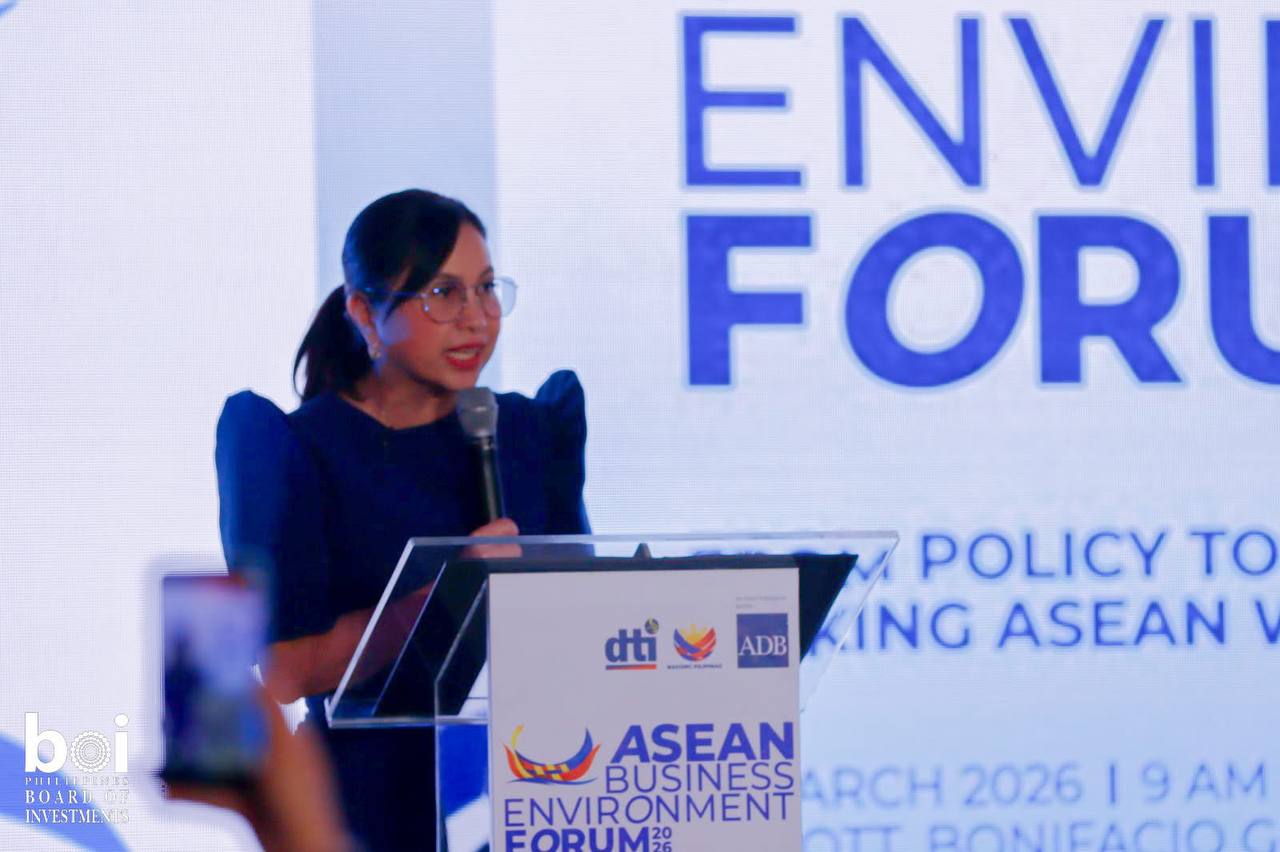
The ASCEND initiative was first flagged publicly by Cristina Roque, secretary of the Department of Trade and Industry, during the ASEAN Business Environment Forum 2026 on March 11.
Roque said the program forms part of broader regional efforts to strengthen innovation systems and support Southeast Asia’s ambitions in advanced manufacturing.
“We are working closely with ADB on the ASCEND program, which is vital to our ASEAN Semiconductor Roadmap, creating strategic investment pathways and promoting R&D to make ASEAN a global hub for high-tech manufacturing,” she told delegates.
Roque added that the ADB also supports the Promoting Sustainability and Productivity for Enterprise Resilience and Upscaling (ProSPER) Project, a USD61-million initiative aimed at accelerating the digital transformation of micro, small, and medium enterprises.
Implemented by the DTI with ADB backing, the ProSPER program seeks to strengthen agricultural value chains, boost productivity, and attract private investment into agro-industries to drive rural economic growth.