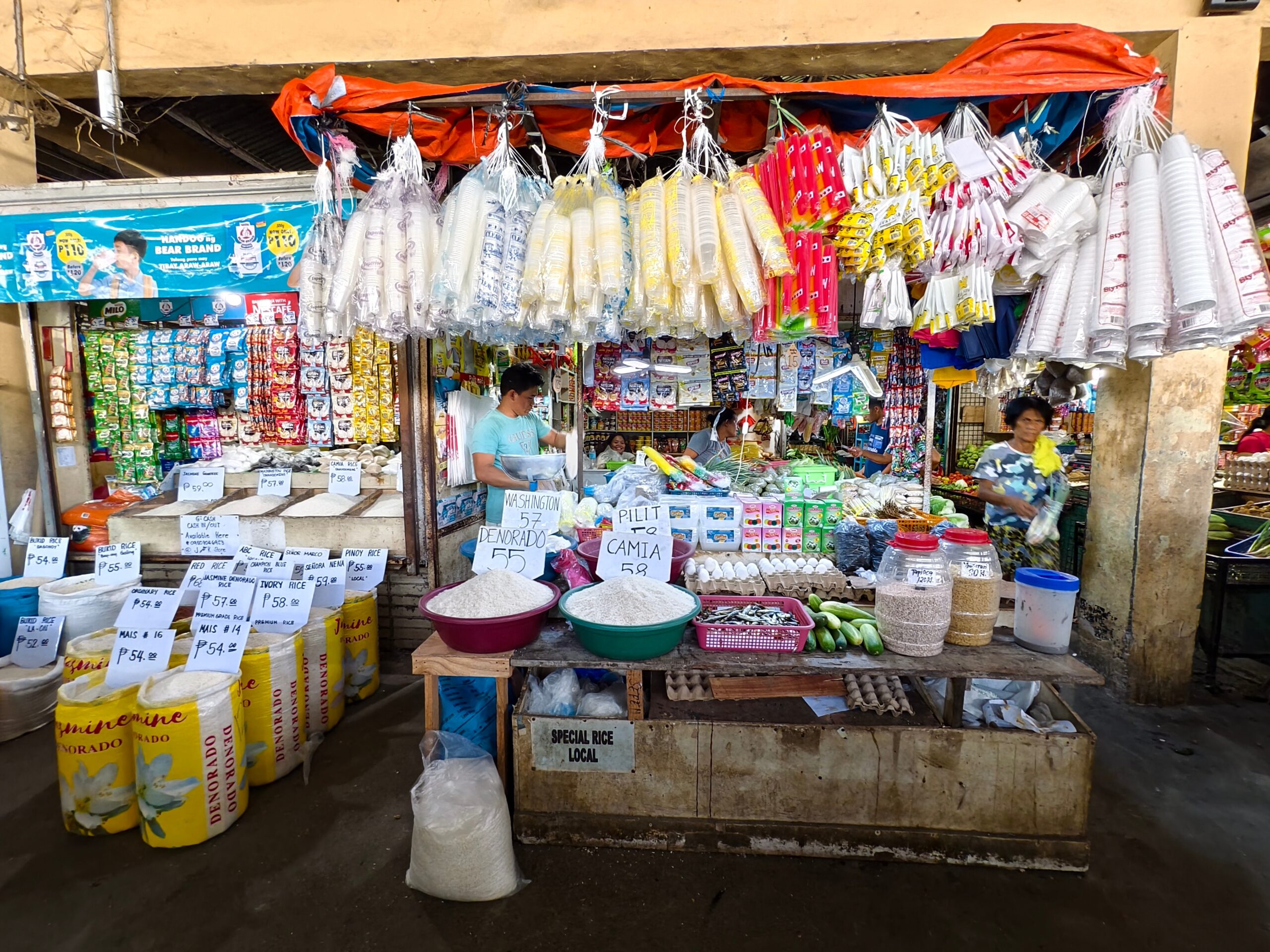
A recent survey commissioned by the Stratbase Institute found that Filipinos want the national government to focus on lowering food prices, creating jobs, and addressing corruption, amid rising fuel costs linked to tensions in the Middle East.
The poll, conducted by Pulse Asia from Feb. 27 to March 2 among 1,200 respondents, showed that 41 percent of Filipinos identified affordable food as their top concern. This is up three percentage points from December 2025, with increases noted in Balance Luzon and Mindanao, as well as among lower-income (Class E) respondents.
Creating more jobs ranked next, with 24 percent of respondents citing it as a priority, up from 21 percent in December. The biggest increase was seen in the Visayas.
Meanwhile, 26 percent said the government should focus on reducing corruption, down from 31 percent in the previous survey.
Stratbase Institute president Victor Andres “Dindo” Manhit said the results reflect growing public concern over rising costs and economic stability as global tensions push fuel prices higher.
“What we are seeing is how geopolitical tensions are directly affecting Filipino households,” he said. “While corruption remains an important issue, ordinary citizens are now more focused on immediate economic pressures including food prices and income stability.”
He added that inflation and corruption remain among the most pressing national concerns based on other recent surveys.
“Our commissioned survey’s findings reinforce concerns that Filipinos are overwhelmingly worried by the rising costs of goods,” Manhit said. “That there remains a high demand to eliminate corruption also shows that the public has stronger expectations for government accountability whenever food prices rise.”
Manhit urged the government to stabilize food and fuel prices, curb profiteering, and expand subsidies for vulnerable sectors.
“Addressing rising food prices must go hand in hand with creating more jobs and ensuring that economic gains are felt at the local community level,” he added.
Other concerns included access to education and healthcare, cited by 10 percent of respondents, unchanged from December.
The survey coincided with escalating conflict in the Middle East, where coordinated strikes by the United States and Israel on Iran led to the closure of the Strait of Hormuz, a key global oil route. This pushed oil prices above $100 per barrel and led to higher fuel prices in the Philippines, raising fears of further inflation.
The survey has a margin of error of ±2.8 percent.