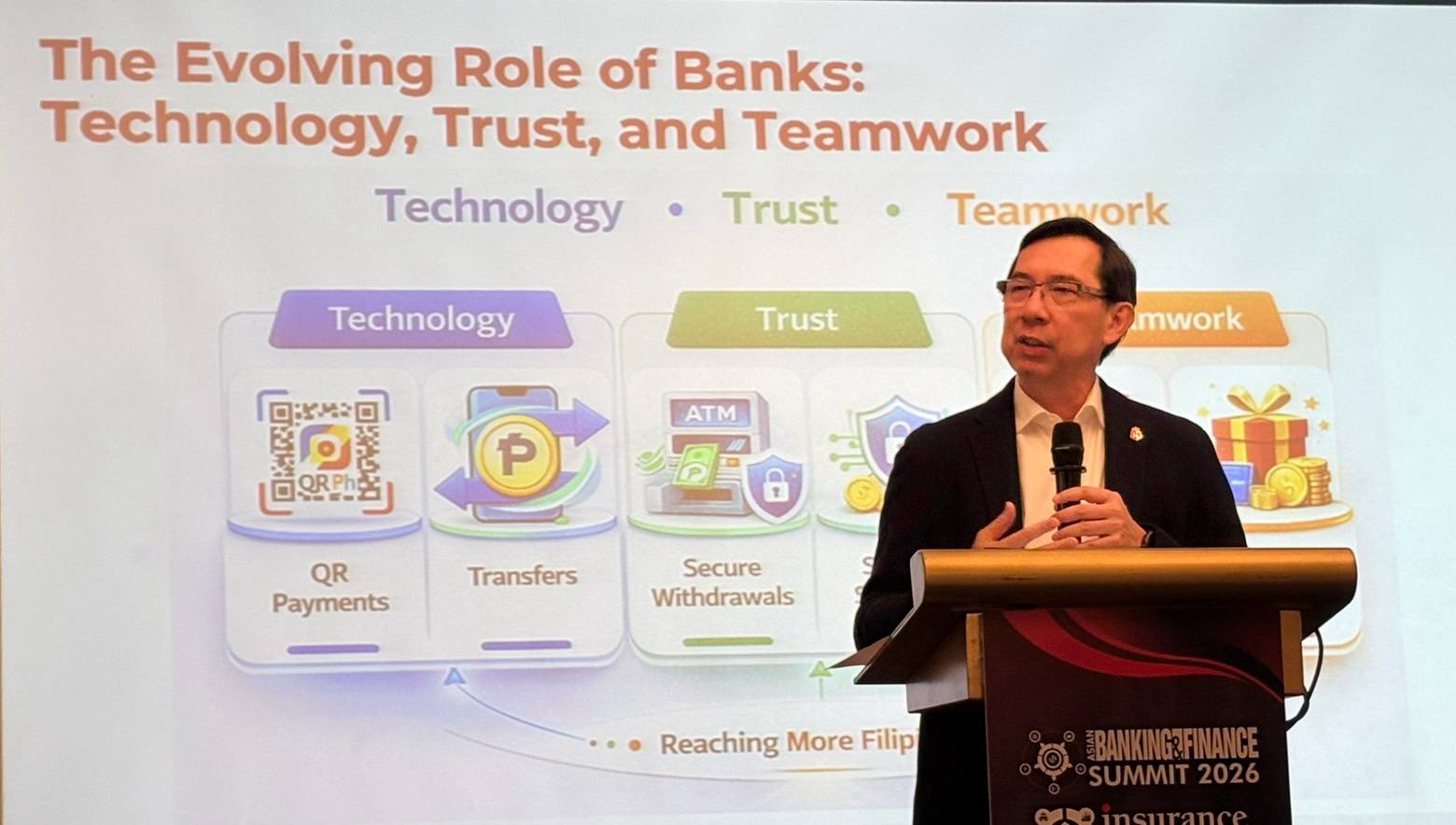
The Bank of the Philippine Islands (BPI) said financial inclusion in the Philippines should move beyond simply opening bank accounts and focus on helping Filipinos actively use financial services in their daily lives.
Speaking at the Asian Banking and Finance and Insurance Asia Summit, BPI President and CEO Jose Teodoro Limcaoco said more Filipinos now have access to formal financial services such as banks, e-wallets, and digital platforms. Data from the Bangko Sentral ng Pilipinas (BSP) showed that 56% of Filipino adults had financial accounts in 2021, up from 29% in 2019, while digital payments made up 57.4% of retail transactions by 2024.
Despite these gains, Limcaoco said many Filipinos still struggle to use financial services regularly. He emphasized that true financial inclusion should mean active participation—such as making payments, transfers, and other transactions—not just account ownership.
BPI said improving inclusion will depend on three key factors: technology, trust, and collaboration.
The bank is expanding access through initiatives like “May BPI Dito,” which delivers services through thousands of partner stores nationwide, and its e-wallet app VYBE, which now has over 2.6 million users and supports digital payments and bill services.
However, BPI warned that growing digital use also increases cybersecurity risks. BSP data showed cyber losses among financial institutions reached P5.82 billion in 2024, while reports indicate 74% of Filipinos have experienced fraud attempts.
To address this, BPI is promoting cybersecurity awareness through programs like the CyberProtect Conference and partnerships with the Philippine National Police Anti-Cybercrime Group.
The bank also highlighted partnerships such as PalengQR-Ph, which encourages digital payments among small businesses and market vendors, and financial literacy efforts by the BPI Foundation, which have reached 3.3 million Filipinos.
BPI said strengthening financial education, building trust, and expanding digital tools will be key to making financial inclusion more meaningful across communities.