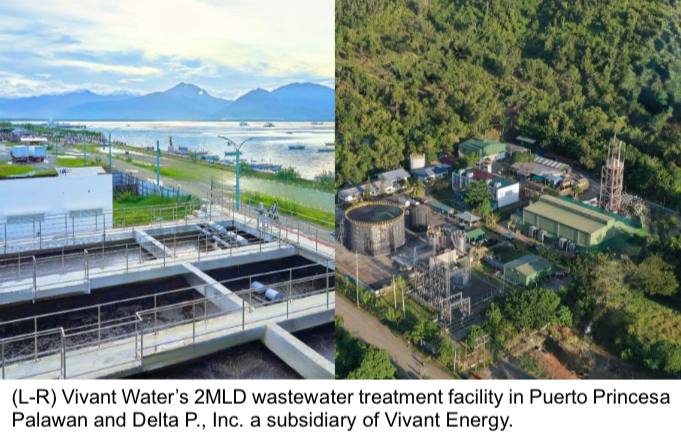
Vivant Corp. posted double-digit earnings growth last year on the back of strong power generation and early gains from its expanding water business, even as softer energy volumes and higher costs tempered momentum.
The company reported consolidated core net income (CCNI) of P2.7 billion, up 21 percent year on year. Net income attributable to equity holders also reached P2.7 billion, rising 15 percent despite non-core items, including gains from a share sale and losses tied to an unplanned plant outage.

Chief executive Arlo G. Sarmiento said results reflected the strength of Vivant’s diversified portfolio. “This was driven by the strong performance of our generation assets, particularly oil plants, alongside steady contributions from distribution, while our water business is beginning to unlock value,” he said.
Energy remained the dominant earnings driver, contributing P3.4 billion, led by power generation, which accounted for P2.5 billion. Distribution utilities added P1.1 billion, offsetting a P160 million loss in the retail electricity segment due to elevated power costs.
While total energy sales volumes declined 11 percent to 4,441 gigawatt-hours, earnings were supported by higher Reserve Market revenues, which more than doubled to P2.5 billion as market activity normalized from a low base in 2024.
Vivant is also gradually diversifying into renewables and water. A 40 percent stake in a 49.2-megawatt solar facility in Bataan added incremental income, while its water segment swung to a P218 million profit, reversing a prior-year loss, as concession-based revenues began to flow.
Revenues rose 2 percent to P12.4 billion, while operating expenses climbed 10 percent to P1.8 billion due to higher headcount and depreciation from recent capital spending.
The company is positioning for growth amid rising uncertainty. Sarmiento said Vivant will focus on expanding its retail energy footprint, scaling renewable capacity, strengthening off-grid operations, and building out water infrastructure.
The strategy reflects a broader pivot toward more stable, utility-like income streams as volatility in fuel prices and global markets continues to reshape the energy sector.