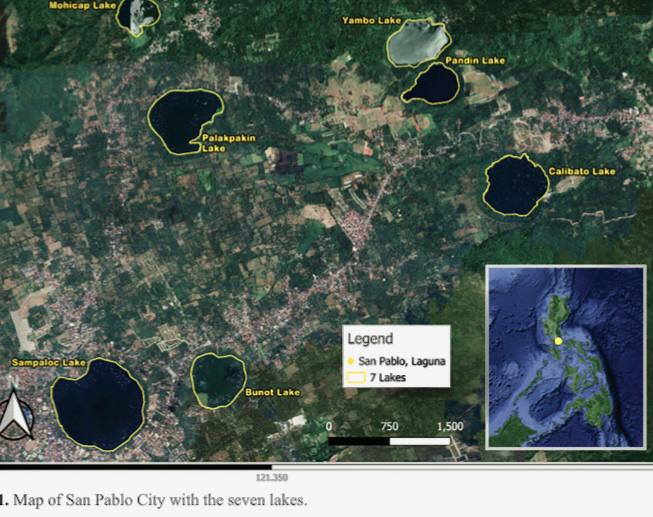
Meet the cousins of San Pablo City’s famous seven lakes: Palakpakin, the industrious fish-farming cousin, and Pandin, the quiet, tourist-loving one.
Though they live in the same neighborhood, their lifestyles couldn’t be more different. And yet they share a common problem.
A study conducted from June to November 2023, recently published in the Philippine Journal of Science, shows that while Palakpakin keeps busy feeding fish and hustling with aquaculture, it’s also gathering extra “nutrients” from nearby homes and farms.
Pandin, meanwhile, prefers a slower pace, hosting visitors who kayak, swim, and snap selfies in clear waters. But despite its calm demeanor, Pandin isn’t immune to the trickle-down effects of human activity.
Researchers measured the lakes’ nitrate and phosphate levels. Palakpakin came out as the “high-energy cousin,” with higher nutrient levels and classified as “highly polluted.” Pandin, though more laid-back, still showed signs of moderate pollution.
Nitrates were within safe limits in both lakes, but phosphates—those sneaky algae boosters—often went overboard. Too much phosphate can trigger algal blooms that cloud water, harm fish, and even produce toxins.
The silver lining? Right now, neither cousin poses serious health risks for swimmers or visitors. But experts warn that if Palakpakin keeps overindulging in nutrients, Pandin might soon feel the consequences. After all, family troubles tend to ripple across the dinner table, or in this case, the water.
The study highlights the delicate balance between work and play. Palakpakin’s industrious ways keep locals fed, but they also stress the lake’s ecosystem. Pandin shows the benefits of moderation and careful management; but even it needs vigilance.
Solutions are straightforward. Authorities should limit fish-cage crowding, reduce runoff from homes and farms, plant buffer zones, and keep an eye on water quality. Local communities can play a part too, through clean-ups, awareness campaigns, and responsible tourism.
In the end, Palakpakin and Pandin remind us that even relatives with different lifestyles share more than just a family tree, they share a future. How well we manage these lakes today will decide whether these cousins—and may other lakes across the country—could keep thriving, or end up fighting over algal blooms tomorrow.