Metro Manila’s real estate future may depend less on skyline ambition and more on a simpler question of how easily people can get to work.
That is the central conclusion of a new report by Colliers, which argues that transit-oriented developments are no longer a planning ideal but an economic imperative as congestion, rising fuel costs, and hybrid work reshape business decisions.
Workers in the capital lose as much as 188 hours a year to traffic, according to the TomTom Traffic Index 2025, and spend two to three hours each day commuting.
These inefficiencies translate into billions of pesos in lost productivity and higher logistics costs, reinforcing the urgency of building more connected and efficient urban systems.
Against this backdrop, accessibility has overtaken cost as the decisive factor in office location. In 2025, 62 percent of leasing transactions were in buildings located within one kilometer of transport hubs, highlighting how proximity has become essential rather than optional.
Companies are increasingly clustering near existing and future rail lines, bus terminals, and intermodal hubs in a bid to improve workforce reliability and attendance.
The persistence of office work reinforces this shift. While 67 percent of firms have adopted hybrid arrangements, 82 percent still require employees to report onsite on designated days.
The result is a quiet but decisive reality. If the commute is too long, too costly, or too unpredictable, employees are less inclined to return, undermining even the most flexible workplace policies.
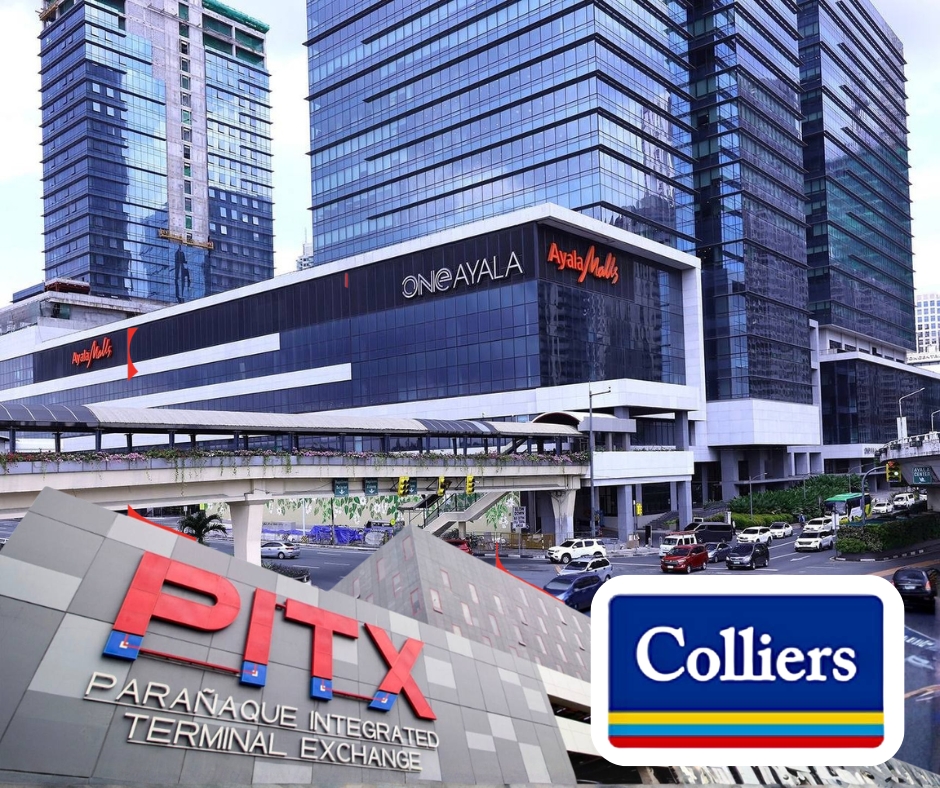
Colliers cited developments such as One Ayala and Parañaque Integrated Terminal Exchange as examples of how integrating transport, offices, and retail can drive occupancy and sustain foot traffic while creating more resilient mixed-use ecosystems.
The firm cautioned, however, that the promise of transit-oriented development rests on execution. Advancing projects like the Unified Grand Central Station and the Metro Manila Subway Project, strengthening public-private partnerships, and improving first- and last-mile connectivity will be critical to unlocking value.
With geopolitical tensions pushing energy costs higher, Colliers said the direction is clear. Cities must be designed around mobility, or risk creating spaces that remain out of reach for the people meant to use them.