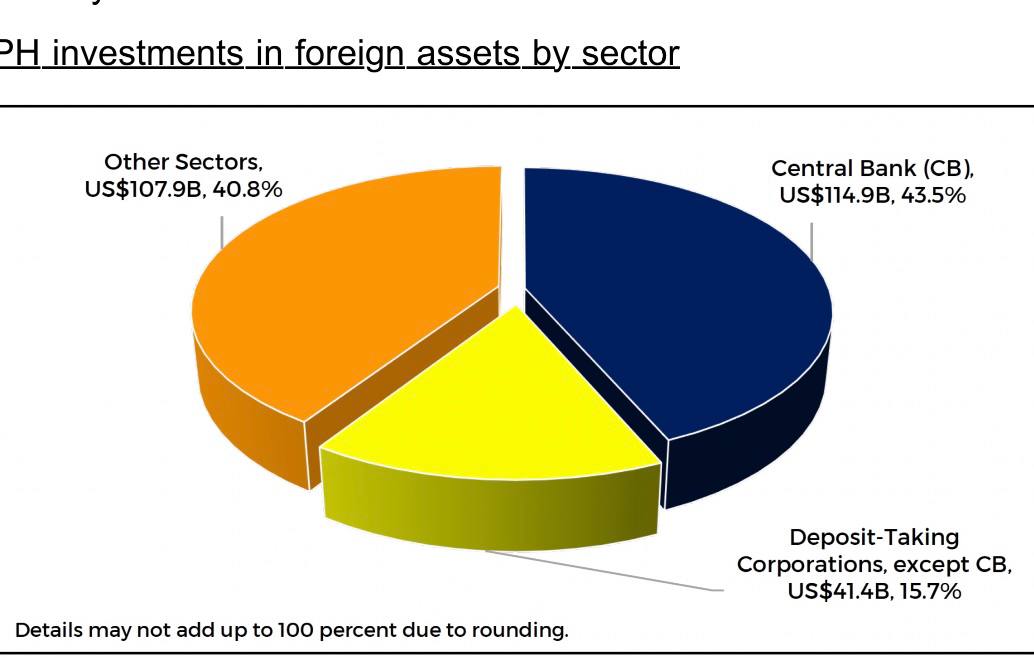
The country’s financial position with the rest of the world improved modestly at the end of 2025, as the country’s net external liability narrowed to US$50.8 billion, down from US$52.1 billion in the previous quarter.
This means the country still owes more to foreign entities than domestic entities own abroad, even though this gap narrowed. This improvement came as Filipino investments overseas grew faster, rising by 1.0 percent, compared with a 0.4 percent increase in foreign investments in Philippine assets.
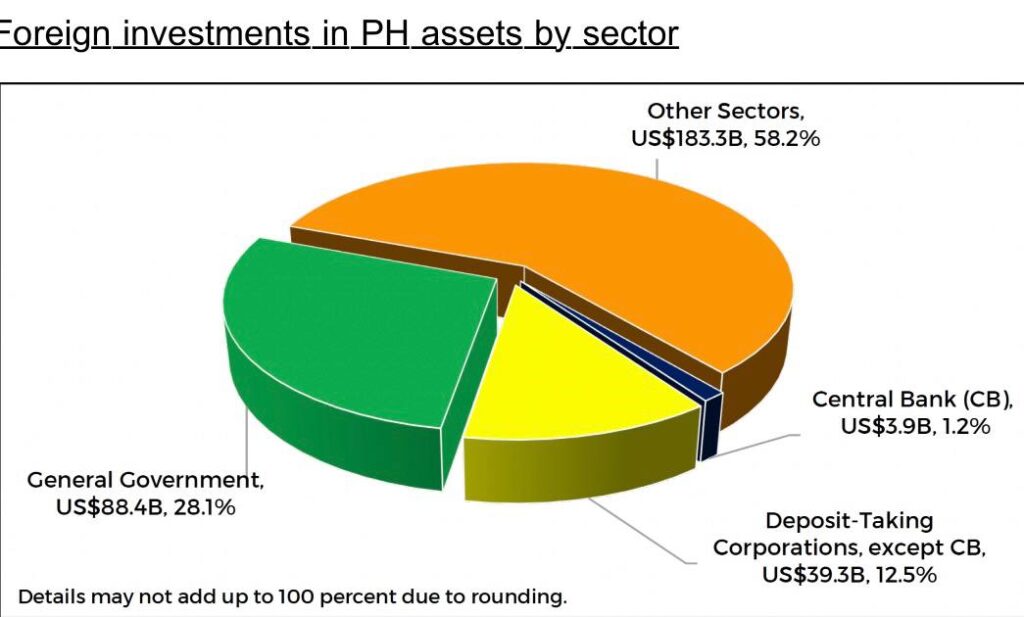
Measured against the size of the economy, the country’s net obligations also declined, from 10.8 percent to 10.4 percent of gross domestic product (GDP), pointing to slightly stronger financial footing.
The International Investment Position (IIP), which tracks what the country owns and owes globally, is a key gauge of economic resilience. A smaller net liability means the Philippines is less dependent on foreign funding, reducing its exposure to sudden capital outflows or global financial shocks. The faster expansion of overseas assets also suggests that Filipino investors and institutions may be earning more from abroad, providing an additional cushion for the economy.
For ordinary Filipinos, the impact is indirect but important. A healthier external position can help stabilize the peso, which in turn supports more stable prices for imported goods such as fuel and food. It also strengthens the country’s ability to weather global uncertainties, reducing the risk of sharp economic disruptions that could affect jobs and incomes.
Overall, the latest figures signal gradual improvement rather than a major shift. The Philippines remains a net borrower from the rest of the world, but the narrowing gap reflects a small yet meaningful step toward greater economic stability and resilience.