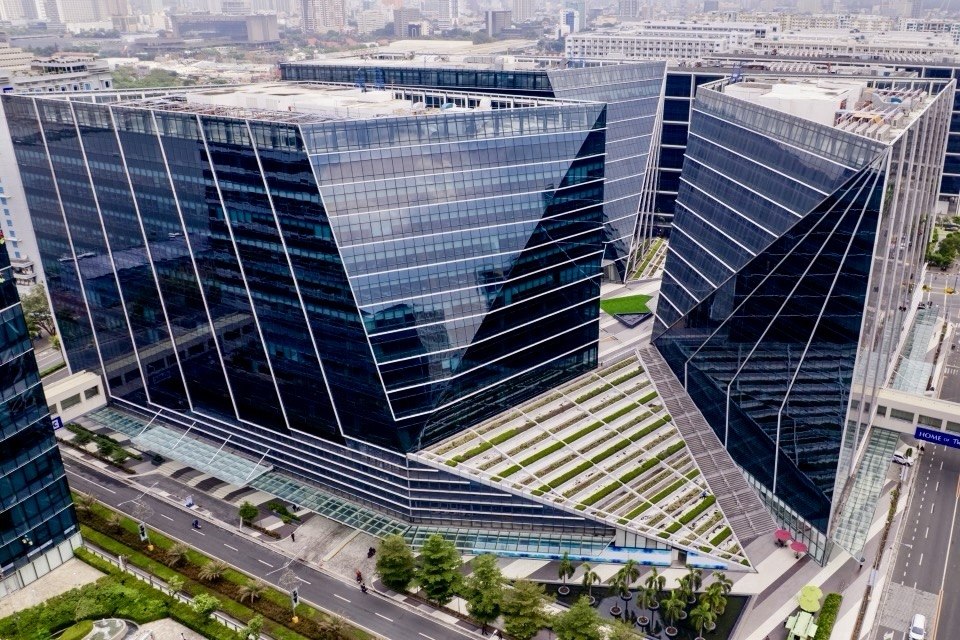
SM Prime Holdings Inc. is proving that in real estate, even water can deliver returns, if managed well enough.
Its commercial leasing arm, SM Offices, ramped up water-efficiency efforts in 2025, saving more than 185,000 cubic meters of water across its developments. That volume is not just a statistic, it is roughly equivalent to supplying 775 urban households for an entire year.
The bulk of the savings came from recycled water systems embedded within office buildings, particularly through on-site sewage treatment plants. Instead of going to waste, treated water is reused for flushing toilets, irrigating landscaped areas, and even supporting cooling systems—turning what was once discarded into a recurring operational asset.
“Water efficiency is becoming increasingly important in modern office developments as more companies prioritize sustainability,” said Alexis Ortiga, vice president and head of SM Offices. “Using water responsibly helps reduce environmental impact, lower operating costs, and ensure our buildings remain resilient as water resources become more constrained.”
The numbers reveal a deliberate strategy. Stand-alone office buildings reused over 57,000 cubic meters of water, while mall-integrated offices accounted for nearly 129,000 cubic meters—suggesting that scale and integration are key advantages in maximizing resource efficiency.
Beyond recycling, SM Offices is tightening consumption at the margins. Low-flow and sensor-based fixtures, leak detection systems, and optimized irrigation schedules are quietly trimming waste. In some developments, treated water is even fed into cooling towers, reducing reliance on fresh water in energy-intensive air-conditioning systems.
The sustainability push also extends to tenants. Building guidelines encourage water-efficient fittings, while usage data and conservation reminders nudge occupants toward more responsible habits.
The broader implication is clear. As water risks become more pronounced in urban centers, efficiency is no longer just an environmental checkbox—it is a cost and resilience strategy.
SM Offices appears to be leaning into that reality, making the case that in the future of office spaces, sustainability is not just about saving resources. It is about managing them smarter.