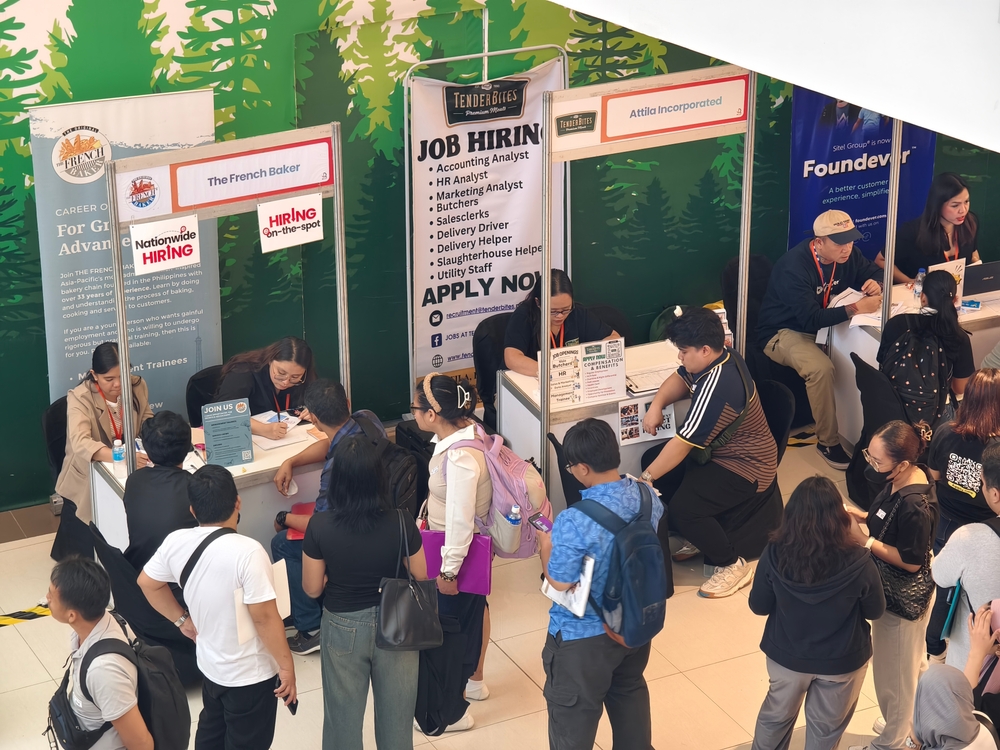
The Philippines’ job market showed tentative improvement in February, with the unemployment rate easing to 5.1 percent from 5.8 percent in January, according to data released Wednesday by the Philippine Statistics Authority.
The figure, however, remained higher than the 3.8 percent recorded a year earlier, pointing to lingering labor market slack.
In absolute terms, the number of unemployed Filipinos declined to 2.66 million from 2.96 million in the previous month, suggesting some recovery in hiring after a soft start to the year. Still, this was significantly above the 1.94 million jobless recorded in February 2025.
It is unclear if this recovery in the jobs market will persist in March, when the impact of the February 28 US-Israel air strike on Iran is fully felt through higher petroleum products and transport costs.
Employment levels improved on a monthly basis, with the number of employed Filipinos rising to 49.43 million from 47.94 million in January. This pushed the employment rate to 94.9 percent, higher than 94.2 percent a month earlier, though still below the 96.2 percent posted a year ago.
Labor force participation also picked up to 63.8 percent from 62.3 percent in January, translating to 52.09 million Filipinos either working or seeking jobs. While this signals increased economic activity, it remained slightly below last year’s 64.5 percent, indicating that some workers have yet to fully return to the labor market.
The services sector continued to dominate employment, accounting for 63.5 percent of total jobs, followed by agriculture at 18.8 percent and industry at 17.7 percent. Gains were seen in administrative support, transport, and hospitality, reflecting steady demand in consumer-driven sectors.
However, underemployment—a measure of job quality—remained elevated at 11.8 percent, equivalent to 5.84 million workers seeking additional hours or better-paying jobs. While improved from January’s 13.2 percent, it was higher than 10.1 percent a year earlier, underscoring persistent vulnerabilities.
The mixed data reflects a labor market that is recovering unevenly. While hiring has picked up, the quality and stability of jobs remain a concern, particularly as workers navigate rising living costs and shifting demand across sectors.