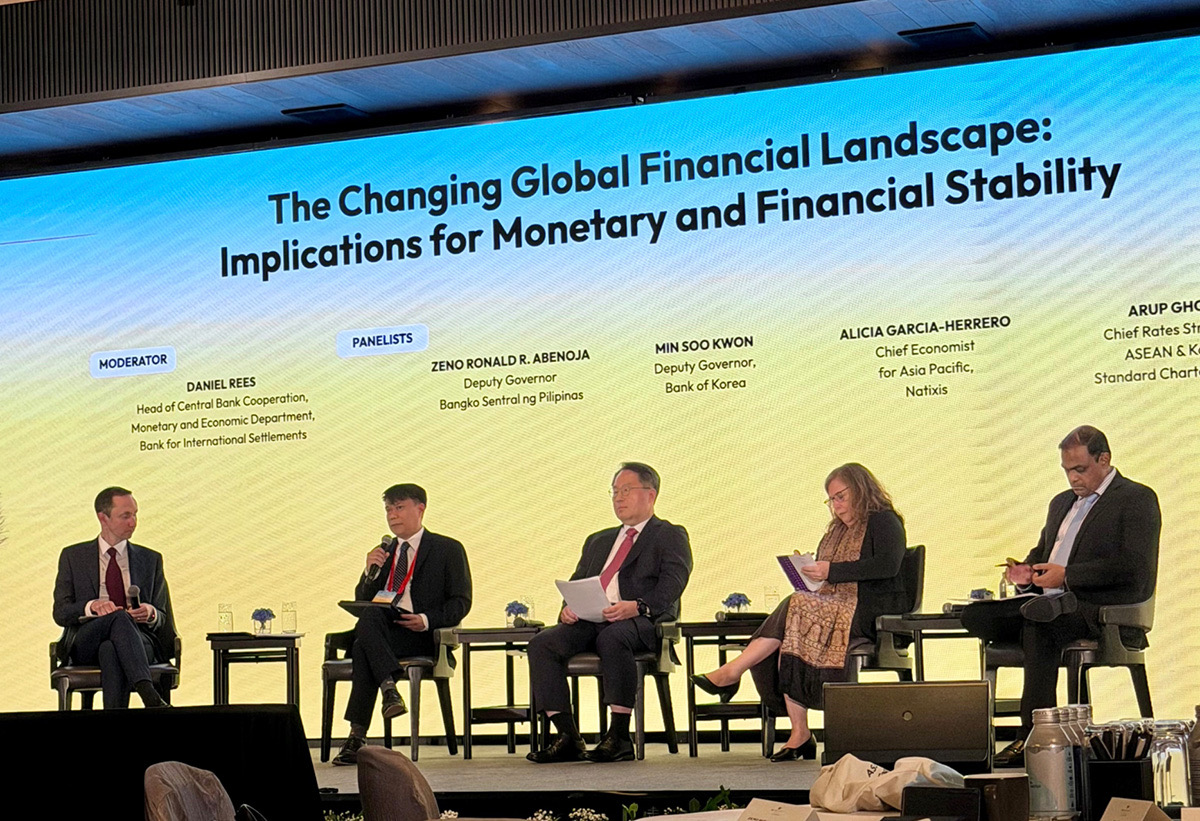
The Bangko Sentral ng Pilipinas (BSP) is stepping up efforts to deepen the money market, expand capital market development, and improve cross-border payments to support economic growth and financial stability, BSP deputy governor Zeno Ronald R. Abenoja said at the 4th ASEAN+3 Economic Cooperation and Financial Stability Forum held in November in Hong Kong.
Abenoja said the BSP is working to deepen the money market and adopt more market-oriented operations to boost liquidity and improve how monetary policy affects the real economy. Stronger money and capital markets will help the Philippines integrate more closely with regional and global financial systems, support investment, and strengthen the financial sector amid global uncertainty and rapid digital change.
On cross-border payments, Abenoja highlighted the use of tokenization and stablecoin technology to make retail payments and remittances faster, cheaper, and more accessible. These innovations could lower transaction costs for businesses and overseas Filipinos, improve financial inclusion, and support trade and economic activity.
The forum, themed “From Fragmentation to Resilience: Macro-financial Stability and Regional Integration in ASEAN+3,” gathered policymakers, financial experts, and academics to discuss regional financial stability and cooperation. It was co-organized by the ASEAN+3 Macroeconomic Research Office (AMRO), the Bank for International Settlements, and the Hong Kong Monetary Authority.
Abenoja also represented the BSP at the ASEAN+3 Finance and Central Bank Deputies’ Meeting from 26 to 27 November 2025. The Philippines will co-chair the ASEAN+3 Finance Process with Japan in 2026.