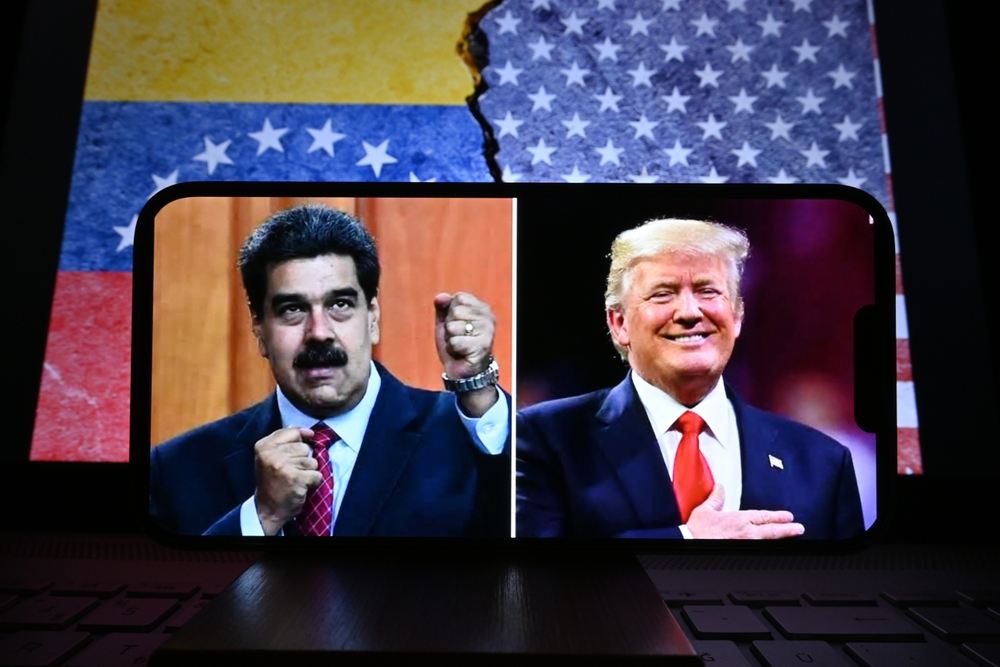
Global markets are bracing for turbulence after the US weekend strike in Venezuela, which resulted in the capture of President Nicolas Maduro and signals a temporary US administration of the country. Analysts warn the move could ripple across energy markets, with implications for the Philippine economy.
“The main risk is oil price volatility. Rising crude costs could drive up inflation, widen the trade deficit, and create turbulence in local financial markets,” said Michael Ricafort., economist at Rizal Commercial Banking Corp.
Venezuela produces about 800,000 barrels per day—less than 1 percent of global supply—but holds some of the world’s largest reserves, making even minor disruptions a global concern.
“With the US invasion of Venezuela, expect oil prices to spike—and that means higher fuel, transport, and food costs for Filipinos. Inflation could rise by half to one percentage point,” said Jonathan Ravelas, managing director of eManagement for Business and Marketing Services.
“Beyond that, the peso may weaken, remittances could be at risk, and global market jitters might hit exports and investments. The smart move now? Build fuel buffers, fast-track renewables, and prepare targeted subsidies. Businesses should lock in energy contracts and hedge currency exposure early,” Ravelas added.
Markets are watching whether US reconstruction plans for Venezuela’s oil sector attract billions in investment.
“If supply improves long-term, it may offset initial price shocks,” Ricafort noted, emphasizing that immediate effects are likely to be inflationary.
The geopolitical dimension adds further uncertainty. China, Venezuela’s largest oil buyer and creditor, condemned the U.S. action, while Russia and Iran are closely monitoring developments. Analysts say how these powers respond could determine whether tensions escalate or stabilize in coming days.
For the Philippines, a spike in global oil prices could push domestic fuel and transport costs higher, pressuring households and businesses. Currency and stock market volatility may also rise if global risk sentiment worsens. Investors are advised to monitor oil futures, the peso’s exchange rate, and Philippine equities closely as trading resumes on Monday.
Ricafort summed up the delicate outlook: “Markets face a classic wait-and-see scenario. The next week will reveal whether this is a short-term shock or the start of prolonged instability.”
Astro del Castillo, managing director at First Grade Finance Inc., expects a more subdued reaction from the local market, which has been on a slide for most of 2025. “The geopolitical shockwaves will be felt by most but will have limited impact in our local market. PSEi may hover around the same level given the lack of impetus,” he said.
With geopolitical flashpoints and global supply concerns intersecting, the Philippines may feel indirect but tangible economic effects, underscoring how international events can quickly translate into local financial pressures.