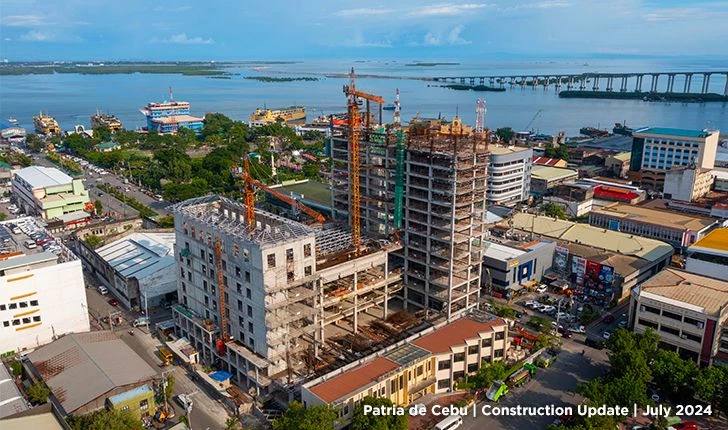
Cebu Landmasters Inc. (CLI), the leading property developer in the Visayas and Mindanao, has officially opened the newly redeveloped Patria de Cebu, a mixed-use complex that blends heritage preservation with modern commercial use in downtown Cebu City.
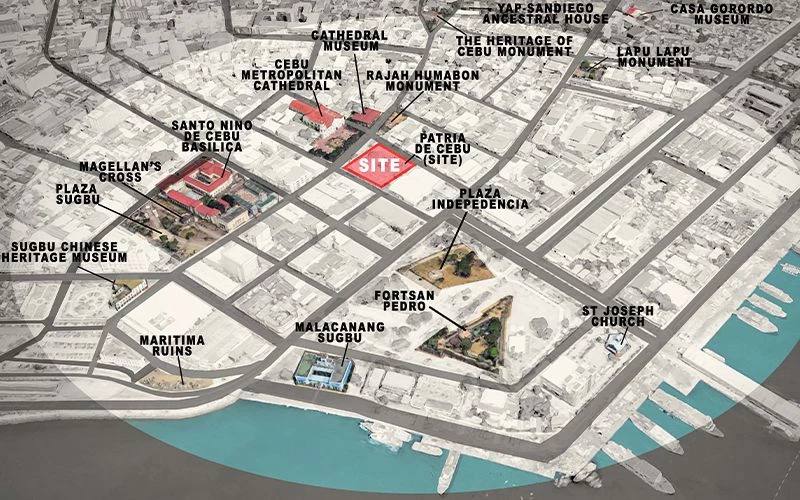
Developed in partnership with the Archdiocese of Cebu, Patria de Cebu sits along P. Burgos Street at the heart of the city’s heritage trail. The project spans a combined gross floor area of 21,000 square meters and integrates retail, office, and hotel components—strengthening CLI’s push into high-traffic, urban redevelopment projects.
Rather than replacing the old structure, CLI retained Patria’s original framework and infused it with Filipino-Spanish architectural elements, preserving its historical and cultural significance. The revitalized complex features an open-air façade and a central courtyard inspired by European public squares, positioned directly across the Cebu Metropolitan Cathedral.
“Patria de Cebu is our way of honoring Cebu’s rich heritage and the unwavering faith of Cebuanos,” said CLI Chairman and CEO Jose Soberano III. “We designed it to preserve its legacy while bringing renewed economic and social life to the community.”
A key anchor of the project is Mercure Cebu Downtown, the company’s first international hotel in Cebu’s downtown district. Operated by French hospitality group Accor, the hotel will add 182 rooms to CLI’s portfolio and is slated to open by end-2026, reinforcing the area’s appeal to tourists and business travelers.
Retail spaces totaling 4,320 square meters are now open, timed ahead of the Sinulog festivities. Tenants include Metro Supermarket, Bo’s Coffee, Goldilocks, Orange Brutus, CNT Lechon, and wellness brands such as TUF and The Beauty Studio. Office spaces covering 4,400 square meters are set to open later this year.
Patria de Cebu, which won Best Mega Mixed-Use Development at the 2021 PropertyGuru Philippines Property Awards, highlights the strategy of Cebu Landmaster of pairing heritage conservation with commercially viable urban growth—an approach increasingly relevant as cities look to revive aging districts without erasing their identity.