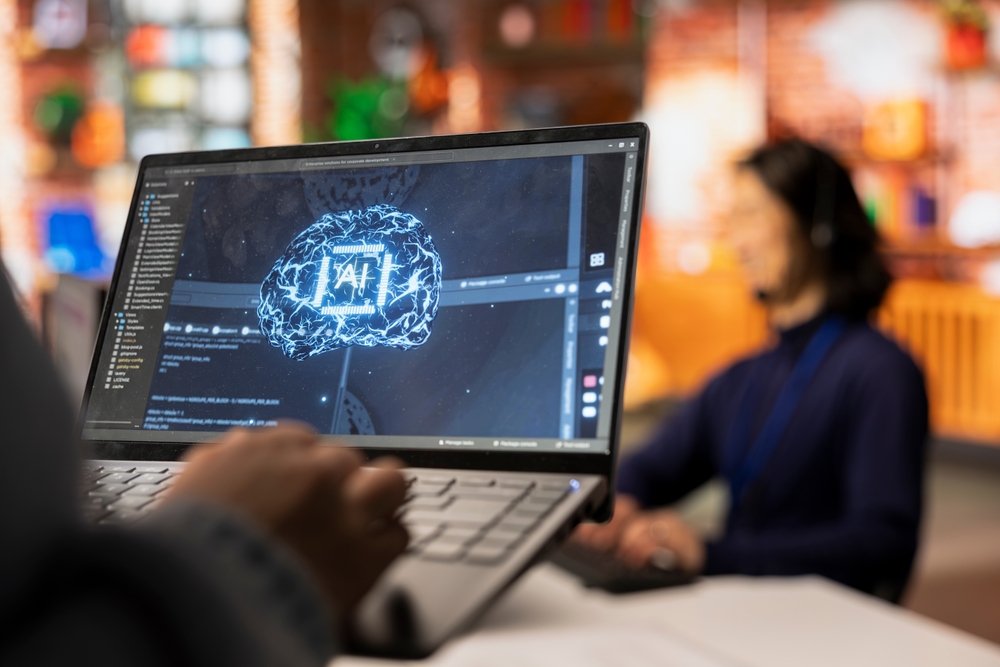
Artificial intelligence (AI) is here and is already transforming how businesses in the Philippines operate. Across industries such as manufacturing, finance, marketing, and education, AI is enhancing efficiency, enabling smarter decision-making, and unlocking insights from data like never before.
What we are witnessing today is not a minor technology upgrade. The rapid spread of AI—and the productivity gains that come with it—is forcing both business and government to rethink how they manage operations, deliver services, and make decisions.
This was evident in a recent discussion between the Philippine Chamber of Commerce and Industry (PCCI) and AI4PH, a network of AI policy experts and industry leaders. The focus was not on whether AI will affect the Philippine economy, but on how it can be used to strengthen competitiveness while ensuring that Filipino workers remain globally relevant.
One thing stood out: AI is no longer confined to manufacturing or back-office automation. It is now driving innovation across the entire economy—from customer service and creative industries to education and research and development. Companies are adopting AI because it delivers deeper, faster, and more actionable data, leading to better decisions and results.
Used well, AI allows people to do more—and do it better and more efficiently. But this transition will not manage itself. If AI is to lift the economy rather than widen inequality, investment in people must be pursued as seriously as investment in technology. Filipino workers need more than basic digital skills; they must learn how to work alongside AI tools to improve productivity, quality, and competitiveness.
This is where government, schools, and the private sector must work together. Government could consider recognizing AI-related work as an apprenticeable occupation under the Enterprise-Based Education and Training (EBET) framework. This would allow companies to train young Filipinos in real workplace settings at lower cost, while building a much-needed talent pipeline.
Society’s mindset must also go beyond skills. If we want the Philippines to be more than just a user of AI, we must compete in the infrastructure that makes AI possible—data centers, cloud services, and advanced computing. Without these, Filipinos will remain dependent on technology developed elsewhere.
As PCCI continues to engage government on AI policy, our position is clear: AI should be a tool for growth, not fear. With smart regulation, sustained investment in skills, and the right business environment, AI can help Philippine companies become more productive, more competitive, and better prepared for a rapidly changing global economy.
About the Author

Mr. Ferdinand A. Ferrer is the newly elected president of the Philippine Chamber of Commerce and Industry (PCCI). He is chairman and CEO of the EMS Group, which is engaged in electronics assembly, engineering services, contract manufacturing, and skills development, with four locations in the Philippines and a presence in five countries. He is a graduate of De La Salle University with a Bachelor of Science in Marketing Management.