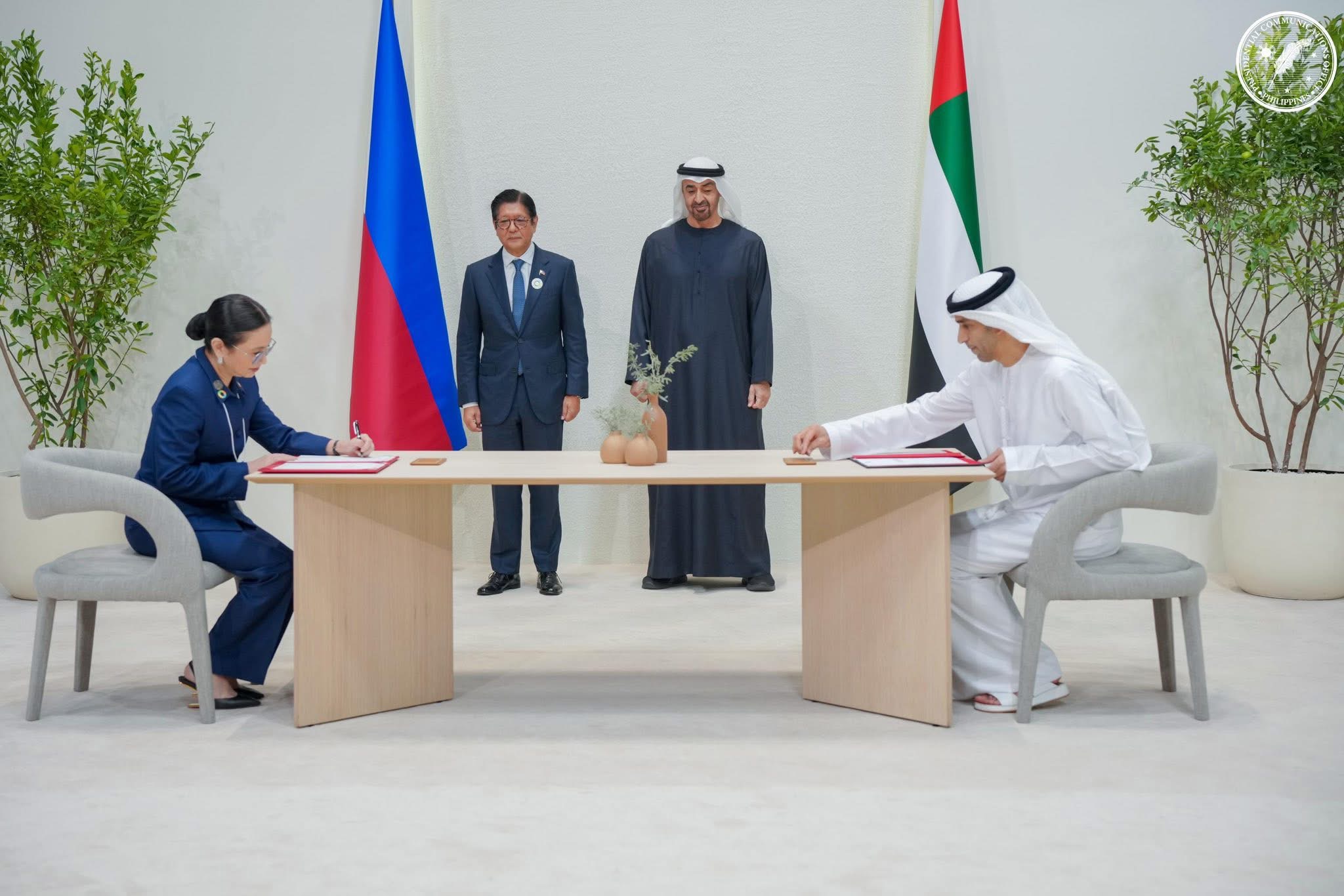
Business groups welcomed the signing of the Philippines–United Arab Emirates Comprehensive Economic Partnership Agreement (CEPA), calling it a strategic milestone that broadens trade reach, strengthens investment flows, and opens new pathways for exporters and small businesses.
The Philippine Chamber of Commerce and Industry (PCCI) said the deal deepens economic ties with one of the Middle East’s most important commercial hubs, giving Filipino exporters, investors, and micro, small, and medium enterprises improved access to a high-income, globally connected market.
“The UAE serves not only as a major destination for Philippine exports but also as a gateway linking Asia, the Middle East, Africa, and Europe,” PCCI President Perry Ferrer said, adding that CEPA provides a sturdier platform for local firms to scale across the wider region.
The chamber said the pact diversifies trade partnerships and reduces reliance on traditional markets by tapping the UAE’s logistics strength and re-export networks.
PCCI flagged opportunities in food and agriculture, manufacturing, construction materials, and digital and professional services, alongside improved conditions for Filipino providers in ICT-BPO, healthcare, and tourism. It also underscored MSME-focused provisions that lower barriers to exporting, enable services trade, and encourage partnerships with UAE companies.
On investments, the group pointed to frameworks that could attract more UAE capital into manufacturing, infrastructure, digital trade, and energy.
Separately, the Philippine Exporters Confederation, Inc. said the CEPA would lift export competitiveness, describing the UAE as a strategic global hub.
With nearly USD390 million in shipments last year and momentum heading into 2025, PHILEXPORT expects deeper market access, lower tariffs, and more inclusive growth, particularly for MSMEs seeking to scale internationally. Officials said implementation speed will determine gains for exporters and investors.