
The Bureau of Internal Revenue (BIR) on January 23 launched a sweeping reform agenda that puts audit reform and accountability at the center of tax administration, as the agency prepares to resume tax audits under stricter rules, clearer safeguards, and stronger oversight.
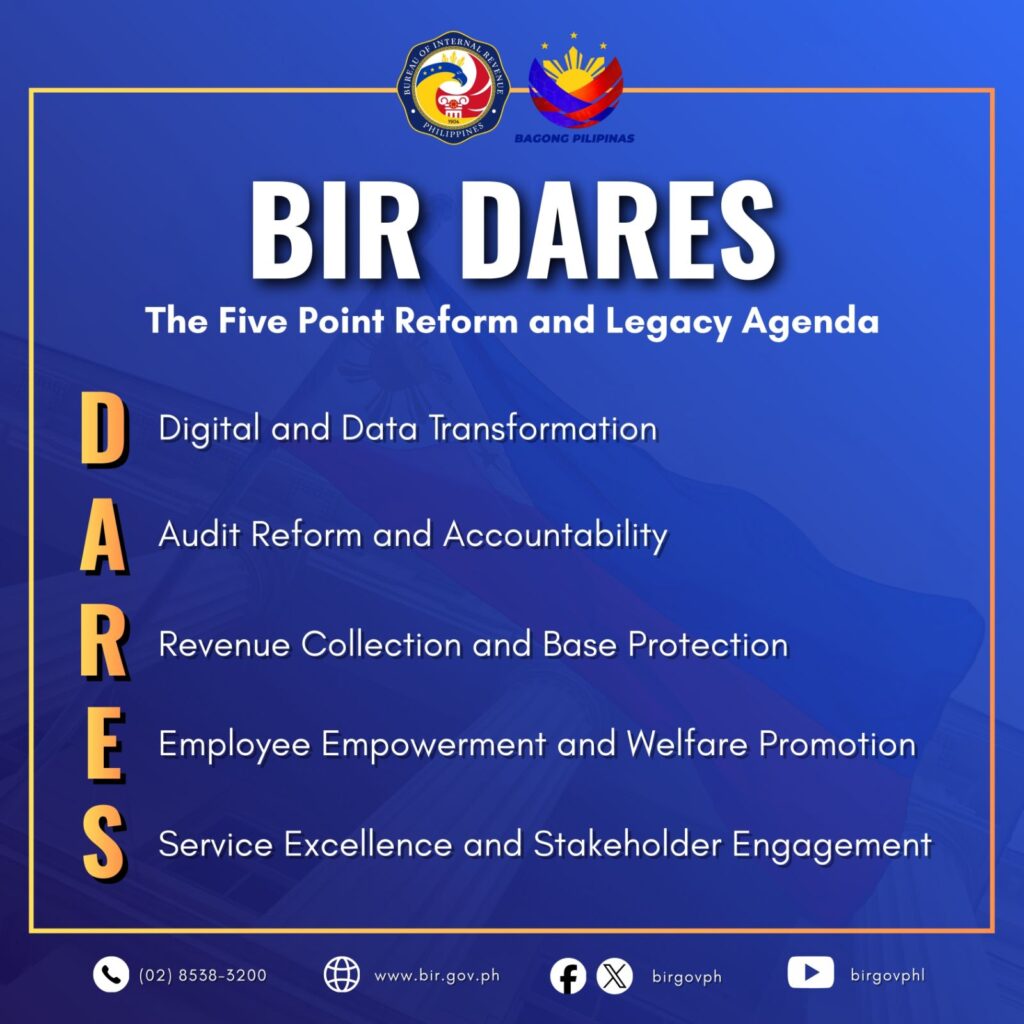
Called BIR D.A.R.E.S., the five-point program covers Digital and Data Transformation; Audit Reform and Accountability; Revenue Collection and Base Protection; Employee Empowerment and Welfare Promotion; and Service Excellence and Stakeholder Engagement. The reforms were formally rolled out during the BIR Directors’ Conference, attended by regional directors from Luzon and officials of the Large Taxpayers Service.
BIR Commissioner Charlito Martin R. Mendoza said the agenda aligns with President Ferdinand Marcos Jr.’s directive to keep revenue collection focused on nation-building while fixing long-standing weaknesses in tax administration.
“These are not abstract priorities,” Mendoza said. “These are real issues on the ground, and these are the reforms we are choosing to confront.”
Audit reform was identified as the most urgent pillar. Mendoza noted that the BIR suspended the issuance of Letters of Authority (LOAs) in late November following concerns from the private sector on audit practices. The pause allowed the agency to review its systems and address gaps that could undermine fairness and public trust.
To support this, the BIR created a Technical Working Group on Assessment Integrity and Audit Reform, now finalizing new policies ahead of the resumption of audits.
Among the immediate changes are a public LOA verifier accessible through the BIR chatbot REVIE, a single consolidated LOA per taxpayer per year, and the removal of overlapping audit units and task forces. The agency will also revive the “revalida” or audit-the-auditors system to tighten internal accountability.
The launch coincided with Finance Secretary Frederick D. Go’s briefing on broader economic reforms aimed at easing compliance and improving the business climate. Mendoza said further digitalization, risk-based enforcement in sectors like tobacco, fuel, and vape, and stronger employee welfare programs will support sustained revenue growth and better taxpayer service.