The Department of Energy (DOE) is pushing a major acceleration of the country’s net-metering program by enforcing strict, time-bound permit processing across local governments—an overhaul the agency said will significantly speed up solar installations for households and businesses.
Under a new joint memorandum circular, the DOE, together with the Department of the Interior and Local Government and the Department of Public Works and Highways, has ordered local government units (LGUs) nationwide to adopt standardized application forms and comply with fixed turnaround times for key permits.
LGUs are now required to issue electrical permits within three working days and Certificates of Final Electrical Inspection within seven working days upon submission of complete requirements. Failure to act within these periods will result in applications being automatically “deemed approved,” allowing applicants to proceed with their net-metering projects based on proof of filing and payment.
The DOE said the move removes long-standing local bottlenecks that have slowed net-metering uptake and complements earlier Energy Regulatory Commission (ERC) directives that simplified requirements for distribution utilities. A DOE supplemental policy further expands consumer benefits and participation.
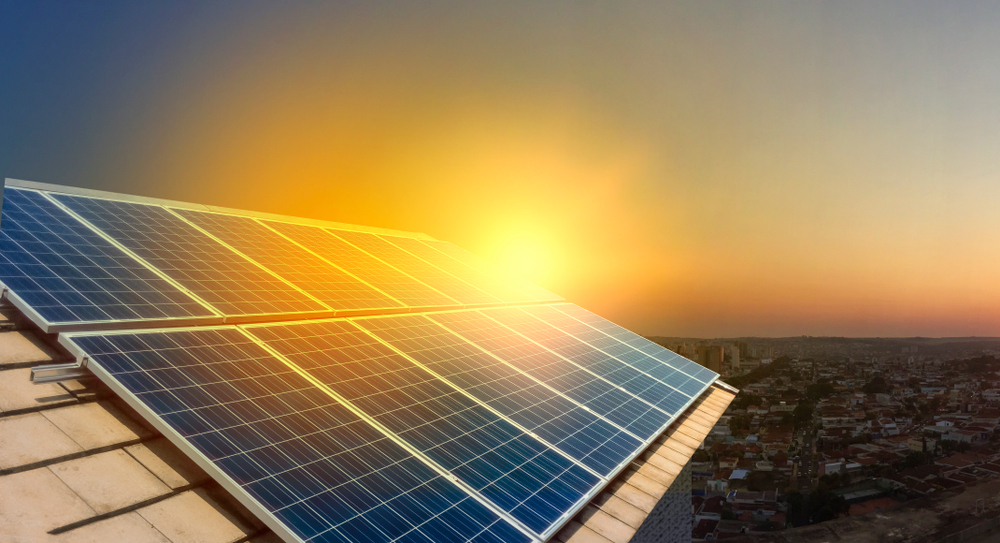
Net metering allows owners of solar power systems with capacities of up to 100 kilowatts peak (kWp) to export excess electricity to the grid in exchange for bill credits or rebates.
Energy Secretary Sharon Garin said the coordinated reforms directly answer the President’s call in his 2025 State of the Nation Address to intensify and expedite the net-metering program, describing the measures as decisive steps to make the system “faster, simpler, and more accessible” to Filipinos.
The DOE stressed that beyond lowering electricity bills, wider net-metering adoption strengthens distributed power generation, boosts grid resilience, and reduces dependence on imported fuels.
As of December 2025, the Luzon grid dominated net-metering participation with 17,141 qualified end-users, accounting for 73.43 percent of total installed capacity. The Visayas followed with 3,179 users (21.21 percent), while Mindanao recorded 904 users contributing 5.36 percent of capacity.