The humble dining table is facing an existential crisis.
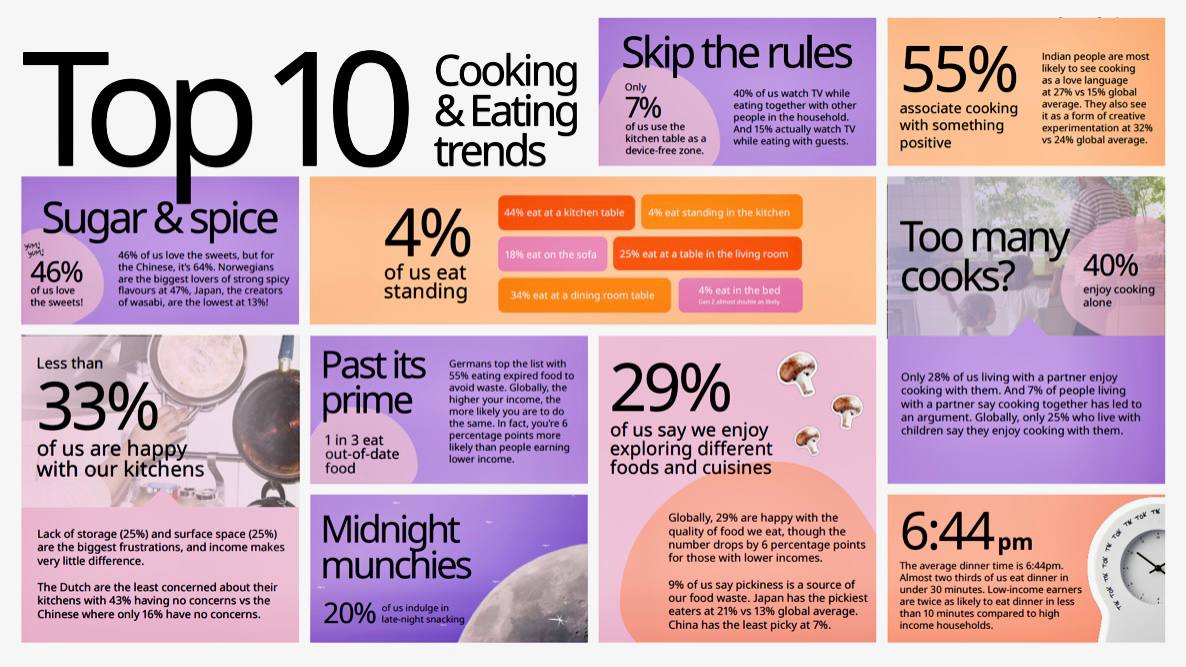
According to IKEA’s latest global Cooking and Eating Survey—one of the largest of its kind, spanning more than 31,000 respondents across 31 markets—just 44 percent of people now eat dinner at a kitchen table.
The rest? They’re improvising. Eighteen percent dine on the sofa, 4 percent eat in bed, and another 4 percent stand in the kitchen, presumably mid-scroll or mid-thought.
In the UK, the sofa has become the nation’s unofficial dining room: 48 percent eat there, compared with 31 percent at a kitchen table. Americans and Hungarians are twice as likely as the global average to eat in bed, turning mealtime into a fully horizontal affair.
It is a small domestic shift with outsized implications. Dinner, long considered one of humanity’s most reliable bonding rituals, is being squeezed by busy schedules, shrinking homes and glowing screens.
“Despite the emotional importance of food, shared meals are under pressure,” said Lorena Lourido Gomez, Global Food Manager at IKEA Retail (Ingka Group). “Busy schedules, compact living, and competing priorities make it harder for people to come together, not just at the same time, but in the same place.”
Time is the chief complaint. Thirty-eight percent of Gen Z and 33 percent of Millennials cite lack of time as a major barrier to cooking at home on weekdays. Most people finish dinner in under 30 minutes, and low-income households are twice as likely as higher-income ones to eat in under 10. For many, dinner is less a lingering ritual and more a pit stop.
Then there are the screens—modern dinner guests who never leave. Only 7 percent of households enforce device-free dining. Fifty-four percent watch TV when eating alone, and 40 percent do so even while sharing a meal with others at home. Multitasking is no longer the exception; it is the backdrop.
Meanwhile, the kitchen itself is feeling the strain. Only 32 percent say they are happy with their kitchen. A quarter cite lack of storage and insufficient surface space as key frustrations, and 24 percent say their kitchen is simply too small. Nearly half report at least one space-related concern, especially city dwellers, families with children and younger generations.
And yet, amid the comfortable chaos, the appetite for connection persists. Sixty percent say bonding over food matters to them. Dining tables, where they are used, double as celebration hubs (31 percent), spaces for togetherness (29 percent), and daily debrief stations (20 percent).
Dinner may have gone rogue—wandering from table to sofa to screen—but the longing to gather, however informally, remains firmly on the menu.