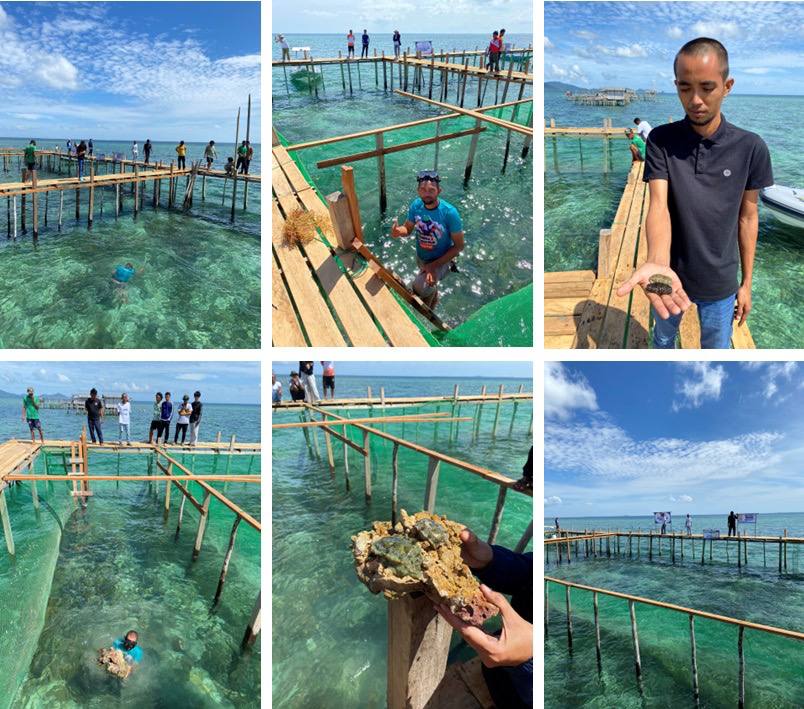
The Japan government and the Food and Agriculture Organization of the United Nations (FAO) have launched a two-year program to strengthen aquaculture and fisheries in the Bangsamoro Autonomous Region in Muslim Mindanao(BARMM), a region seen as one of the Philippines’ most promising areas for fish production.
Signed in 2025, the project—“Development of a Sustainable Fishery Value Chain in the Bangsamoro Autonomous Region in Muslim Mindanao (BARMM)”—aims to boost productivity, create jobs, and build long-term stability in coastal communities. It focuses on improving the entire fishery value chain, from hatchery development to market access, while promoting sustainable practices.
The initiative supports small-scale fishers by providing training, introducing high-value species such as sea cucumber and abalone, and encouraging value-adding activities to increase income. It also strengthens local knowledge and technical skills to make the sector more resilient to economic and environmental challenges.
On 10 February 2026, Japan’s First Secretary and Agriculture Attaché Akasaka Hidenori visited project sites in Tawi-Tawi province to monitor progress and meet with regional officials, local government units, and beneficiaries. He held talks with Panglima Sugala Mayor Nurbert Sahali and other officials, stressing the importance of close coordination between national, regional, and local partners to ensure lasting community benefits.
Akasaka visited Barangay Karaha in Panglima Sugala, where community fisherfolk groups are establishing hatcheries for sea cucumber, algae, and abalone under the project. He also inspected the rehabilitation of a freshwater hatchery in Bongao managed by the Ministry of Agriculture, Fisheries and Agrarian Reform, which is supported by the same program.
Officials said the hatcheries are central to building a sustainable aquaculture industry in BARMM. Beyond increasing fish production, the project is expected to strengthen food security, raise incomes, and support long-term peace and development in a region where economic growth is closely tied to political stability.