The Philippines and the United Kingdom are tightening economic ties, aligning policy dialogue with hard project pipelines to turn diplomatic goodwill into concrete deals.
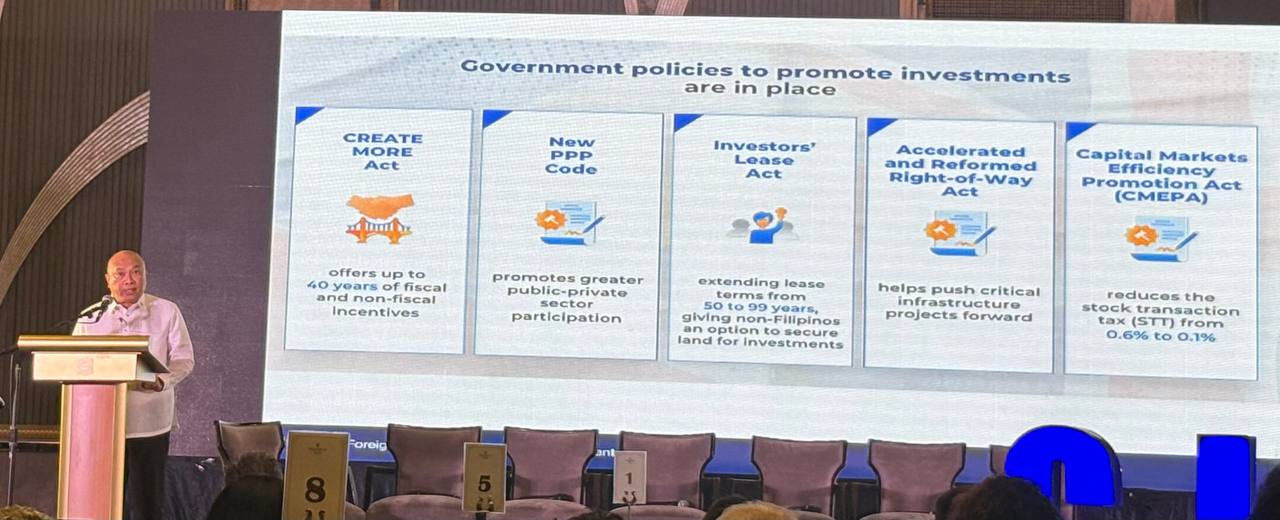
At the UK–Philippines Growth & Investment Partnerships relaunch in Taguig City on February 23, Department of Finance Undersecretary Joven Z. Balbosa said Manila and London are synchronizing initiatives under the Luzon Economic Corridor (LEC) and the Joint Economic and Trade Committee (JETCO) to fast-track priority investments.
The focus is the Subic–Clark–Manila–Batangas stretch of the Luzon Economic Corridor, a high-impact logistics and industrial artery. Balbosa said both governments are finalizing a government-to-government framework while identifying bankable projects through the JETCO Infrastructure Central Working Group.
“This disciplined, structured approach — aligning policy dialogue with project pipelines — ensures that cooperation translates into concrete, manageable investments,” he said.
Through the UK–Philippines Growth and Investment Partnerships Toolkit, Manila has tapped official development assistance to fund technical studies and project preparation, crowding in significantly larger pools of private capital. The strategy is simple: de-risk early, unlock big-ticket financing later.
The results are already visible. In 2024, the United Kingdom became the Philippines’ top source of foreign direct investment pledges at USD9.4 billion, underscoring investor confidence in macroeconomic stability and reform momentum.
British capital is flowing into sectors that sharpen competitiveness, particularly renewables and infrastructure. London-based Actis has committed USD600 million to develop Terra Solar, poised to be the country’s largest single-site solar power project.
With London signaling strong backing for the Luzon Economic Corridor, the UK is cementing its role as a strategic partner in Manila’s infrastructure buildout and clean energy transition — where policy alignment now meets investible scale.