Metro Manila is bracing for its biggest hotel supply surge in eight years, with nearly 2,900 new rooms set to debut in 2026, a sign of developer confidence even as international arrivals lag, according to Colliers Philippines.
The research firm says 2026 will deliver the largest hotel completion tally since 2018, with Makati’s central business district and the Bay Area accounting for more than two‑thirds of new supply.
This construction wave underscores continued appetite among Philippine developers to grow capacity, particularly through partnerships with global brands.
From 2026 through 2029, roughly half of the incoming properties are slated to fly foreign flags. Names such as Mandarin, Dusit, Canopy and Moxy are poised to broaden their local footprints as asset owners chase brand recognition and operational expertise.
“Philippine developers remain aggressive in partnering with foreign hospitality brands,” noted Colliers’ Director for Research Joey Roi Bondoc.
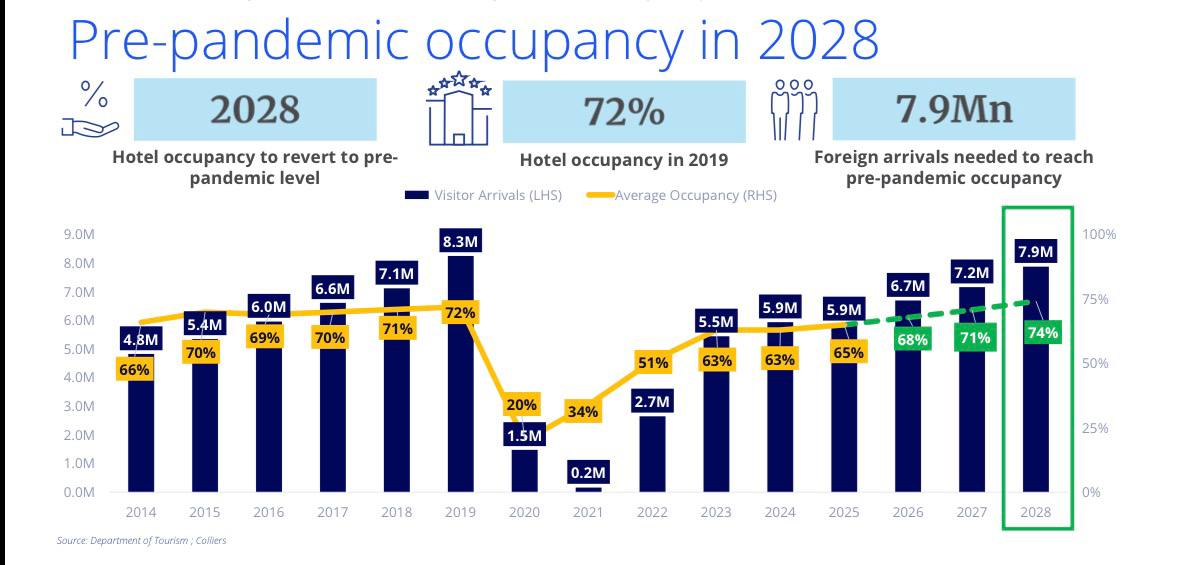
Yet the momentum comes against a challenging demand backdrop. Foreign visitor numbers in 2025 stayed below pre‑COVID levels, and the country has yet to regain its pre‑pandemic tourism highs, Colliers data show.
That shortfall has tempered the upside for room‑night demand from international guests.
Domestic travel and MICE (meetings, incentives, conferences and exhibitions) markets are filling part of the gap, driving occupancy in major hubs beyond the capital, including Cebu, Davao, Cagayan de Oro and Clark.
Colliers forecasts Metro Manila hotel occupancy around 60 percent in 2026, with average daily rates nudging up about 3 percent. Pre‑pandemic occupancy of around 74 percent may only come into view by 2028.
Bondoc urged developers to lean into asset‑light models, broaden MICE offerings and support reforms to grow inbound tourism.
“A conservative 10–12 percent rise in foreign visitors is likely,” he said, but only if the Philippines can sharpen its competitive edge.