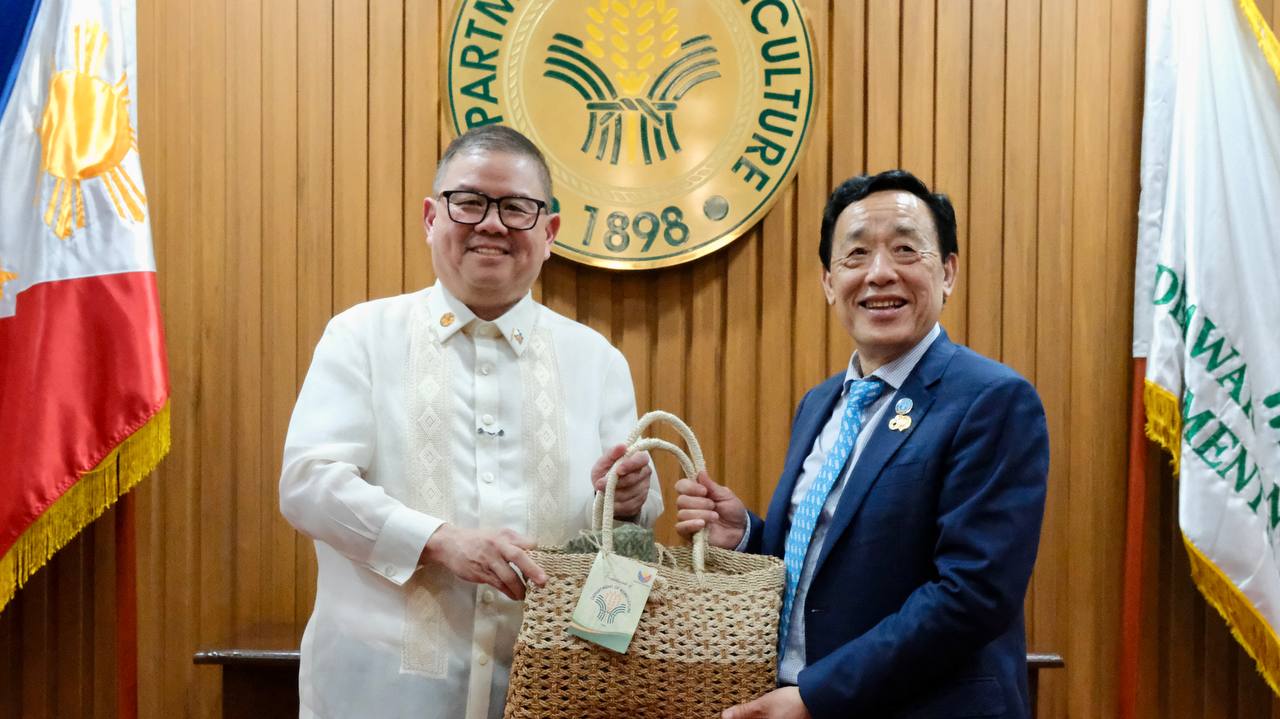
The Philippines is seeking closer cooperation with the Food and Agriculture Organization of the United Nations (FAO) following the first official visit of its Director-General, Qu Dongyu, to the Department of Agriculture (DA).
Agriculture Secretary Francisco P. Tiu Laurel Jr. said the visit highlights the countries’ 48-year partnership aimed at improving food systems, increasing farmers’ incomes, and strengthening food security. He added that FAO-supported programs have helped farmers and fisherfolk, especially in vulnerable communities.
The Philippines, a founding member of FAO, has worked with the agency since 1978 on projects involving sustainable agriculture, fisheries, climate resilience, and food security.
Qu said the country’s rich biodiversity, strong fisheries sector, and young workforce give it an advantage in improving agriculture. He also praised government efforts to boost investments, improve supply chains, and reduce postharvest losses.
Both sides discussed key challenges such as climate change, biodiversity loss, and rising costs of oil and fertilizer due to global tensions. They agreed on the need for stronger regional cooperation to protect farmers from economic shocks.
The DA is pushing for more public-private partnerships to fund irrigation, farm infrastructure, and postharvest facilities to increase productivity and incomes.
The Philippines will expand its participation in FAO programs, including an upcoming investment forum in April and global events later this year. Priority products include seaweed, abaca, bamboo, and mango.
The country will also join the FAO Asia-Pacific Regional Conference in Brunei next month and plans to bid to host the 2028 meeting. It is also set to host the first Asia-Pacific conference on agricultural mechanization in November.
Officials reported stable aquaculture and poultry production, as well as progress in controlling African swine fever using a high-efficacy vaccine.
Both sides agreed to seek funding from international institutions to support a more resilient and inclusive agriculture sector.