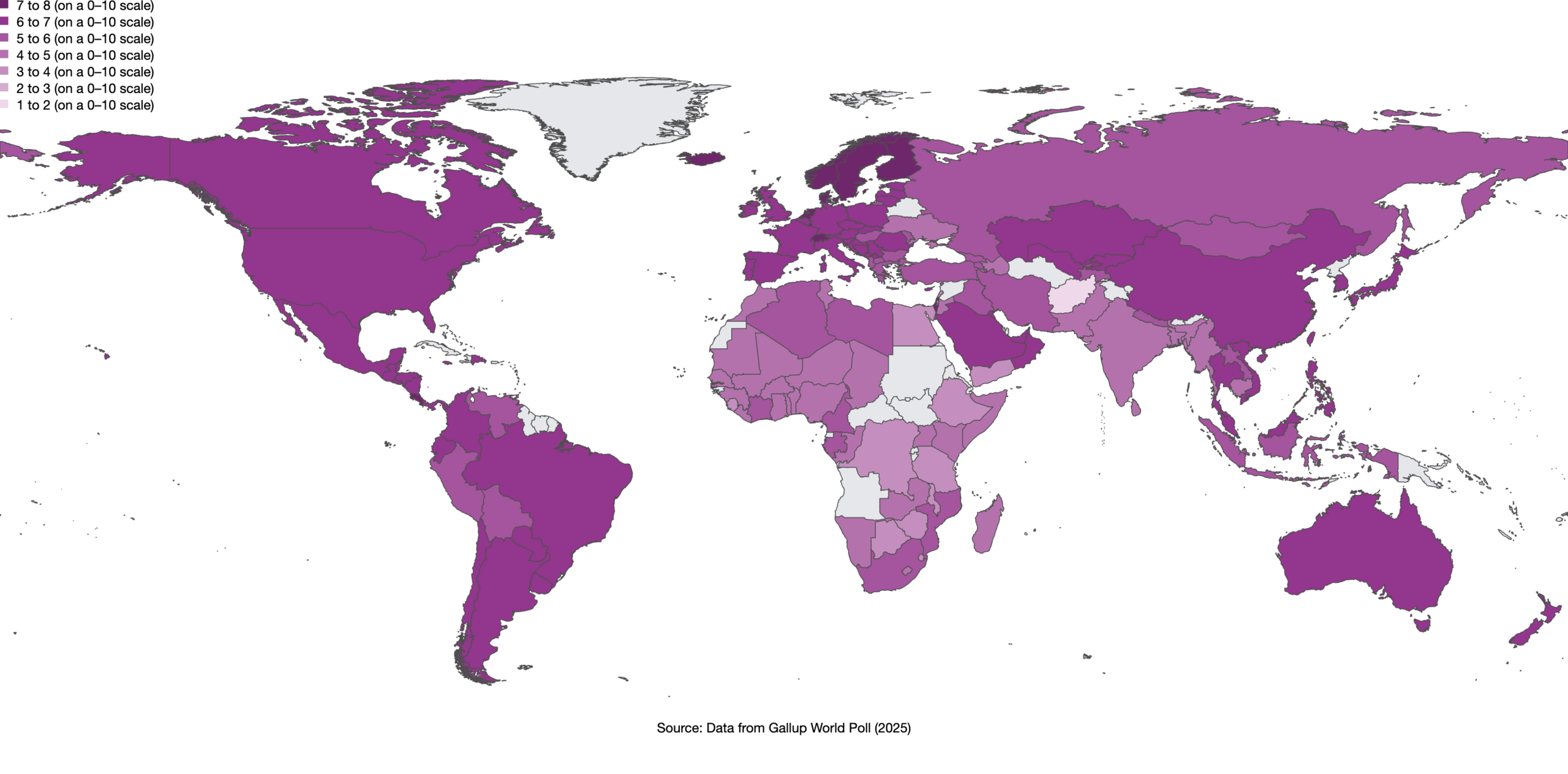
The latest World Happiness Report, released on March 20 to mark the International Day of Happiness, offers a split-screen view of global wellbeing, with steady gains on one side and growing unease on the other as social media reshapes the lives of the young.
Published with the backing of the United Nations and research partners, the report keeps Finland at the top of the happiness rankings, followed by a cluster of Nordic countries, while Costa Rica posts its highest-ever finish. Since the late 2000s, nearly twice as many countries have seen significant improvements in life satisfaction as those that have declined.
Among 147 countries, the Philippines inched up to 56th place, ranking fourth in Southeast Asia behind Singapore, Vietnam, and Thailand, with gains largely driven by stronger perceptions of personal freedom.
But globally, the trend lines blur when age is factored in. In several Western economies, including the United States and parts of Europe, youth wellbeing has deteriorated—even as older populations report steadier or improving life evaluations.
A key factor under scrutiny is social media use. Data from the Programme for International Student Assessment covering tens of thousands of adolescents across 47 countries shows that life satisfaction is highest among light users of social media and declines with heavier use.
Activities such as messaging, learning, and content creation are linked to higher wellbeing, while passive consumption—scrolling, gaming, and browsing for entertainment—correlates with lower life satisfaction.
The relationship, however, varies by region. Latin American countries report relatively high youth wellbeing despite heavy social media use, while English-speaking countries and Western Europe show stronger negative associations, particularly among girls.
The report also points to mounting evidence of harm. Drawing on multiple research methods, it finds links between heavy social media use and increased risks of cyberbullying, anxiety, and depression—effects that researchers say are large enough to influence population-level mental health trends.
Even so, the findings caution against simple fixes. Gains in school belonging and social support, for instance, are shown to have a significantly larger impact on adolescent life satisfaction than reductions in screen time alone.
For policymakers, the message is measured but clear: digital habits matter, but the broader social environment still carries more weight in shaping how—and how well—young people live.