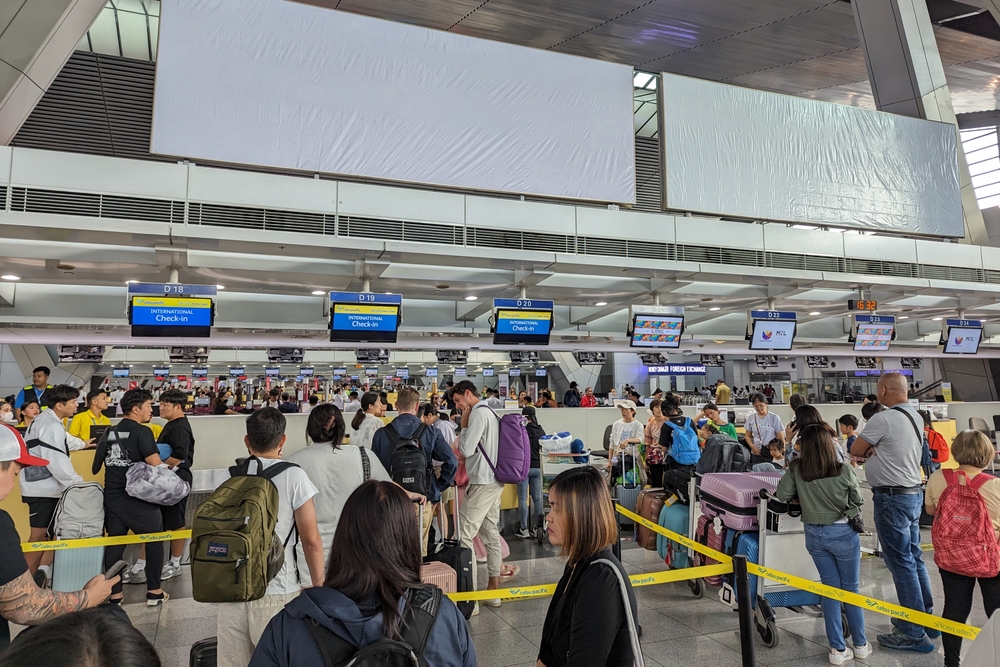
As the Lenten season approaches, millions of Filipinos are once again preparing for the annual Holy Week exodus, filling airports, seaports, and highways en route to the provinces and overseas destinations.
At Manila’s Ninoy Aquino International Airport (NAIA) alone, passenger volume is expected to exceed 1.2 million, setting the stage for one of the busiest travel periods of the year.
A smooth journey, seasoned travelers say, now requires more than a confirmed ticket. It demands careful planning, awareness, and a bit of strategy.
During peak travel days, the standard two-hour airport lead time is no longer enough.
Authorities advise passengers to arrive at least three hours before domestic flights and four to five hours ahead of international departures, as traffic congestion around NAIA and Clark International Airport (CRK), combined with long security lines, can significantly delay entry into terminals.
One of the most common and costly mistakes is heading to the wrong terminal. NAIA’s terminals are not interconnected, and transfers can take up to an hour in heavy traffic.
Terminal assignments vary by airline: Terminal 1 handles international flights for AirAsia, AirAsia Berhad, and Philippine Airlines; Terminal 2 serves Cebu Pacific and PAL domestic operations; while Terminal 3 accommodates several foreign carriers alongside Cebu Pacific’s international flights, with Japan Airlines set to transfer there beginning April 1.
Meanwhile, all turboprop operations of Cebgo and AirSWIFT, including routes to El Nido, Coron, and Naga, have moved to Clark, meaning affected passengers should proceed directly to CRK rather than NAIA.
Digital preparation has also become essential. International travelers are required to register via the government’s eTravel portal within 72 hours before departure, a service that remains free despite the proliferation of fraudulent sites.
Airlines likewise encourage passengers to check in online as early as 24 hours before their flight to secure seats and minimize time spent at airport counters.
Baggage rules remain a frequent source of delays. Travelers are urged to review their ticket’s allowance before leaving home, noting that no single checked bag should exceed 32 kilograms.
Power banks and lithium batteries, considered fire hazards, are strictly prohibited in checked luggage and must be kept in carry-on bags. To streamline the process, self-tagging kiosks available across NAIA terminals allow passengers to print baggage tags and proceed directly to bag-drop counters.
At security checkpoints, strict screening protocols are in place. Liquids, aerosols, and gels must be in containers of 100 milliliters or less and stored in a single transparent one-liter bag, while items such as umbrellas, selfie sticks, and other potentially restricted objects are best packed in checked baggage to avoid delays.
With heavy foot traffic expected, authorities are also urging vigilance inside terminals. Travelers should keep personal belongings secure, avoid leaving gadgets unattended at charging stations, and steer clear of unauthorized “fixers.”
For transport, only accredited airport taxis and reputable ride-hailing services such as Grab are recommended.
With preparation and awareness, what is often seen as a stressful annual migration can become a more manageable, and even meaningful, journey.
As millions take to the skies this Holy Week, plan ahead, stay patient, and fly smart.
Here is the link to the updated OTS Prohibited Items List that passengers should check out 48 hours before traveling. https://ots.gov.ph/prohibited-items/