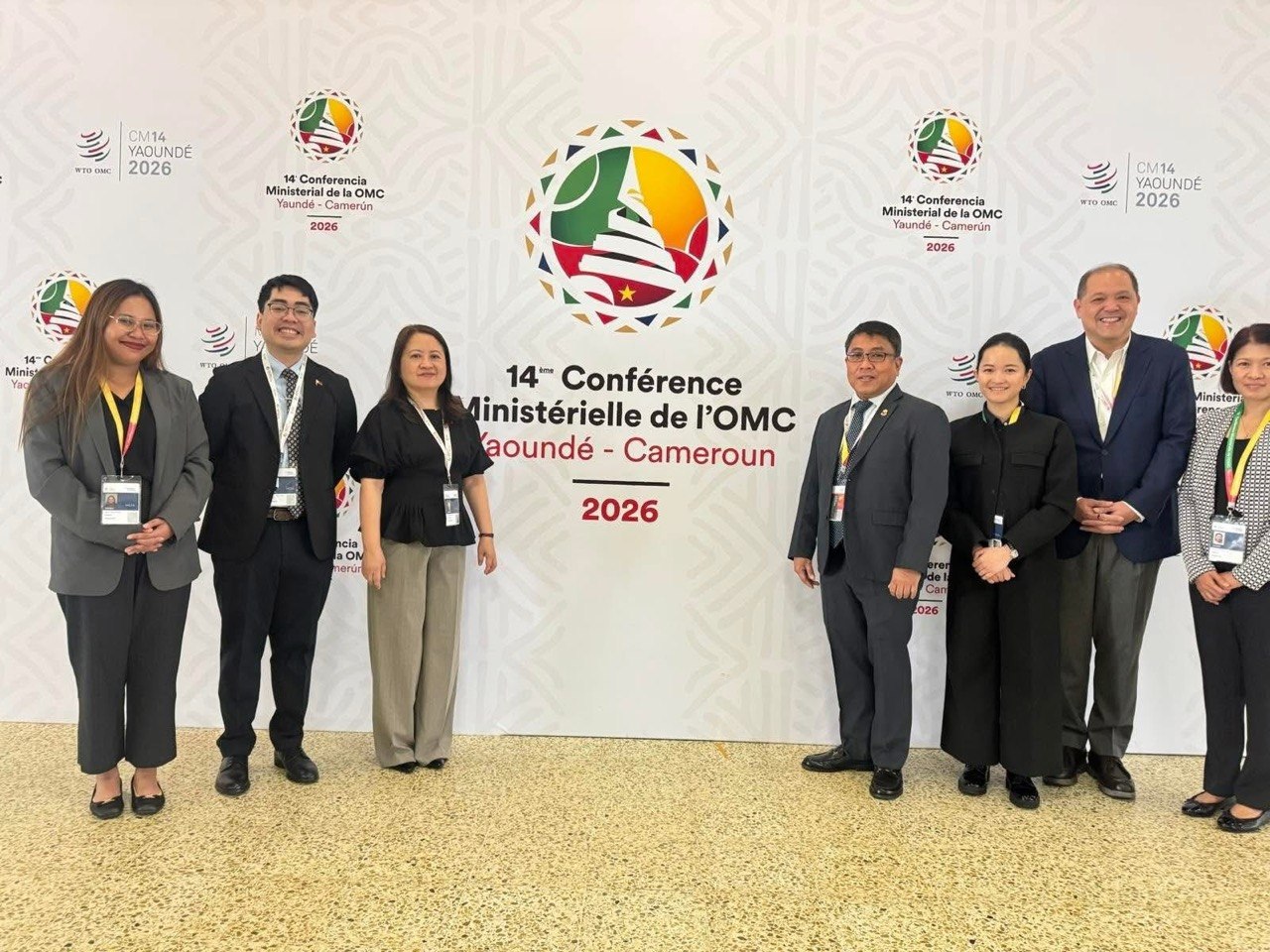
The Philippines reaffirmed its commitment to multilateralism and pledged continued engagement with members of the World Trade Organization (WTO), even as strains persist across the global trading system.
Trade Undersecretary Allan Gepty made the remarks on March 31 following the 14th WTO Ministerial Conference held in Yaoundé, Cameroon from March 26 to 29.
He described the gathering as an “intense, insightful, and enlightening” week, marked by persistent divisions among members on key issues such as dispute settlement, the e-commerce moratorium, development, and special and differential treatment. Despite these differences, Gepty stressed the need to press ahead with negotiations to find common ground.
The Philippines prioritized several initiatives, including the Interim Arrangement on the E-Commerce Agreement, the Fisheries Subsidies Agreement, the Multi-Party Interim Appeal Arbitration Arrangement, and broader dispute settlement reforms.
Although the e-commerce agreement text was stabilized in July 2024, its integration into the WTO framework still requires consensus. In the meantime, 66 participating members have moved to implement the deal domestically.
Gepty said this pragmatic step shows the WTO can still deliver meaningful outcomes, particularly in the digital economy.
He underscored the importance of clear global rules on e-signatures, e-payments, paperless trade, consumer protection, and data privacy—areas critical to the Philippines’ services-driven economy. Such measures, he added, complement existing domestic laws and trade agreements while helping micro, small, and medium enterprises integrate into global markets. With digital transactions now accounting for more than 60 percent of global GDP, he stressed the urgency of establishing common standards.
Gepty also cited the Fisheries Subsidies Agreement as a milestone for sustainable development, highlighting the need to balance environmental protection with the livelihoods of some 2.5 million Filipinos dependent on the sector.
On dispute settlement, he reiterated the importance of restoring a fully functioning two-tier system to uphold a rules-based global order. The interim arbitration arrangement, he said, remains a key mechanism to preserve enforceability and predictability while reforms continue.