Maynilad Water Services Inc. aims to reduce its non-revenue water (NRW) to 27 percent by the end of 2026 as continued investments in pipe rehabilitation, smart water management and network upgrades improve efficiency while making the utility more resilient to drought.
NRW fell to 29.7 percent as of end-June from 35.25 percent a year earlier, the first time the company has brought water losses below the 30 percent threshold. The improvement has enabled Maynilad to recover about 278 million liters per day of treated water, roughly equivalent to the output of more than two water treatment plants, providing an additional buffer during periods of tight supply.
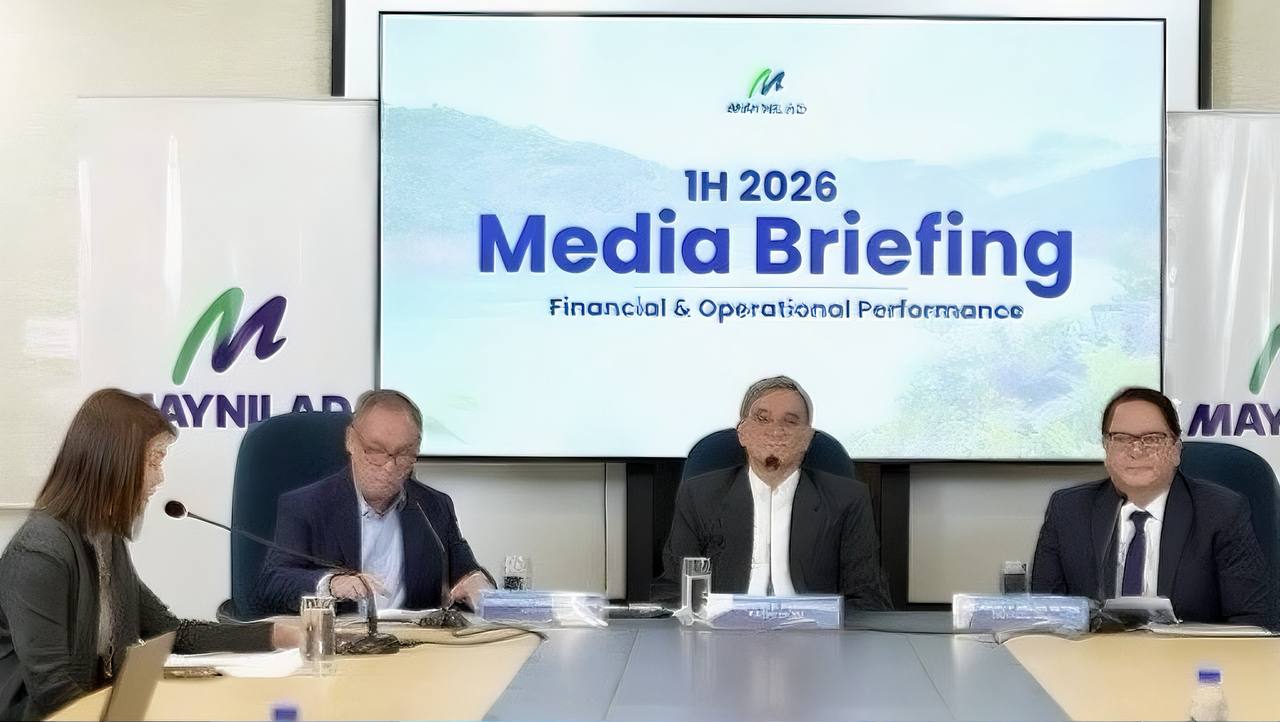
Maynilad President and Chief Executive Officer Ramoncito S. Fernandez said reducing NRW remains both a contractual and regulatory obligation, with the necessary investments already incorporated into the company’s approved business plan.
“We have been meeting our obligations for the last four years,” Fernandez said. He added that the company remains on track to achieve its year-end NRW target of 27 percent while maintaining an average of about 29.8 percent for 2026. Maynilad plans to lower the average further to 25 percent next year, bringing it closer to the internationally accepted benchmark of 20 percent to 25 percent.
Since 2023, the utility has accelerated spending on replacing primary and secondary pipelines, installing pressure-reducing valves, deploying advanced metering systems and adopting other technology-driven solutions. These efforts are complemented by its company-wide “Walk the Line” program, under which employees regularly inspect distribution networks to identify leaks and other sources of water loss.
Chief Operating Officer Chris Lichauco said the reduction in NRW has improved water availability, lowered operating costs and allowed the utility to redirect recovered water to areas with stronger demand.
The gains have also strengthened Maynilad’s resilience strategy. Since the 2019 El Niño, the company has reduced its dependence on Angat Dam from 90 percent to 83 percent, with a target of 81 percent by year-end, through new treatment plants, modular facilities and alternative water sources. Lichauco said these investments enabled Maynilad to maintain uninterrupted service even as Angat’s water level recently fell below the level that triggered widespread supply interruptions in 2019.