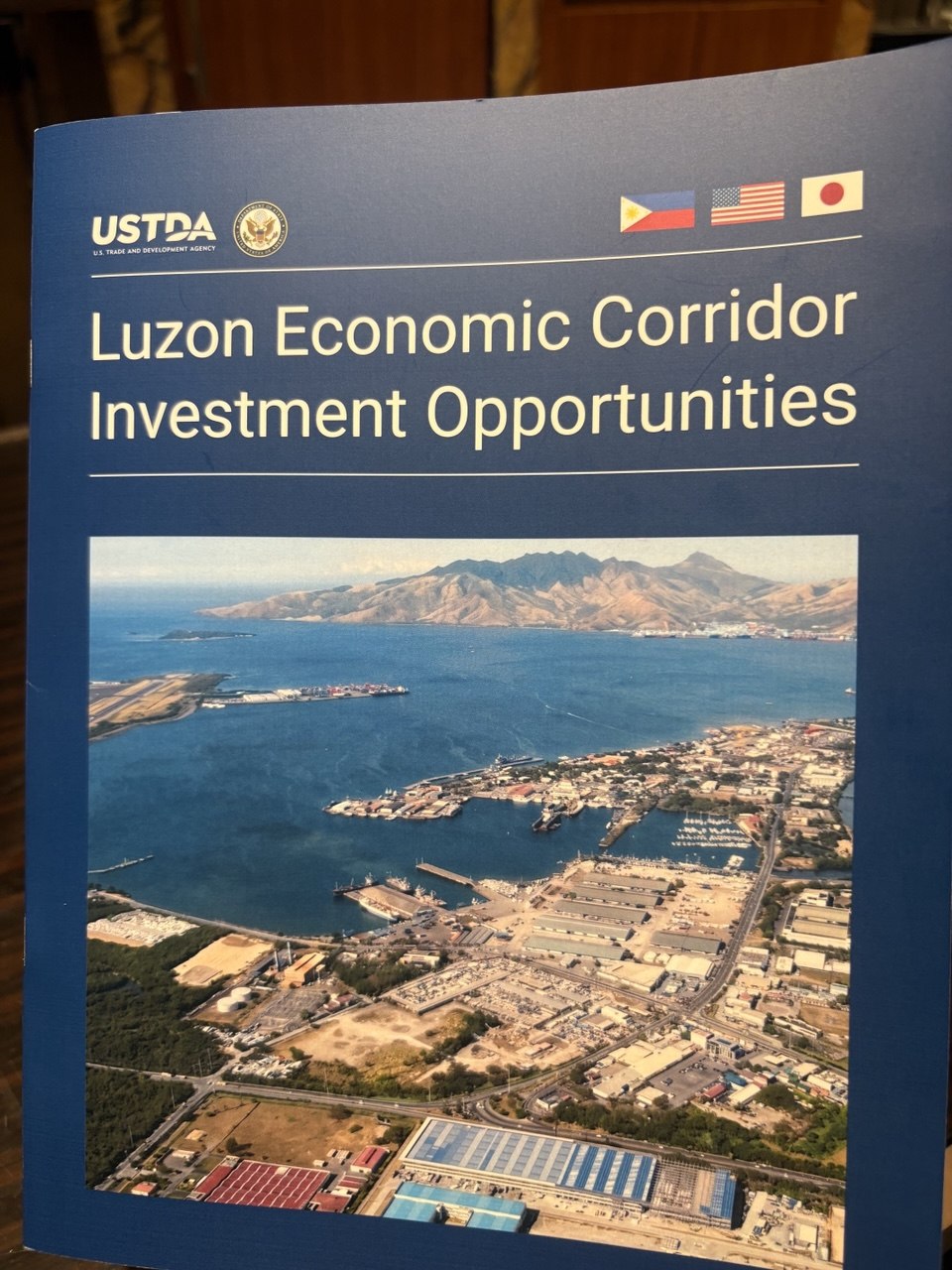
The Philippines put more than USD20 billion worth of infrastructure and industrial projects before about 600 local and foreign investors, seeking to turn the Luzon Economic Corridor (LEC) from a development blueprint into a pipeline of fundable deals.
The 38 projects, presented as a curated deal book at the inaugural LEC Investment Forum, cover transport and logistics, advanced manufacturing, energy, and digital connectivity, with the biggest share coming from projects aimed at improving Luzon’s links to markets and production hubs.
Transport and logistics account for the largest share, with 17 projects, followed by eight in advanced manufacturing, seven in energy, and five in digital connectivity.
Among the biggest opportunities is the proposed USD4 billion to USD6 billion Subic-Clark Natural Gas Ecosystem, an LNG-to-power platform designed to create opportunities for investors, locators, and suppliers. It envisions more than two gigawatts of baseload capacity, supported by a floating storage and regasification unit in Subic and a pipeline linking key areas of the economic corridor.
Another major opportunity is the estimated USD3-billion operations and maintenance package for the Metro Manila Subway, covering 17 stations along the 33-kilometer underground railway, which is targeted to become fully operational by 2032.
The broader LEC pipeline includes railways, fuel storage and pipelines, cold-storage facilities, shipbuilding, and digital infrastructure such as fiber networks.
The opportunities are open not only to foreign capital and private and public equity investors, but also to debt providers, investment structurers, advisers, technology suppliers, and potential locators.
Officials acknowledged that major infrastructure projects require long lead times but stressed that investments in transport, energy, aviation, and industrial infrastructure could have lasting effects on Philippine economic growth.
The pitch now shifts the LEC conversation from a government-led infrastructure plan to an investable pipeline, with the next challenge being to convert investor interest into funded and operational projects.