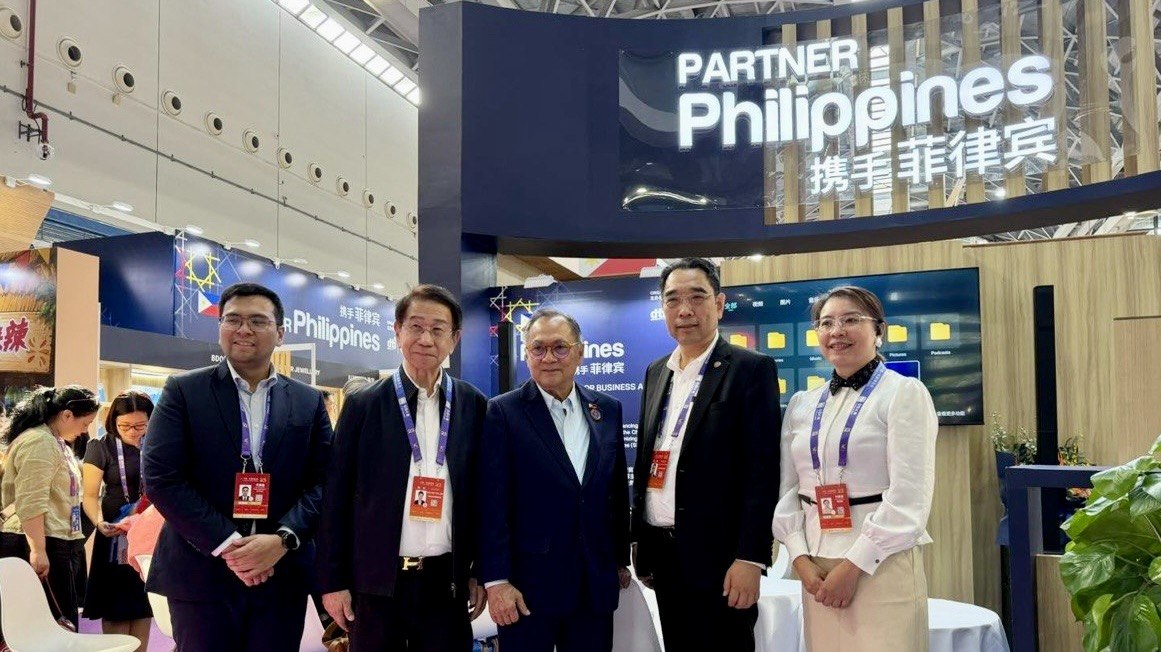
The Philippines is sending its largest-ever delegation to the China-ASEAN Expo (CAEXPO), using its return as Country of Honor to put Philippine exports, tourism, and investment opportunities before Chinese and regional markets.
The 23rd CAEXPO, running Sept. 17 to 21 in Nanning, Guangxi, features 313 Philippine delegates, including 73 export companies showcasing agrifood, fashion, lifestyle, home, and personal care products and services.
The Philippines last held the Country of Honor designation in 2013.
The participation is supported by the Federation of Filipino Chinese Chambers of Commerce and Industry Inc. (FFCCCII), led by president Victor Lim, as Philippine businesses seek to deepen commercial ties with China and other ASEAN economies.
Cebu is being featured as the Philippines’ “Province of Charm,” highlighting its tourism attractions, manufacturing and creative industries, investment opportunities, and connectivity.
The presentation also promotes Cebu’s international airport and deepwater ports, positioning the province as a potential gateway for trade and investment between the Philippines and the wider ASEAN market.
The expo comes as a major new waterway improves China’s links with ASEAN.
The 134.2-kilometer Pinglu Canal in Guangxi opened on Sept. 16, connecting the Xijiang River system with the Beibu Gulf. The canal can accommodate vessels of up to 5,000 tons and is expected to shorten inland shipping routes by more than 560 kilometers.
It could also reduce annual logistics costs by about 5.2 billion yuan, potentially making southwestern China’s inland markets more accessible to regional suppliers.
For Philippine exporters, that creates a potentially important logistics advantage. Lower transport distances and costs could improve the economics of reaching consumers and distributors beyond China’s coastal gateways.
The combination of a record Philippine presence at CAEXPO and improved regional connectivity gives exporters more than a showcase. It puts market access and logistics in the same equation, a combination that could determine whether trade leads turn into actual shipments and investments.