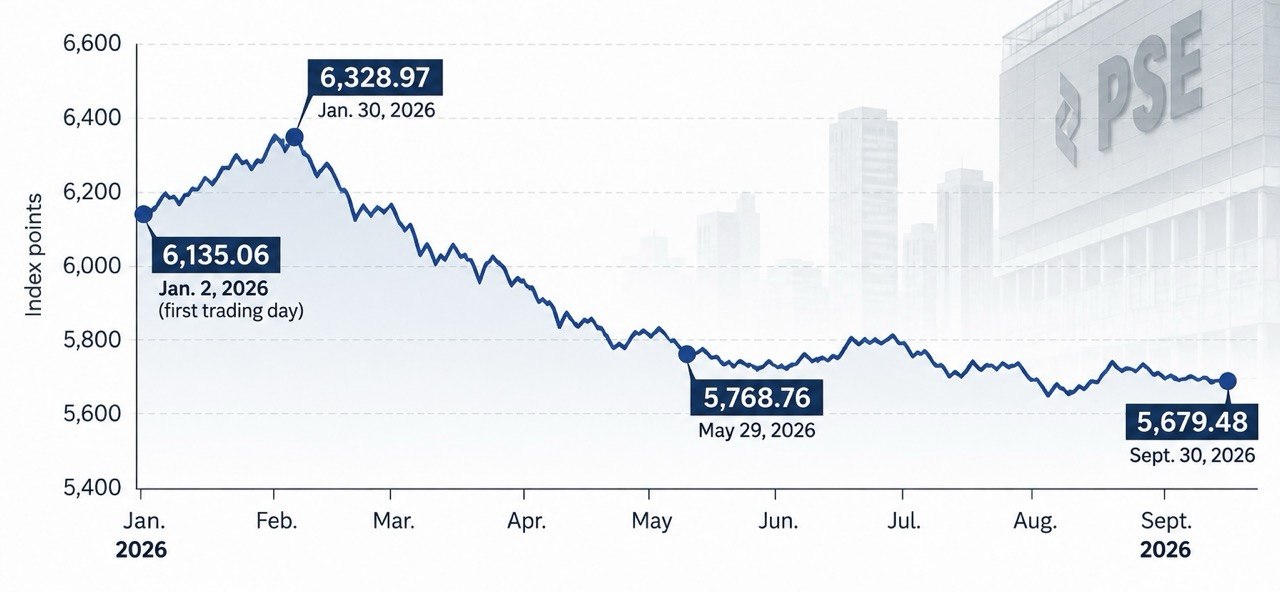
Philippine equities may be approaching a potential re-rating as depressed valuations increasingly reflect concerns over elevated borrowing costs, peso weakness and a fragile domestic macroeconomic backdrop. With the broader market trading at roughly eight times earnings, valuations suggest investors are pricing in substantial pessimism, creating room for upside if economic conditions stabilize and confidence improves.
However, low valuations alone are unlikely to trigger a sustained recovery. Manulife Investments Philippines said a durable re-rating would require a clear and lasting improvement in domestic macroeconomic conditions, better earnings visibility, greater peso stability and a more compelling Philippine equity story relative to regional peers.
Corporate fundamentals could provide an important buffer. Companies with strong balance sheets, predictable cash flows, disciplined capital allocation and sustainable dividends are likely to be more resilient if financing costs remain elevated. These qualities could become increasingly valuable while economic growth remains uneven and investors continue to favor defensive sources of returns.
The fixed-income market offers another potential opportunity. US monetary policy remains a key driver of Philippine bond yields and the peso. A stronger US labor market could reinforce expectations for higher-for-longer interest rates, maintaining pressure on local bonds and the currency. Conversely, weaker employment data could strengthen expectations for Federal Reserve easing and provide relief for Philippine assets.
Against this backdrop, Manulife Investments Philippines favors the three- to seven-year portion of the Philippine bond curve. The segment offers investors attractive yields while avoiding the greater duration risk associated with longer-dated securities.
Overall, Philippine markets have a potentially favorable starting point, but valuation alone is not enough to justify a broad recovery. A sustained re-rating will depend on evidence that domestic growth, corporate earnings and currency conditions are improving. Until then, selective positioning—favoring financially resilient equities and intermediate-term bonds—may offer a more balanced approach as investors navigate continued global rate uncertainty.