The Department of Finance (DOF) is seeking legislative support for a tax reform package that would increase workers’ take-home pay, reduce tax pressures on micro and small businesses, and channel revenues from health-related taxes into essential public services.
The proposed Promoting Growth, Revenue, and Equity towards Socio-Economic Sustainability (ProGRESS) package is being presented to lawmakers and other stakeholders as the government seeks legislative backing through nationwide consultations.
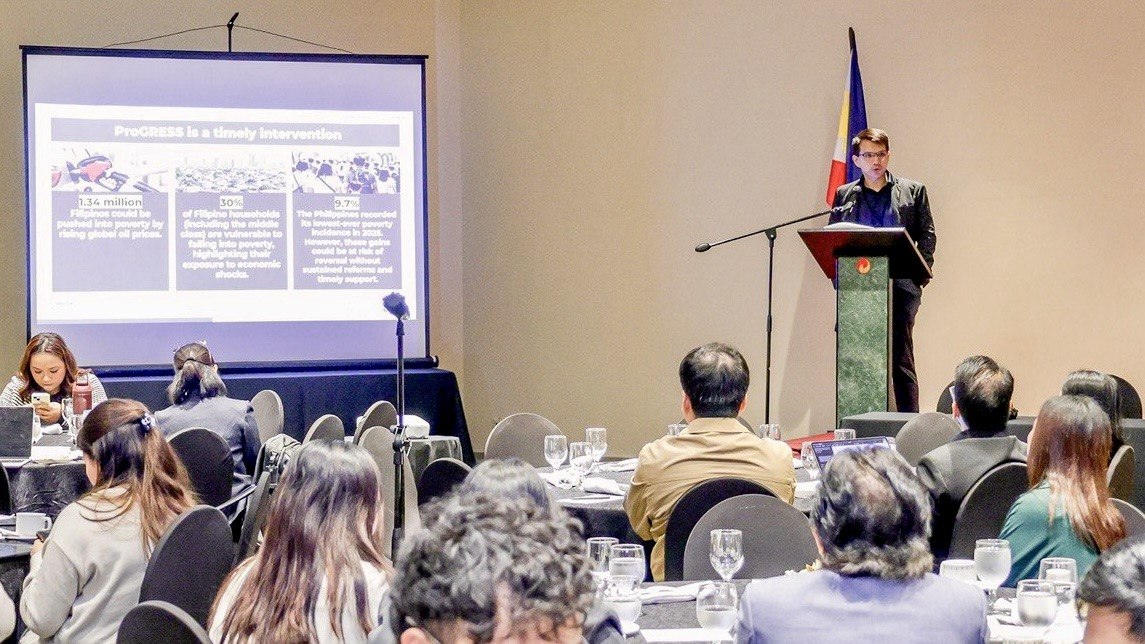
At an interagency forum on October 29, Finance Undersecretary Karlo Fermin Adriano said the proposed reforms aim to balance income protection, public health financing, and a fairer tax system.
“Through continuous engagement, we hope to pass reforms that protect workers’ hard-earned income, support the health of Filipino families, and promote fairness in revenue collection,” Adriano said.
The package also links tax policy with efforts to discourage consumption of products associated with health risks, with the resulting revenues helping finance essential services.
Health Assistant Secretary Lester Tan said health taxes should be viewed not only as a revenue measure but also as a preventive tool that can reduce illness, household medical expenses, and productivity losses.
“Health taxes are about protecting lives,” Tan said.
Budget Director Benjieleth Zuñiga said half of collections from tobacco and sweetened beverages are earmarked for health programs, mainly PhilHealth, medical assistance, and health facilities.
Collections from alcohol, heated tobacco, and vapor products are fully allocated, with 60 percent going to Universal Health Care, 20 percent to medical assistance and health facilities, and the remaining 20 percent to Sustainable Development Goals.
Zuñiga cautioned that generating revenues would mean little without efficient spending and implementation.
“Identifying a funding source is only the first step,” she said, stressing the need to translate collections into accessible and responsive public services.
The DOF and Presidential Legislative Liaison Office jointly organized the forum, which drew around 150 participants. Earlier consultations and briefings covered Manila, Batangas, Baguio, and Cebu.