



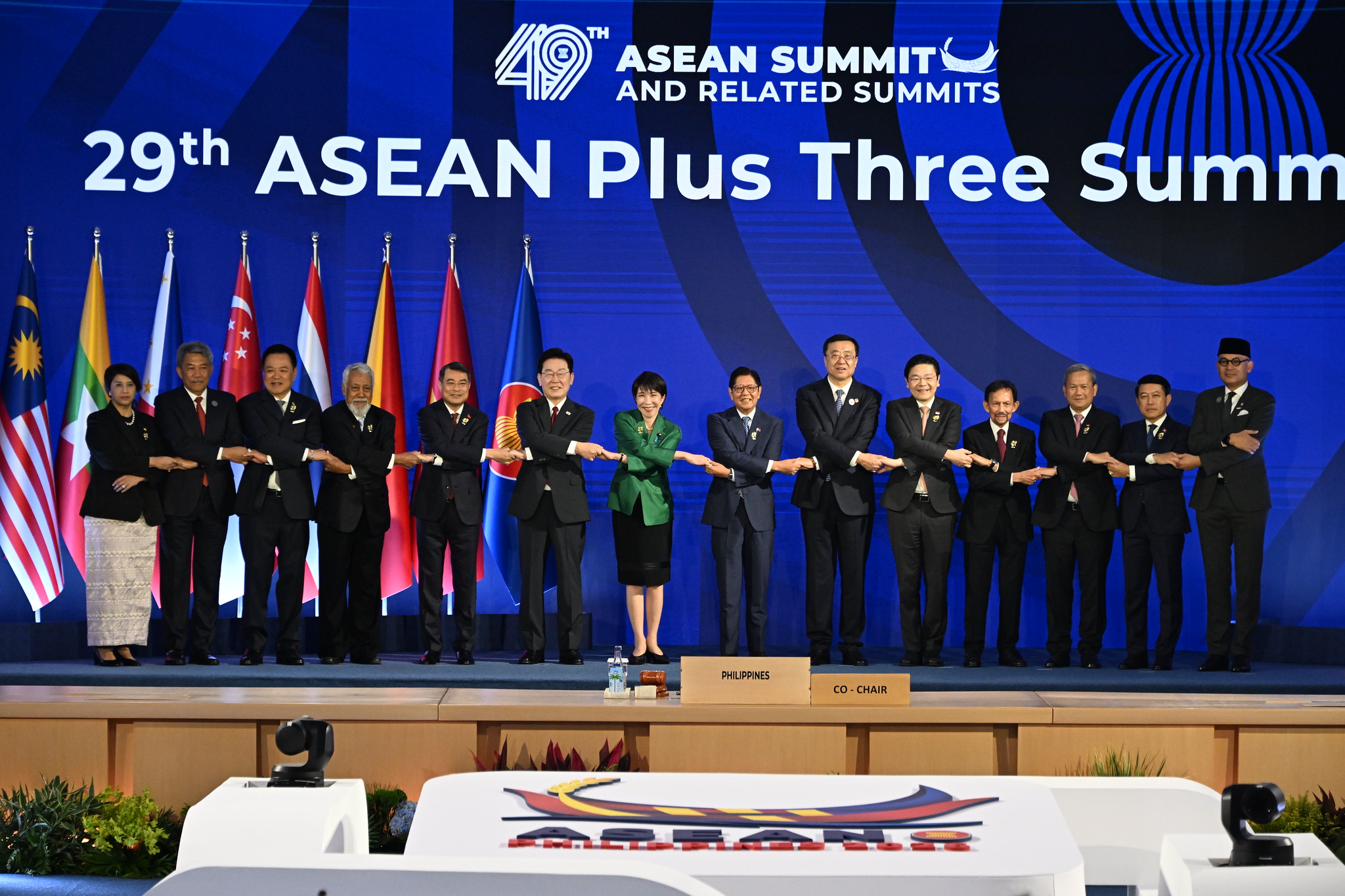
Leaders of the Association of Southeast Asian Nations (ASEAN), alongside Japan, China, and South Korea, adopted two joint statements on Tuesday, November 17, aimed at safeguarding regional shipping lanes, stabilizing food and energy supplies, and strengthening supply chains against global economic shocks.
The agreements were finalized during the 29th ASEAN+3 Summit, a 90-minute session held alongside the 49th ASEAN Summit hosted by the Philippines. For Southeast Asian member states, the outcomes translate high-level diplomacy into practical protections against rising living costs, supply bottlenecks, and cross-border crime.
The two adopted statements focus on Maritime Trade and Logistics Connectivity, as well as Strengthening Energy and Food Security Resilience amid External Shocks and Supply Chain Disruptions. By formalizing these commitments, member nations gain coordinated mechanisms to prevent trade blockages and cushion local economies when global crises disrupt fuel or grain imports.
During the meeting, Japanese Prime Minister Sanae Takaichi outlined Tokyo’s policy priorities in alignment with the ASEAN Community Vision 2045, emphasizing that practical regional cooperation helps smaller and developing nations maintain their economic independence and resilience.
On the economic front, Takaichi pledged continued Japanese support to reinforce the Chiang Mai Initiative Multilateralization, a regional financial safety net designed to help member states manage currency crises and short-term liquidity problems. Japan also committed to expanding cross-border electronic payments, disaster risk financing, and research collaboration with the ASEAN+3 Macroeconomic Research Office, measures expected to lower transaction costs and stabilize capital markets across Southeast Asia.
To protect the region’s agricultural and disaster response systems, Japan announced plans to bolster the ASEAN+3 Emergency Rice Reserve and improve data sharing through the ASEAN Food Security Information System. These steps directly benefit ASEAN member countries by ensuring emergency rice stocks can be rapidly deployed during extreme weather events or harvest shortages. Takaichi also highlighted upcoming regional disaster risk reduction efforts ahead of next year’s Asia-Pacific Ministerial Conference in Sendai, Japan.
Addressing non-traditional security threats, the leaders discussed joint action against transnational organized crime, particularly online scam operations that have increasingly targeted citizens across Southeast Asia. Japan stated it will expand capacity-building assistance through the United Nations Office on Drugs and Crime to help member states disrupt cyber-enabled fraud networks.
Geopolitical security and global trade routes also featured prominently in the discussions. Takaichi urged the full implementation of United Nations Security Council resolutions regarding North Korea’s nuclear and missile programs, warning against sanctions evasion and malicious cyber activities, while seeking regional support to resolve the long-standing issue of Japanese abductees.
Turning to the Middle East, Takaichi and fellow leaders underscored the economic risks posed by regional instability, stressing the need to keep vital maritime chokepoints—specifically the Strait of Hormuz and the Bab-el-Mandeb Strait—open and safe for international shipping. For ASEAN countries heavily reliant on imported Middle Eastern oil and global maritime trade, protecting these sea lanes is critical to preventing domestic fuel price spikes and shipping delays.
Other participating nations echoed the urgency of maintaining freedom of navigation and regional stability, reaffirming their commitment to deeper cooperation in energy, digital trade, and financial resilience under the ASEAN+3 framework.




