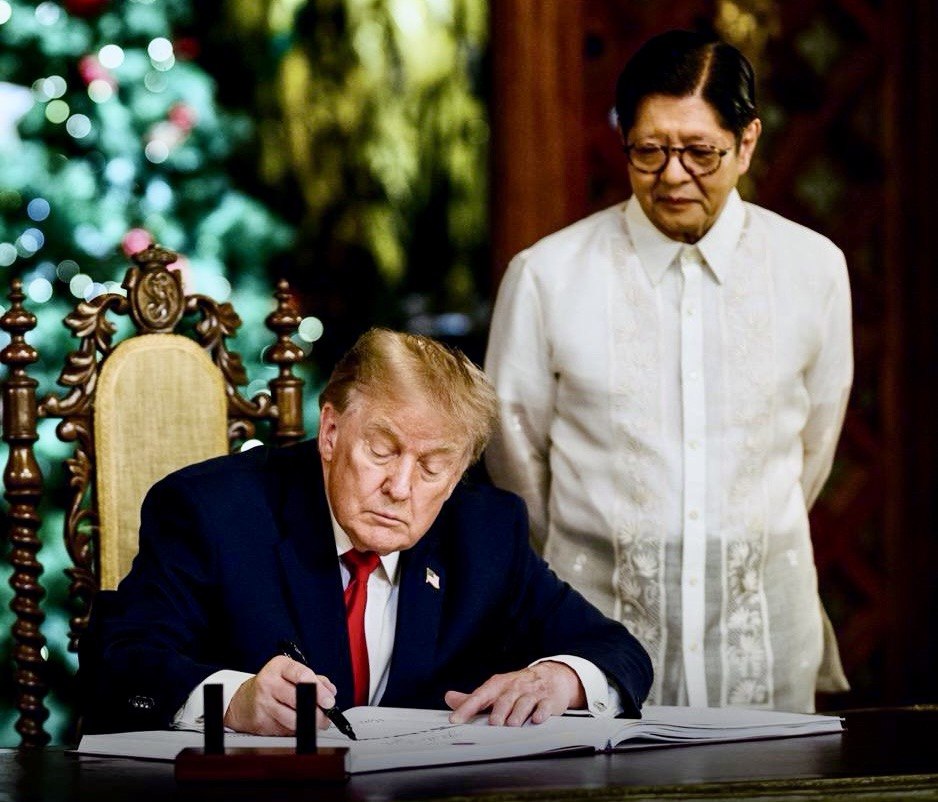
The Philippines is poised to expand its purchases of American aircraft, military equipment, energy and agricultural products under a series of agreements announced during US President Donald Trump’s state visit, as Washington seeks to deepen economic and security ties with Manila while narrowing its trade deficit.
The White House said Wednesday that the visit generated more than USD17 billion in commercial deals and strategic investment commitments involving US companies, with several major transactions involving the Philippines.
The largest is Philippine Airlines’ planned USD12-billion purchase of up to 20 Boeing 787 Dreamliner aircraft powered by GE Aerospace engines. The deal is expected to support about 47,000 jobs in the United States, according to the White House.
Beyond aviation, the agreements cover military financing, energy infrastructure, satellite connectivity and airport modernization, underscoring the breadth of Washington’s effort to strengthen its economic and strategic relationship with Manila.
The two governments will pursue more than USD2 billion in foreign military financing loans, complemented by USD400 million in military assistance to bolster Philippine defense capabilities and deterrence, particularly amid rising tensions in the South China Sea.
The financing commitments could help Manila acquire additional defense equipment and modernize its armed forces, although the scale and timing of actual purchases will depend on subsequent negotiations and implementation arrangements.
Energy cooperation is another major component, with both countries agreeing to explore a civil nuclear technology agreement that could pave the way for gigawatts of additional electricity generation capacity.
For the Philippines, which faces growing power demand and persistent concerns over electricity costs and supply reliability, nuclear cooperation could eventually provide another source of baseload power and reduce dependence on imported fossil fuels. However, translating the initiative into operating capacity would require substantial investment, regulatory work and lengthy project development.
Other commercial initiatives include a USD200-million satellite connectivity opportunity involving US-based Astranis, a USD40-million fuel storage depot in Subic Bay and the modernization of Basco Airport.
These projects could improve communications access, strengthen fuel supply logistics and enhance transport connectivity, although their economic benefits will depend on the pace of implementation and the extent of private-sector participation.
The White House also said Washington and Manila committed to eliminating the US trade deficit with the Philippines through increased Philippine purchases of American energy and agricultural products.
The commitment signals a push to rebalance bilateral trade by expanding US exports to the Philippine market. It could also give the Philippines additional options for sourcing fuel, food and other strategic commodities, although the commercial terms, competitiveness and affordability of these imports will determine whether they translate into lasting benefits for Filipino businesses and consumers.
While the USD17-billion headline figure highlights the scale of commercial opportunities generated by the visit, the announced agreements vary considerably in maturity. Some involve specific purchase commitments, while others remain prospective investments, financing arrangements or initiatives requiring further negotiations.
Their ultimate value to the Philippines will therefore depend not simply on the amount announced, but on how quickly the commitments translate into delivered equipment, operating infrastructure, more reliable energy supplies and stronger economic capacity.