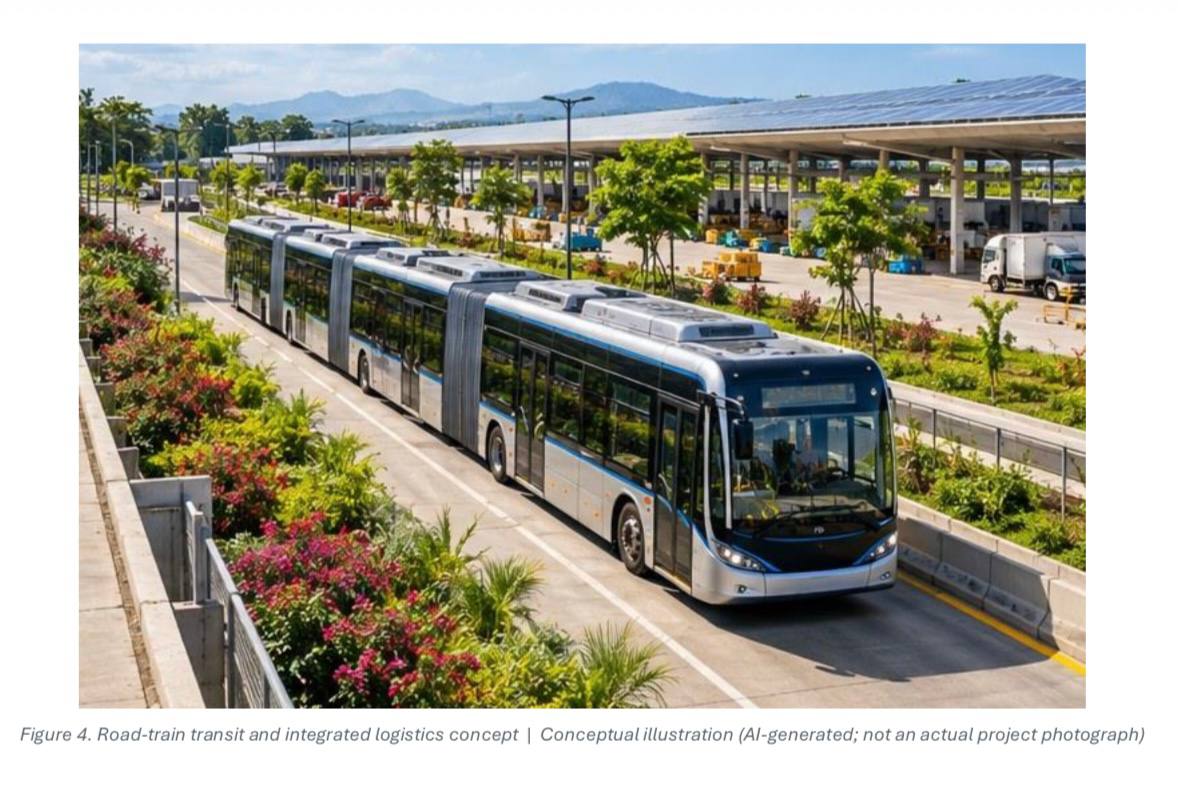
Beyond addressing foreign loan risks, the proposed overhaul of the EDSA Busway and the Tutuban-to-Clark rail corridor highlights a critical gap in Philippine transport and logistics policy: the direct link between mass transit, food prices, and regional development. In his position paper, former transport analyst Francis Yuseco argues that decades of railway neglect have left the country without a reliable national logistics backbone, forcing farmers, fisherfolk, and commuters to bear the cost of an inefficient distribution system.
In the absence of an integrated freight and passenger network, agricultural goods moving from provinces to urban markets must pass through roughly seven layers of intermediaries, including millers, traders, local pass-through fees, illegal checkpoints, and smuggling networks. According to the paper, these layered costs inflate food prices by more than 1,000 percent between farm gates and city markets, keeping rural producers in poverty while driving up household expenses for urban consumers. At the same time, the lack of fast, affordable regional transport has concentrated jobs and economic activity in major cities, fueling severe traffic congestion, pollution, and the growth of overcrowded informal settlements.
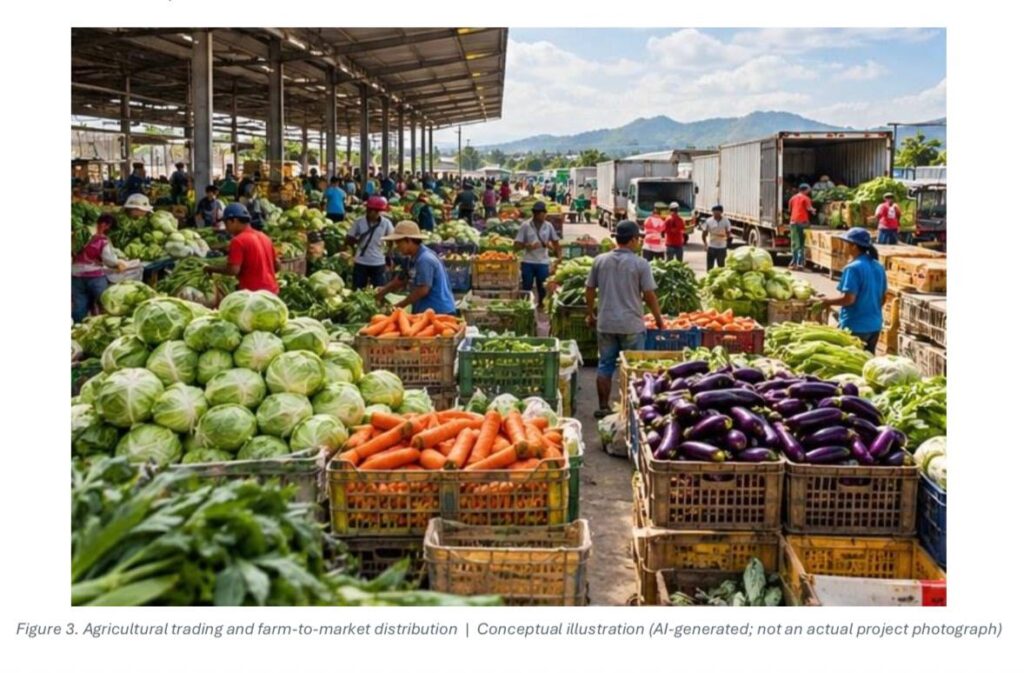
From a transport policy perspective, the proposed Philippine National Digital Logistics Integrated Backbone attempts to solve passenger congestion and freight bottlenecks within a single corridor. Unlike conventional rail lines that are confined to fixed tracks and specialized yards, road trains can leave the main trackway to weave directly into public markets, cold storage plants, warehouses, and agro-industrial complexes. For policy planners, this flexibility eliminates the costly and time-consuming process of transferring cargo multiple times between trains and delivery trucks.
The operational design outlined in the paper also targets reliability, a persistent weakness in Philippine public transit. Conventional rail systems often suffer full-line shutdowns when a single train breaks down or a signaling fault occurs. Under the proposed road-train system, vehicles run 24 hours a day on adjustable schedules—every 60 seconds during peak commuter hours and every five minutes for long-haul trips—while idle units undergo preventive maintenance during off-peak periods. If a vehicle stalls, standby tow trucks can quickly move it into emergency bays along a central green median without halting traffic on the rest of the corridor.
Furthermore, the corridor’s 20-meter central zone is designed to house post-harvest facilities, wet and dry markets, manufacturing spaces, housing, and clean power and water systems alongside digital tracking apps that tell wholesale buyers exactly when farm and fishery shipments will arrive. By rationalizing the EDSA Busway for urban commuters and turning the Tutuban-to-Clark stretch into a secure, unimpeded food and passenger artery, the pilot projects offer a blueprint for decentralizing economic growth. If implemented, the policy approach would shift Philippine infrastructure planning away from single-purpose transit lines toward multi-income corridors that lower logistics costs, strengthen food security, and connect rural producers directly to national markets.